


Evidence of Apis cerana Sacbrood virus Infection in Apis mellifera
- PMID: 26801569
- PMCID: PMC4959495
- DOI: 10.1128/AEM.03292-15
Evidence of Apis cerana Sacbrood virus Infection in Apis mellifera
Abstract
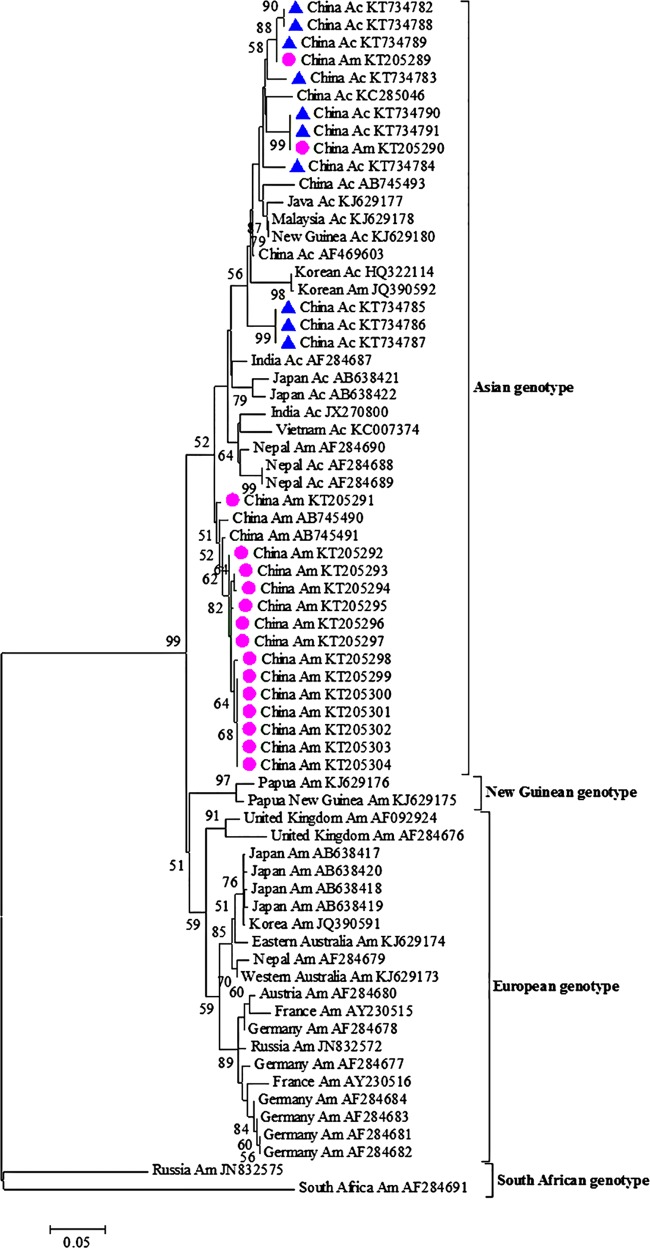
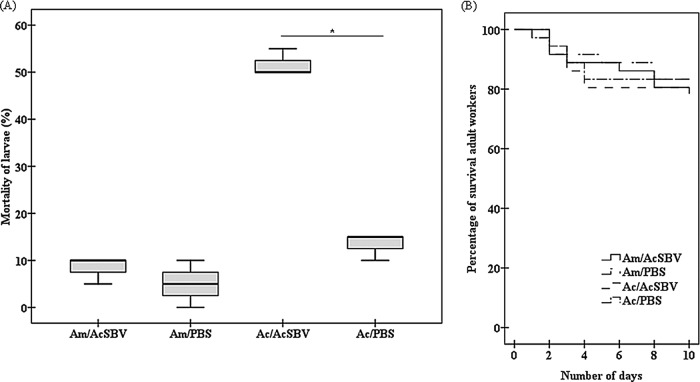
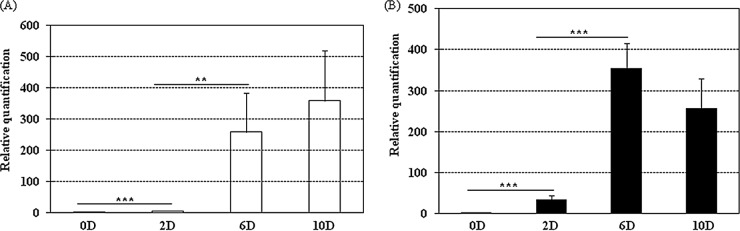
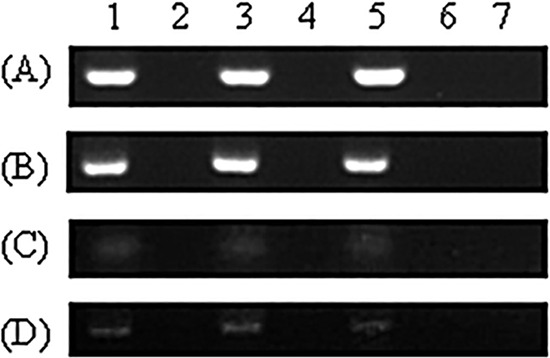
Sacbrood virus(SBV) is one of the most destructive viruses in the Asian honeybee Apis cerana but is much less destructive in Apis mellifera In previous studies, SBV isolates infecting A. cerana(AcSBV) and SBV isolates infecting A. mellifera(AmSBV) were identified as different serotypes, suggesting a species barrier in SBV infection. In order to investigate this species isolation, we examined the presence of SBV infection in 318A. mellifera colonies and 64A. cerana colonies, and we identified the genotypes of SBV isolates. We also performed artificial infection experiments under both laboratory and field conditions. The results showed that 38A. mellifera colonies and 37A. cerana colonies were positive for SBV infection. Phylogenetic analysis based on RNA-dependent RNA polymerase (RdRp) gene sequences indicated that A. cerana isolates and most A. mellifera isolates formed two distinct clades but two strains isolated fromA. mellifera were clustered with theA. cerana isolates. In the artificial-infection experiments, AcSBV negative-strand RNA could be detected in both adult bees and larvae ofA. mellifera, although there were no obvious signs of the disease, demonstrating the replication of AcSBV inA. mellifera Our results suggest that AcSBV is able to infectA. melliferacolonies with low prevalence (0.63% in this study) and pathogenicity. This work will help explain the different susceptibilities ofA. cerana and A. melliferato sacbrood disease and is potentially useful for guiding beekeeping practices.
Copyright © 2016, American Society for Microbiology. All Rights Reserved.
Figures
References
-
- Pearce F. 2014. Honeybee trade is hotbed for carrying disease into wild. New Sci 221:16. doi:10.1016/S0262-4079(14)60357-2. - DOI
-
- Gallai N, Salles JM, Settele J, Vaissière BE. 2009. Economic valuation of the vulnerability of world agriculture confronted with pollinator decline. Ecol Econ 68:810–821. doi:10.1016/j.ecolecon.2008.06.014. - DOI
-
- Garibaldi LA, Steffan-Dewenter I, Kremen C, Morales JM, Bommarco R, Cunningham SA, Carvalheiro LG, Chacoff NP, Dudenhöffer JH, Greenleaf SS, Holzschuh A, Isaacs R, Krewenka K, Mandelik Y, Mayfield MM, Morandin LA, Potts SG, Ricketts TH, Szentgyörgyi H, Viana BF, Westphal C, Winfree R, Klein AM. 2011. Stability of pollination services decreases with isolation from natural areas despite honey bee visits. Ecol Lett 14:1062–1072. doi:10.1111/j.1461-0248.2011.01669.x. - DOI - PubMed
-
- White GF. 1917. Sacbrood. US Dept Agric Bull 431:1–55.
Publication types
MeSH terms
Substances
LinkOut - more resources
Full Text Sources
Other Literature Sources
Research Materials
