Review
. 2016 Feb:36:95-104.
doi: 10.1016/j.semcancer.2016.01.002. Epub 2016 Jan 21.

F-BOX proteins in cancer cachexia and muscle wasting: Emerging regulators and therapeutic opportunities

Affiliations
Review

F-BOX proteins in cancer cachexia and muscle wasting: Emerging regulators and therapeutic opportunities

Ammar Sukari et al. Semin Cancer Biol. 2016 Feb.

Abstract

Cancer cachexia is a debilitating metabolic syndrome accounting for fatigue, an impairment of normal activities, loss of muscle mass associated with body weight loss eventually leading to death in majority of patients with advanced disease. Cachexia patients undergoing skeletal muscle atrophy show consistent activation of the SCF ubiquitin ligase (F-BOX) family member Atrogin-1 (also known as MAFBx/FBXO32) alongside the activation of the muscle ring finger protein1 (MuRF1). Other lesser known F-BOX family members are also emerging as key players supporting muscle wasting pathways. Recent work highlights a spectrum of different cancer signaling mechanisms impacting F-BOX family members that feed forward muscle atrophy related genes during cachexia. These novel players provide unique opportunities to block cachexia induced skeletal muscle atrophy by therapeutically targeting the SCF protein ligases. Conversely, strategies that induce the production of proteins may be helpful to counter the effects of these F-BOX proteins. Through this review, we bring forward some novel targets that promote atrogin-1 signaling in cachexia and muscle wasting and highlight newer therapeutic opportunities that can help in the better management of patients with this devastating and fatal disorder.

Keywords: Atrogin-1; CRM1; Cancer cachexia; F-BOX; Muscle wasting.


Figures

Figure 1
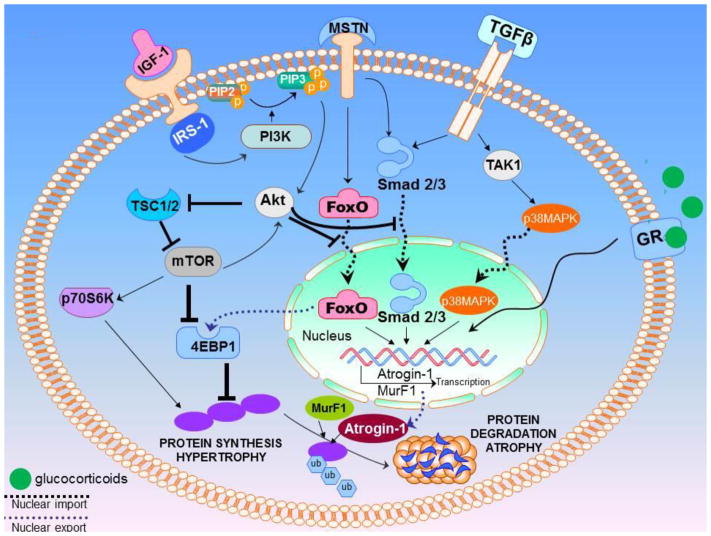
Figure 1. Summary schema of muscle hypertrophy and dystrophy signaling
Muscle wasting processes are regulated by a number of receptor mediated signaling pathways. The binding of IGF-1 to its receptor results in the activation of insulin receptor substrate-1 (IRS-1), which promotes the activation of phosphatidylinositol-3-kinase (PI3K). The PI3K in-turn is responsible for the addition of a phosphate group to the intramembranous phosphoinositide-(4,5)-biphosphate (PIP2) to result in phosphoinositide-(3,4,5)-triphosphate (PIP3). IGF-1 receptor mediated activation of protein synthesis is PI3K dependent. The serine/threonine kinase Akt, binds PIP3 on the membrane through an N-terminal pleckstrin homology (PH) domain and is activated by phosphoinositide-dependent kinase-1 (PDK1). The recruitment of Akt to the membrane and the activation of Akt through PDK1 promotes Akt release into cytosol to activate mTOR and other downstream effectors. mTOR can also signal upstream to further activate Akt. Akt acts on mTOR by TSC1 and TSC2, which in turn increases mTOR activity. Myostatin (MSTN) and TGF-β when activated, bind to their respective receptors and activate the Smads (Smad2/3) as well as p38 MAPK signaling. MSTN can activate FOXO directly or through the activation of smad, while TGF-β mostly signals through the Smad2/3 alone. p38 MAPK is activated by TAK1 downstream of the activin and TGF-β receptors, and it can regulate the activity of various transcription factors to control gene expression related to muscle function. Under stress, the glucocorticoids act on the muscle antagonistic to the actions of insulin, resulting in the enhancement of protein degradation, reduced protein synthesis, and marked reduction in insulin-stimulated glucose uptake. Both genetic and epigenetic mechanisms have been found to be at play in muscles that in turn regulate or are regulated through protein and glucose signaling through modulation of the insulin/IGF-1 pathway. MuRF1 possesses a GRE in its proximal promoter, and its regulation by GCs depends on GR homodimerization. In contrast, Atrogin-1 is activated through an indirect mechanism, involving competitive binding of GR with AKT leads to the downstream activation of FOXO1/3, transcriptional regulators of MAFbx, thus, indirectly inducing MAFbx expression.
Figure 2
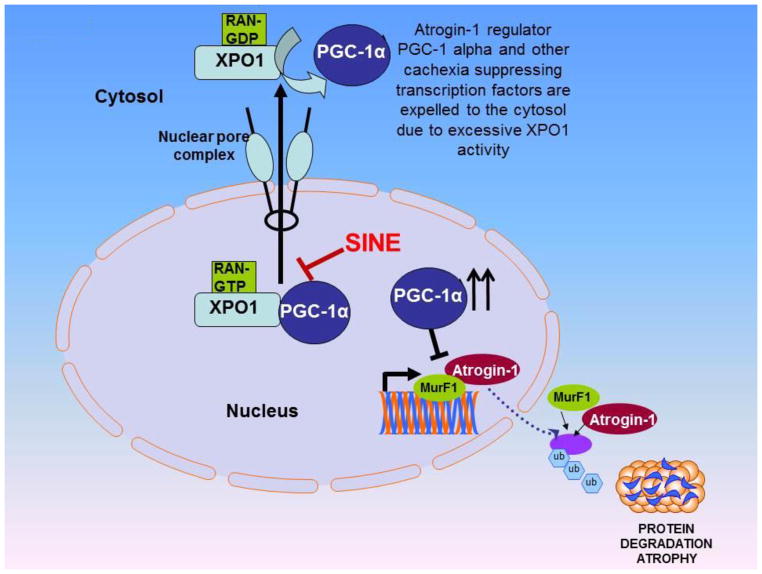
Figure 2. Targeting muscle wasting at the nuclear pore
In cancer, excessive activity of CRM1 results in the functional inactivation of important tumor suppressor proteins (TSPs) and cachexia preventing transcription factors (TFs). Inhibition of nuclear exporter protein Exportin1 (XPO1) by specific inhibitor of nuclear export (SINE) can induce nuclear accumulation of PGC-1 alpha and additional transcription factors that suppress cachexia causing atrogenes.
Figure 3
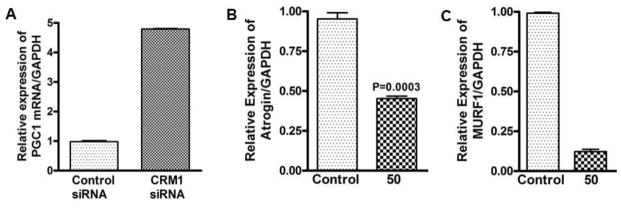
Figure 3. Role of nuclear exporter in muscle wasting (proof of concept)
[A] siRNA silencing of nuclear exporter caused re-expression of PGC1-α in human mammary epithelial cells. Snail transduced Human mammary epithelial cells (HMLE-Snail) grown in duplicate were exposed to either control siRNA or CRM1 siRNA for 72 hrs (for two passages). At the end of the treatment period RNA from each treatment condition was isolated and subjected to RT-PCR analysis. [B] MiaPaCa-2 pancreatic cancer cell lines grown in duplicate in six well plates (50,000 cells per well) were exposed to 50 nM Selinexor (a specific inhibitor of nuclear export for 24 hrs) and RNA was quantified using RT-PCR for [B] Atrogin-1 and [C] MurF1 (p<0.001) normalized GAPDH.

References

    1. Fearon KC, Voss AC, Hustead DS. Definition of cancer cachexia: effect of weight loss, reduced food intake, and systemic inflammation on functional status and prognosis. Am J Clin Nutr. 2006;83:1345–50. - PubMed
    1. Kast RE, Foley KF. Cancer chemotherapy and cachexia: mirtazapine and olanzapine are 5-HT3 antagonists with good antinausea effects. Eur J Cancer Care (Engl ) 2007;16:351–4. - PubMed
    1. Ottery FD. Supportive nutrition to prevent cachexia and improve quality of life. Semin Oncol. 1995;22:98–111. - PubMed
    1. Mantovani G, Madeddu C. Cyclooxygenase-2 inhibitors and antioxidants in the treatment of cachexia. Curr Opin Support Palliat Care. 2008;2:275–81. - PubMed
    1. Hopkinson JB. Psychosocial impact of cancer cachexia. J Cachexia Sarcopenia Muscle. 2014;5:89–94. - PMC - PubMed

Publication types

MeSH terms

LinkOut - more resources