. 2016 Jan 25;10(1):e0004402.
doi: 10.1371/journal.pntd.0004402. eCollection 2016 Jan.

Whole-Genome Sequencing Analysis from the Chikungunya Virus Caribbean Outbreak Reveals Novel Evolutionary Genomic Elements

Affiliations

Whole-Genome Sequencing Analysis from the Chikungunya Virus Caribbean Outbreak Reveals Novel Evolutionary Genomic Elements

Kenneth A Stapleford et al. PLoS Negl Trop Dis. .

Abstract

Background: Chikungunya virus (CHIKV), an alphavirus and member of the Togaviridae family, is capable of causing severe febrile disease in humans. In December of 2013 the Asian Lineage of CHIKV spread from the Old World to the Americas, spreading rapidly throughout the New World. Given this new emergence in naïve populations we studied the viral genetic diversity present in infected individuals to understand how CHIKV may have evolved during this continuing outbreak.

Methodology/principle findings: We used deep-sequencing technologies coupled with well-established bioinformatics pipelines to characterize the minority variants and diversity present in CHIKV infected individuals from Guadeloupe and Martinique, two islands in the center of the epidemic. We observed changes in the consensus sequence as well as a diverse range of minority variants present at various levels in the population. Furthermore, we found that overall diversity was dramatically reduced after single passages in cell lines. Finally, we constructed an infectious clone from this outbreak and identified a novel 3' untranslated region (UTR) structure, not previously found in nature, that led to increased replication in insect cells.

Conclusions/significance: Here we preformed an intrahost quasispecies analysis of the new CHIKV outbreak in the Caribbean. We identified novel variants present in infected individuals, as well as a new 3'UTR structure, suggesting that CHIKV has rapidly evolved in a short period of time once it entered this naïve population. These studies highlight the need to continue viral diversity surveillance over time as this epidemic evolves in order to understand the evolutionary potential of CHIKV.


Conflict of interest statement

The authors have declared that no competing interests exist.

Figures
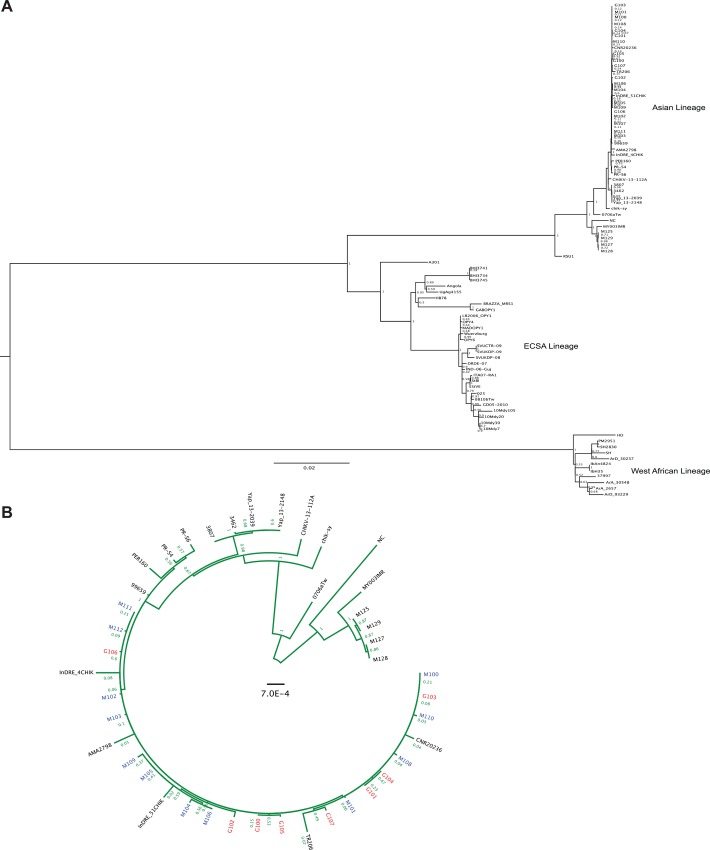
Fig 1
Fig 1. Phylogenetic analysis of chikungunya virus human samples from Martinique and Guadeloupe.
A. Maximum likelihood phylogenetic tree of chikungunya virus strains using complete genome sequences. Scale bar represents genetic distance. Numbers at the branches show aLRT values (1 = 1000). Genotypes are indicated on the right. B. Maximum likelihood phylogenetic tree based on the Caribbean outbreak cluster with additional Asian strains of chikungunya virus using full genome sequences. Scale bar denotes genetic distance. Numbers at the branches show aLRT values (1 = 1000). Strains from Martinique are in blue and those from Guadeloupe are in red.
Fig 2
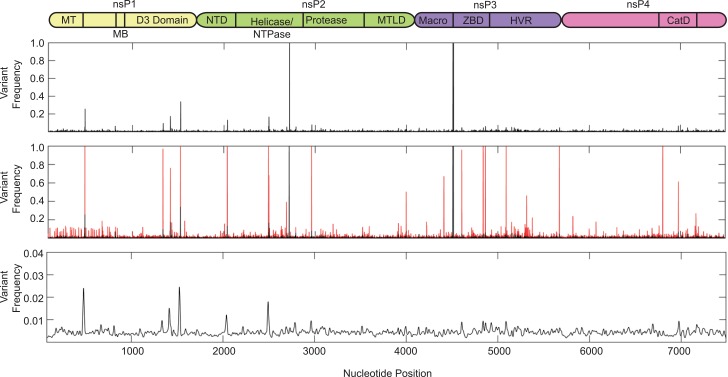
Fig 2. Minority variant analysis of chikungunya virus nonstructural proteins.
Schematic representation of the chikungunya virus nonstructural proteins is represented above the graph. Nonstructural domains represent the following: nsP1, nonstructural protein 1, genome nucleotides 77–1681, MT = methyltransferase domain (amino acids 1–170), MB = membrane binding domain (amino acids 171–300); nsP2, nonstructural protein 2, genome nucleotides 1682–4072, NTD = N-terminal domain, MTLD = methyltransferase like domain; nsp3, nonstructural protein 3, genome nucleotide 4073–5653, ZBD = zinc binding domain, HVR = hypervariable region (amino acids 328–530); nsP4, nonstructural protein 4, genome nucleotides. 5654–7489, CatD = catalytic domain (amino acids 365–479). Variants expressing a frequency of greater than 0.001 were used for analysis. Top graph represent the mean variant frequency over all samples. Middle graph represents the mean frequency (black) and variant range (red) over all samples. Bottom graph represents mean variant frequency smoothed with a Gaussian kernel.
Fig 3
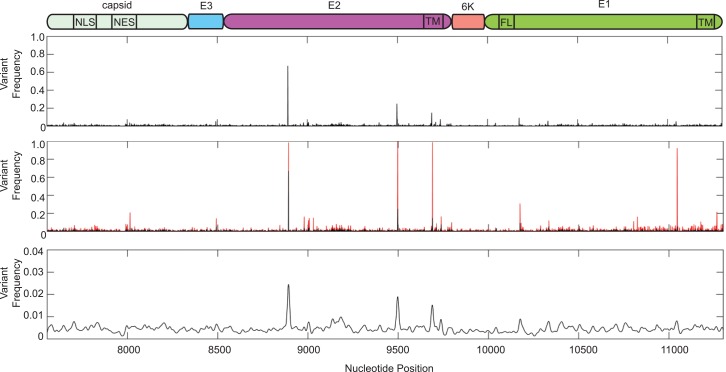
Fig 3. Minority variant analysis of chikungunya virus structural proteins.
Schematic representation of the chikungunya virus structural proteins is represented above. Capsid, genome nucleotides 7555–8337, NLS = nuclear localization signal (amino acids 60–99), NES = nuclear export signal (amino acids 143–155); E3, genome nucleotides 8338–8529; E2, genome nucleotides 8530–9801, TM = transmembrane domain (amino acids 363–391); 6k, genome nucleotides 9802–9981; E1, genome nucleotides 9982–11301, FL = fusion loop (amino acids 83–101), TM = transmembrane domain (amino acids 413–436). Variants expressing a frequency of greater then 0.001 were used for analysis. Top graph represent the mean frequency over all samples. Middle graph represents the mean frequency (black) and variant range (red) over all samples. Bottom graph represents mean variant frequency smoothed with a Gaussian kernel.
Fig 4
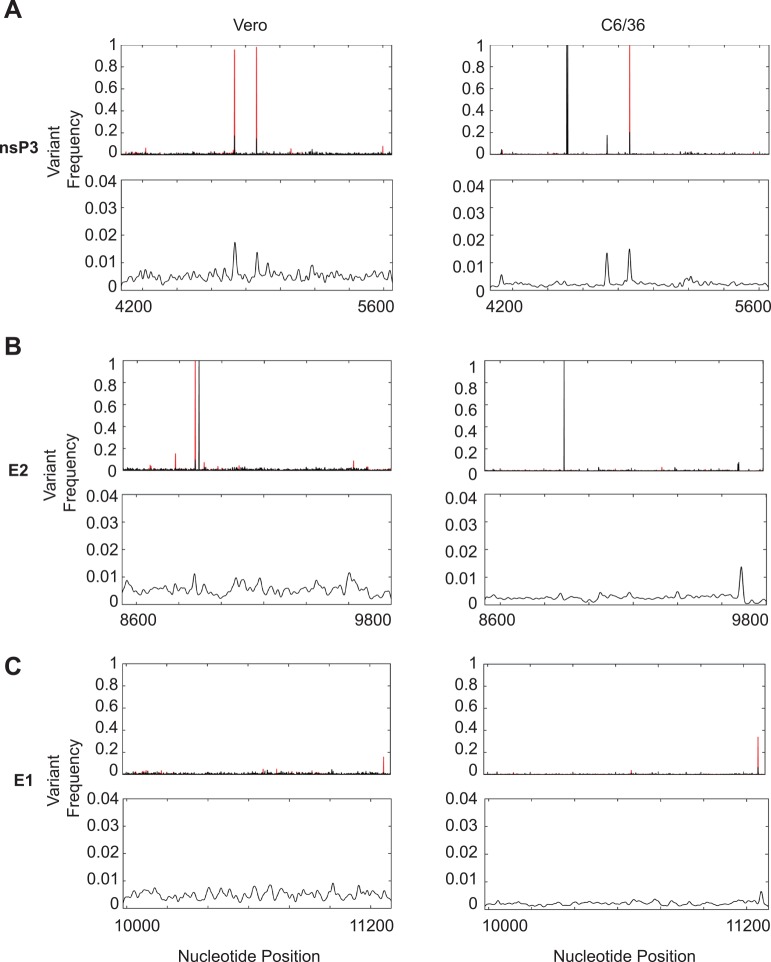
Fig 4. Comparison of minority variants present in either mammalian or insect tissue culture passaged viral stocks.
A. Frequency of variants present in nsp3 (nucleotides 4073–5653). B. Frequency of variants present in E2 (nucleotides 8530–9801). C. Frequency of variants present in E1 (nucleotides 9982–11301). Top graphs represent the mean variant frequency (black) and variant frequency range (red) over each sample. Bottom graphs represent mean low-level variant frequency (0.001–0.04) smoothed with a Gaussian kernel.
Fig 5
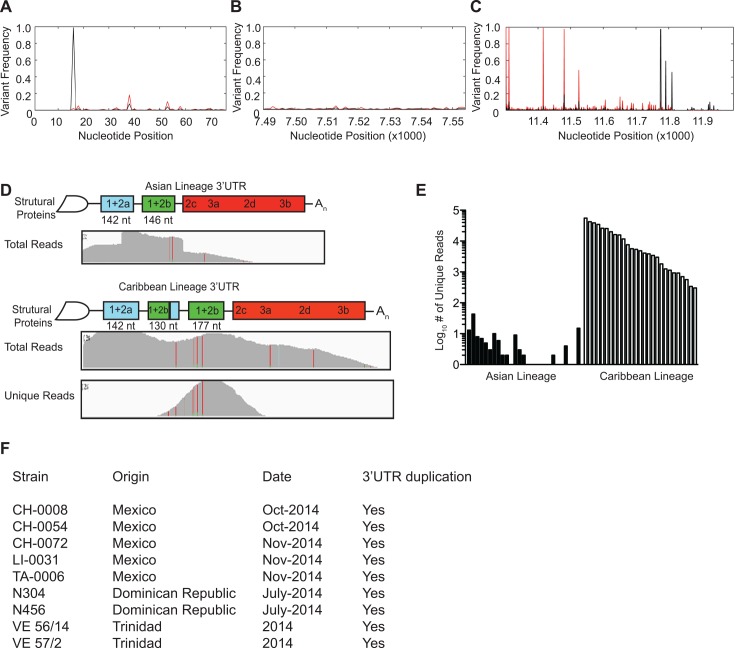
Fig 5. Analysis of minority variants in noncoding genome regions and identification of a novel duplication in the 3’UTR.
A-C. Minority variants present in the 5’UTR, genome nucleotides 1–76 (A), subgenomic promoter, genome nucleotides 7490–7554 (B), and 3’UTR, genome sequence 11302–11944 (C). Graphs represent the mean variant frequency (black) and variant range (red) at each nucleotide. D. Schematic and alignment of the published Asian strain and novel Caribbean strain containing a 177 nucleotide duplication of the 3’ end of 1+2a and complete 1+2b in the 3’UTR. “Total reads” show the read coverage of all reads aligning to the two lineage references. E. Quantification of the total “unique reads”. Unique reads show the read coverage of all reads where the alignment to the Caribbean reference is superior to the alignment of the Asian Lineage. F. The presence of the 3'UTR duplication was confirmed in clinical samples obtained from Mexico [18], Dominican Republic and Trinidad.
Fig 6
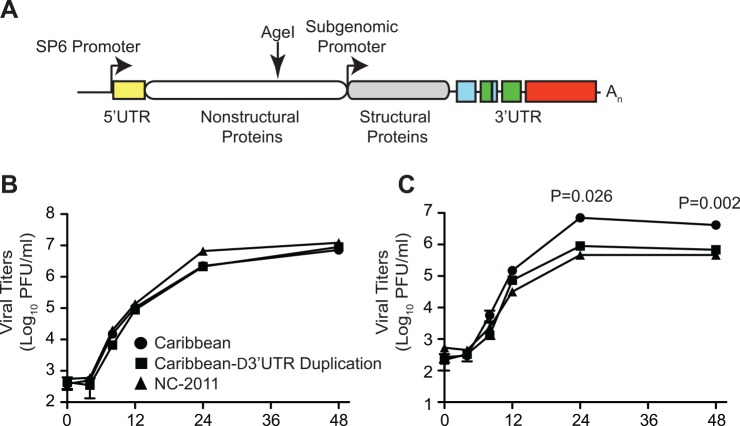
Fig 6. Design and growth of the Caribbean strain infectious clone.
A. Schematic of the infectious clone, including a new synonymous AgeI restriction site and duplication in the 3’UTR. B and C. Viral growth curves of the Caribbean infectious clone (Caribbean–circle), a Caribbean clone lacking the 3’UTR duplication (Caribbean-∆3’UTR Duplication—square), or an Asian lineage strain of chikungunya virus (NC-2011—triangle) in either mammalian (Vero) or insect (C6/36) cells respectively. Mean values and SEM, n = 3, two-tailed unpaired t-test.

References

    1. Lanciotti RS, Valadere AM (2014) Transcontinental movement of Asian genotype chikungunya virus. Emerging infectious diseases 20: 1400–1402. 10.3201/eid2008.140268 - DOI - PMC - PubMed
    1. Fredericks AC, Fernandez-Sesma A (2014) The burden of dengue and chikungunya worldwide: implications for the southern United States and California. Annals of global health 80: 466–475. 10.1016/j.aogh.2015.02.006 - DOI - PMC - PubMed
    1. Van Bortel W, Dorleans F, Rosine J, Blateau A, Rousset D, et al. (2014) Chikungunya outbreak in the Caribbean region, December 2013 to March 2014, and the significance for Europe. Euro surveillance: bulletin Europeen sur les maladies transmissibles = European communicable disease bulletin 19. - PubMed
    1. Weaver SC (2014) Arrival of chikungunya virus in the new world: prospects for spread and impact on public health. PLoS neglected tropical diseases 8: e2921 10.1371/journal.pntd.0002921 - DOI - PMC - PubMed
    1. Vega-Rua A, Lourenco-de-Oliveira R, Mousson L, Vazeille M, Fuchs S, et al. (2015) Chikungunya virus transmission potential by local Aedes mosquitoes in the Americas and Europe. PLoS neglected tropical diseases 9: e0003780 10.1371/journal.pntd.0003780 - DOI - PMC - PubMed

Publication types