


Systematic review to understand and improve care after stillbirth: a review of parents' and healthcare professionals' experiences
- PMID: 26810220
- PMCID: PMC4727309
- DOI: 10.1186/s12884-016-0806-2
Systematic review to understand and improve care after stillbirth: a review of parents' and healthcare professionals' experiences
Abstract
Background: 2.7 million babies were stillborn in 2015 worldwide; behind these statistics lie the experiences of bereaved parents. The first Lancet series on stillbirth in 2011 described stillbirth as one of the "most shamefully neglected" areas of public health, recommended improving interaction between families and frontline caregivers and made a plea for increased investment in relevant research.
Methods: A systematic review of qualitative, quantitative and mixed-method studies researching parents and healthcare professionals experiences of care after stillbirth in high-income westernised countries (Europe, North America, Australia and South Africa) was conducted. The review was designed to inform research, training and improve care for parents who experience stillbirth.
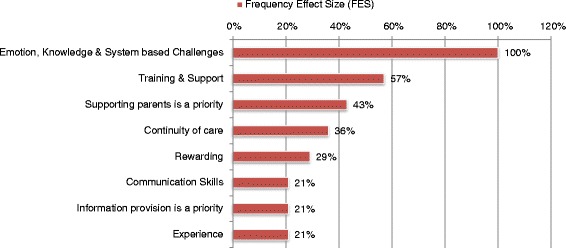
Results: Four thousand four hundred eighty eight abstracts were identified; 52 studies were eligible for inclusion. Synthesis and quantitative aggregation (meta-summary) was used to extract findings and calculate frequency effect sizes (FES%) for each theme (shown in italics), a measure of the prevalence of that finding in the included studies. Researchers' areas of interest may influence reporting of findings in the literature and result in higher FES sizes, such as; support memory making (53%) and fathers have different needs (18%). Other parental findings were more unexpected; Parents want increased public awareness (20%) and for stillbirth care to be prioritised (5%). Parental findings highlighted lessons for staff; prepare parents for vaginal birth (23%), discuss concerns (13%), give options & time (20%), privacy not abandonment (30%), tailored post-mortem discussions (20%) and post-natal information (30%). Parental and staff findings were often related; behaviours and actions of staff have a memorable impact on parents (53%) whilst staff described emotional, knowledge and system-based barriers to providing effective care (100%). Parents reported distress being caused by midwives hiding behind 'doing' and ritualising guidelines whilst staff described distancing themselves from parents and focusing on tasks as coping strategies. Parents and staff both identified the need for improved training (parents 25% & staff 57%); continuity of care (parents 15% & staff 36%); supportive systems & structures (parents 50%); and clear care pathways (parents 5%).
Conclusions: Parents' and healthcare workers' experiences of stillbirth can inform training, improve the provision of care and highlight areas for future research.
Figures


References
-
- Lawn JE, Blencowe H, Waiswa P, Amouzou A, Mathers C, Hogan D, et al. Ending preventable stillbirths 2, Stillbirths: rates, risk factors and accelerations towards 2030. Lancet. 2016 - PubMed
-
- MBRACE. Perinatal mortality surveillance report 2013. https://www.npeu.ox.ac.uk/mbrrace-uk/reports. Accessed 02 July 2015.
Publication types
MeSH terms
LinkOut - more resources
Full Text Sources
Other Literature Sources
Medical
Miscellaneous
