


What Does Self-rated Health Mean? Changes and Variations in the Association of Obesity with Objective and Subjective Components Of Self-rated Health
- PMID: 26811364
- PMCID: PMC5191852
- DOI: 10.1177/0022146515626218
What Does Self-rated Health Mean? Changes and Variations in the Association of Obesity with Objective and Subjective Components Of Self-rated Health
Abstract
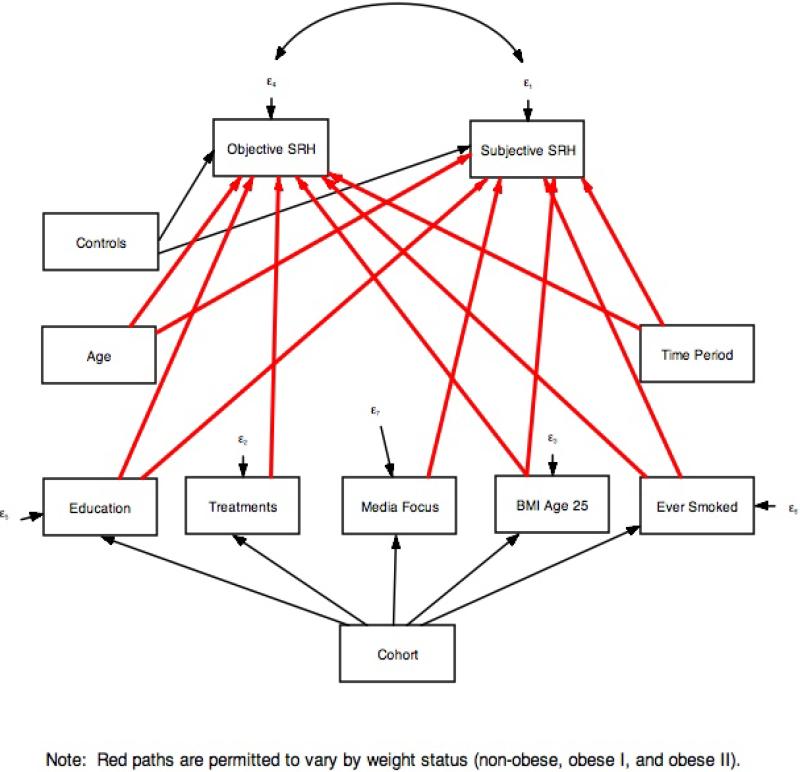
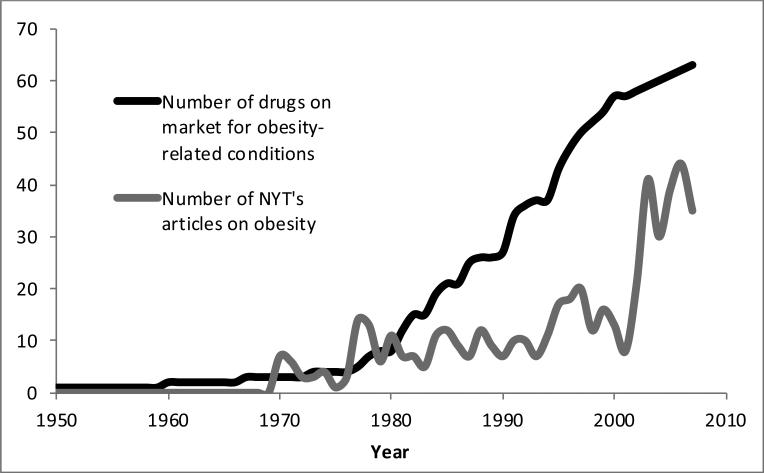
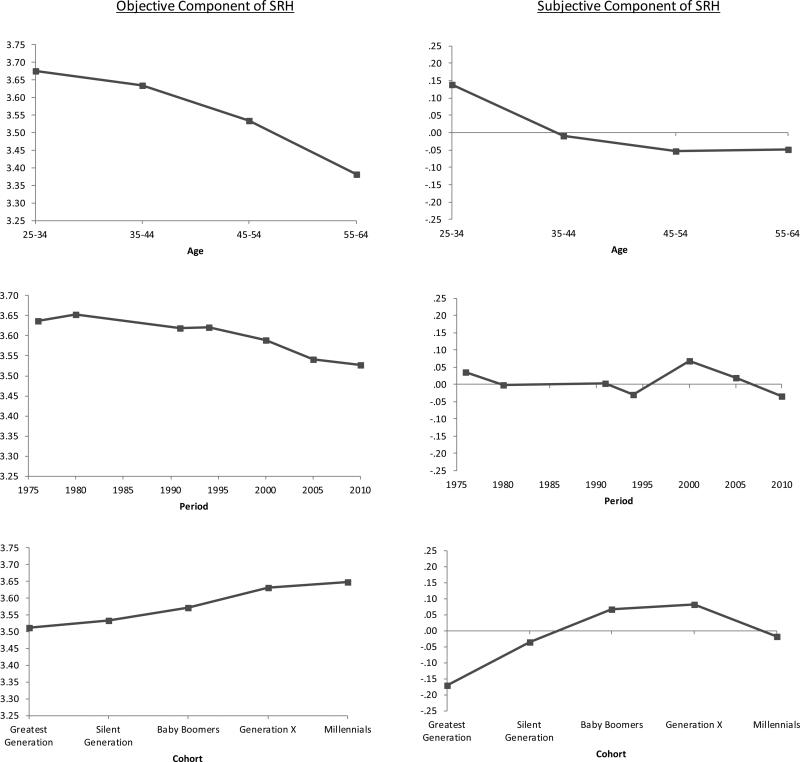
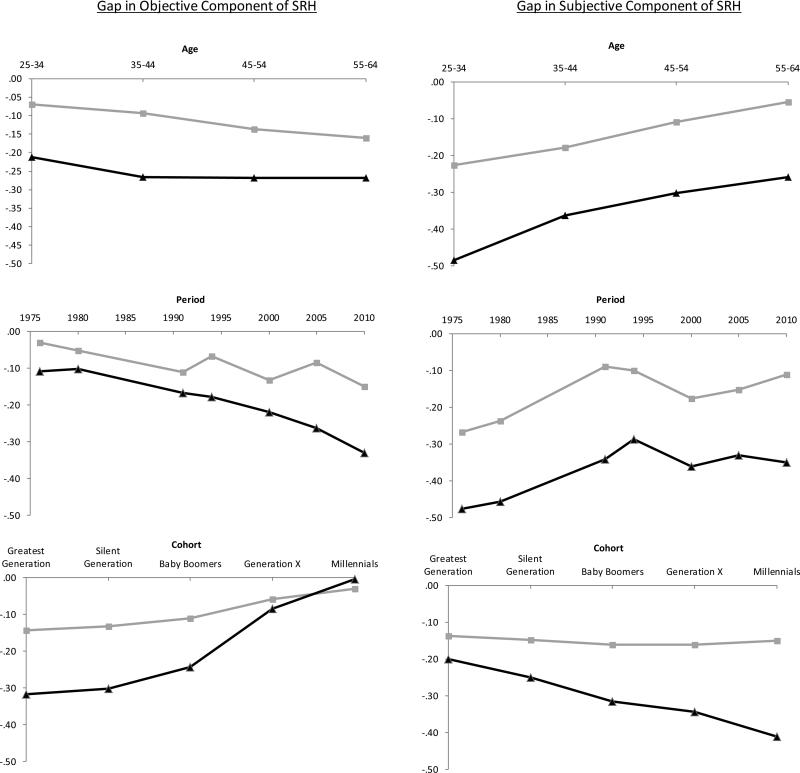
There are concerns about the meaning of self-rated health (SRH) and the factors individuals consider. To illustrate how SRH is contextualized, we examine how the obesity-SRH association varies across age, periods, and cohorts. We decompose SRH into subjective and objective components and use a mechanism-based age-period-cohort model approach with four decades (1970s to 2000s) and five birth cohorts of National Health and Nutrition Examination Survey data (N = 26,184). Obese adults rate their health more negatively than non-obese when using overall SRH with little variation by age, period, or cohort. However, when we decomposed SRH into objective and subjective components, the obesity gap widened with increasing age in objective SRH but narrowed in subjective SRH. Additionally, the gap narrowed for more recently born cohorts for objective SRH but widened for subjective SRH. The results provide indirect evidence that the relationship between obesity and SRH is socially patterned according to exposure to information about obesity and the availability of resources to manage it.
Keywords: NHANES; adults; cohorts; obesity; periods; self-rated health.
© American Sociological Association 2016.
Figures
References
-
- Abdullah Asnawi, Wolfe Rory, Stoelwinder Johannes U., De Courten Maximilian, Stevenson Christopher, Walls Helen L, Peeters Anna. The Number of Years Lived with Obesity and the Risk of All-Cause and Cause-Specific Mortality. International Journal of Epidemiology. 2011;40(4):985–96. - PubMed
-
- Allman-Farinelli MA, Chey T, Bauman AE, Gill T, James WPT. Age, Period and Birth Cohort Effects on Prevalence of Overweight and Obesity in Australian Adults from 1990 to 2000. European journal of clinical nutrition. 2007;62(7):898–907. - PubMed
-
- Alwin Duane F., McCammon Ryan J., Hofer Scott M. Studying Baby Boom Cohorts within a Demographic and Developmental Context: Conceptual and Methodological Issues. In: Whitbourne SKE, Willis SL, editors. The Baby Boomers Grow Up: Contemporary Perspectives on Midlife. Lawrence Erlbaum Associates Publishers; Mahwah, NJ: 2006.
-
- Au Nicole, Johnston David W. Self-Assessed Health: What Does It Mean and What Does It Hide? Social Science & Medicine. 2014;121:21–28. - PubMed
Publication types
MeSH terms
Grants and funding
LinkOut - more resources
Full Text Sources
Other Literature Sources
Medical
Miscellaneous
