


Evaluation of adjuvant carboplatin chemotherapy in the management of surgically excised anal sac apocrine gland adenocarcinoma in dogs
- PMID: 26811974
- PMCID: PMC6880235
- DOI: 10.1111/vco.12068
Evaluation of adjuvant carboplatin chemotherapy in the management of surgically excised anal sac apocrine gland adenocarcinoma in dogs
Abstract
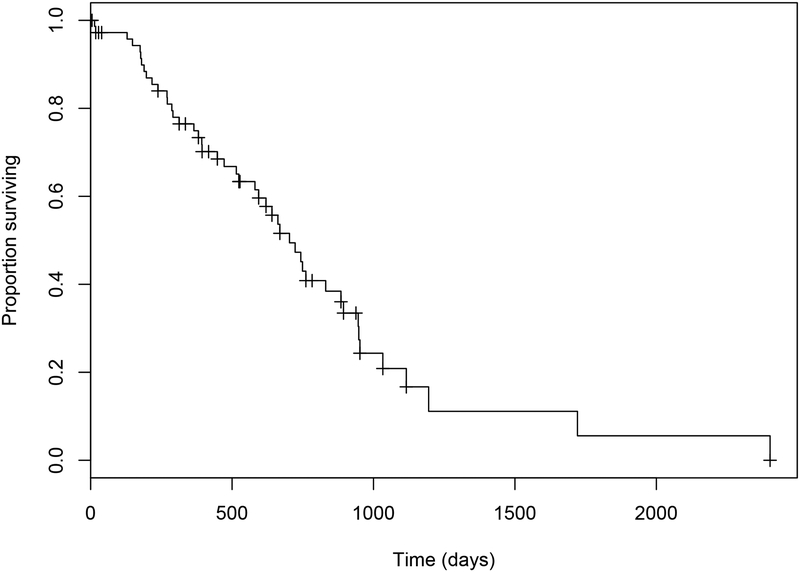
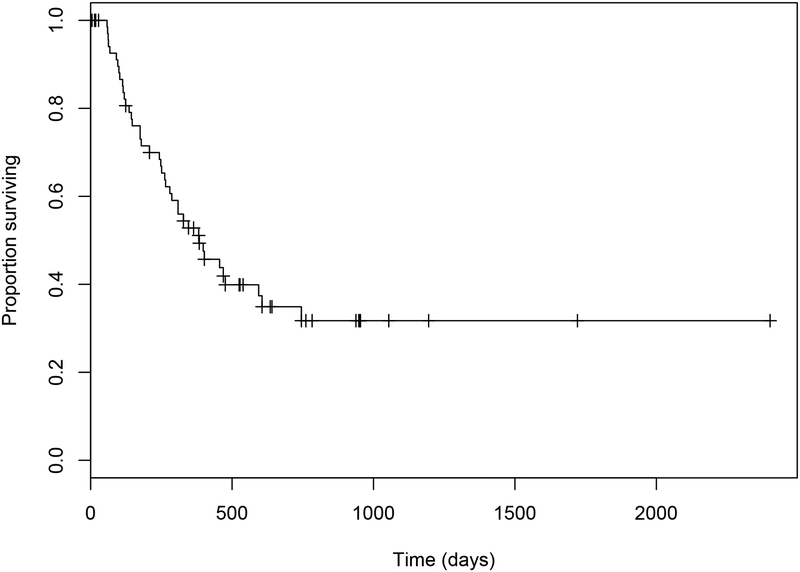
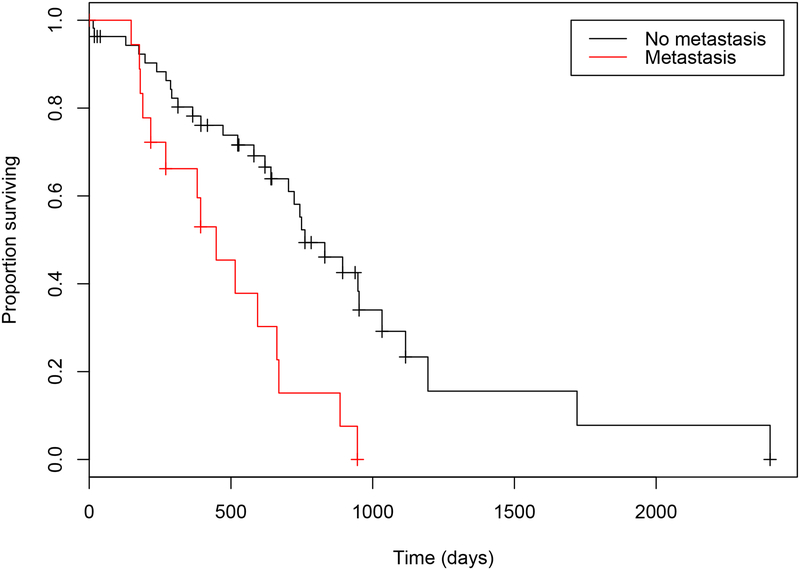
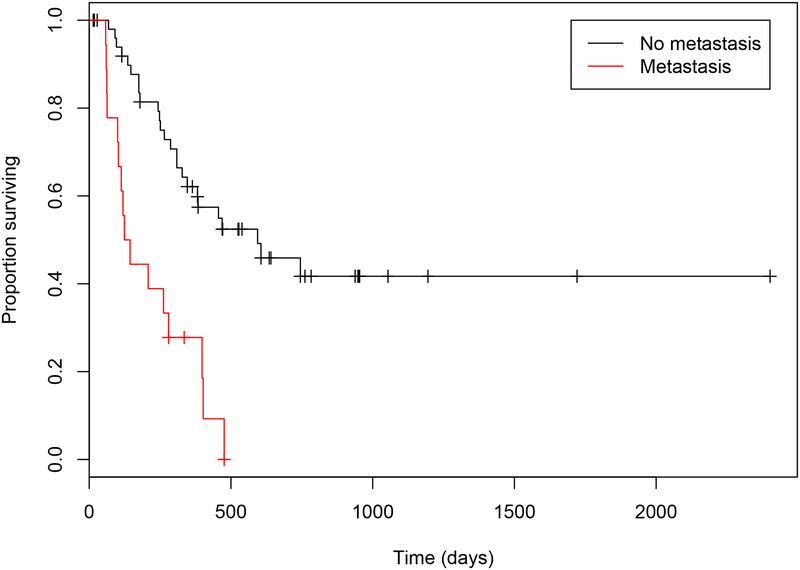
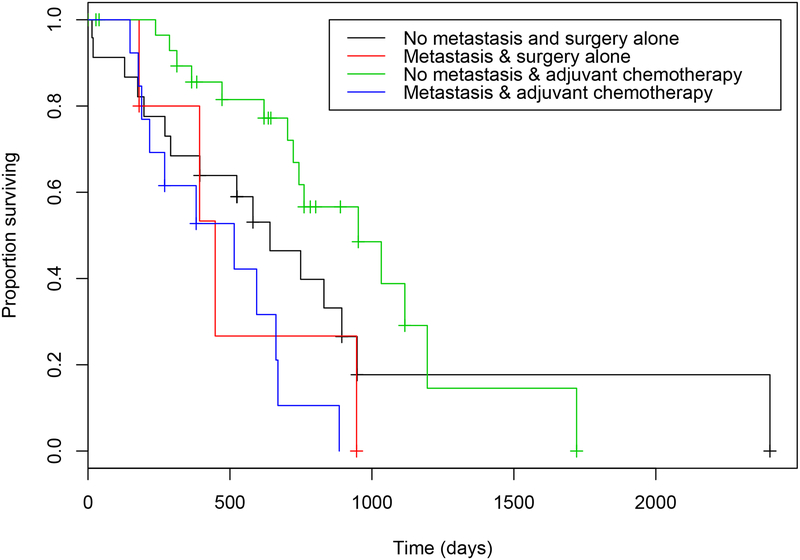
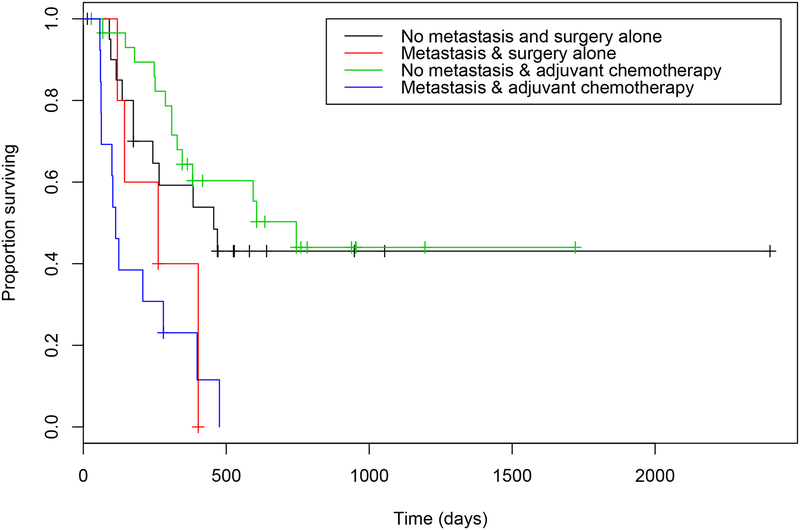
There is no widely accepted standard of care for canine anal sac apocrine gland adenocarcinoma (ASAGAC). Surgery alone is inadequate in many cases, but the benefit of adjuvant chemotherapy is not well established. The primary objective of this retrospective study was to evaluate the role of carboplatin chemotherapy in the post-operative management of ASAGAC. Seventy-four dogs with naturally occurring ASAGAC underwent surgery. Forty-four dogs received adjuvant carboplatin and 30 did not. Median overall survival (OS) was 703 days. Median time to progression (TTP) was 384 days. Only primary tumour size and lymph node metastasis at diagnosis significantly impacted the outcome. Differences in OS and TTP, between the dogs that received adjuvant carboplatin and those that did not, failed to reach statistical significance. Treatment of progressive disease, whilst not limited to chemotherapy, significantly prolonged the survival. This study shows that adjuvant carboplatin chemotherapy is well tolerated and may have a role in the management of dogs with ASAGAC.
Keywords: canine; carboplatin; outcome; surgery.
© 2013 John Wiley & Sons Ltd.
Conflict of interest statement
Conflicts of interest
The authors declare no conflicts of interest.
Figures
References
-
- Berrocal A, Vos JH, van den Ingh TS, Molenbeek RF and van Sluijs FJ. Canine perineal tumors, Journal of Veterinary Medicine Series A 1989; 36: 739–749. - PubMed
-
- Goldschmidt MH and Hendrick MJ. Anal sac gland carcinoma In: Meuten DJ, ed. Tumors in Domestic Animals, 4th ed. Ames, Iowa: Iowa State Press; 2002: 74–76.
-
- Goldschmidt MH and Zoltowski C. Anal sac adenocarcinoma in the dog: 14 cases. The Journal of Small Animal Practice 1981; 22: 119–128. - PubMed
-
- Ross JT, Scavelli TD, Matthieson DT and Patnaik AK. Adenocarcinoma of the apocrine glands of the anal sac in dogs: a review of 32 cases. Journal of the American Animal Hospital Association 1991; 27: 349–355.
-
- Bennett PF, DeNicola DB, Bonney P, Glickman NW and Knapp DW. Canine anal sac adenocarcinomas: clinical presentation and response to therapy. Journal of Veterinary Internal Medicine 2002; 16: 100–104. - PubMed
Publication types
MeSH terms
Substances
Grants and funding
LinkOut - more resources
Full Text Sources
Other Literature Sources
