Prognostic Indicators for Ebola Patient Survival
- PMID: 26812579
- PMCID: PMC4734506
- DOI: 10.3201/eid2202.151250
Prognostic Indicators for Ebola Patient Survival
Abstract
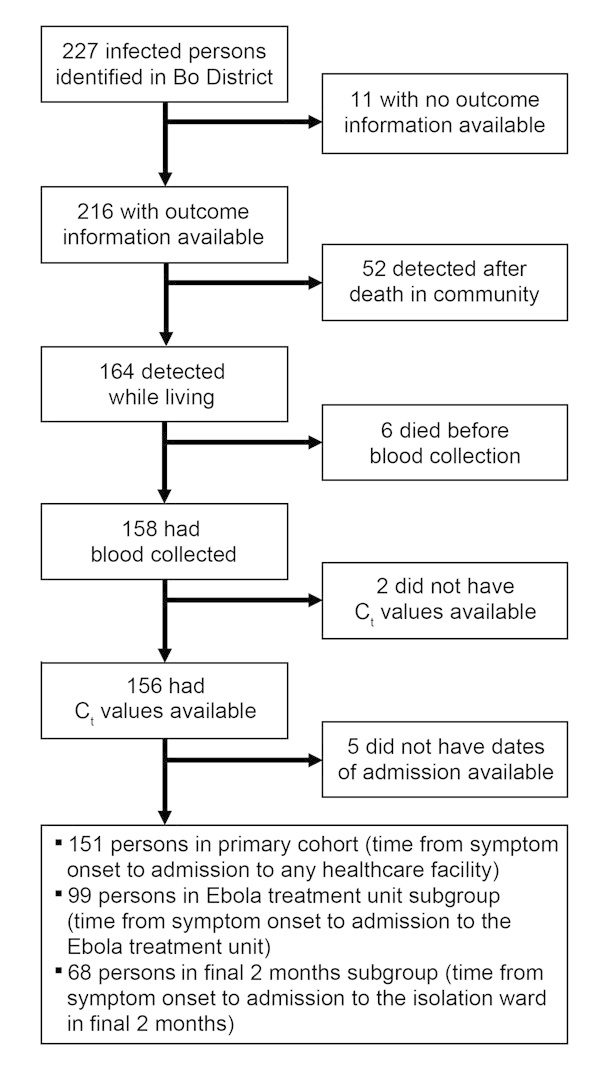
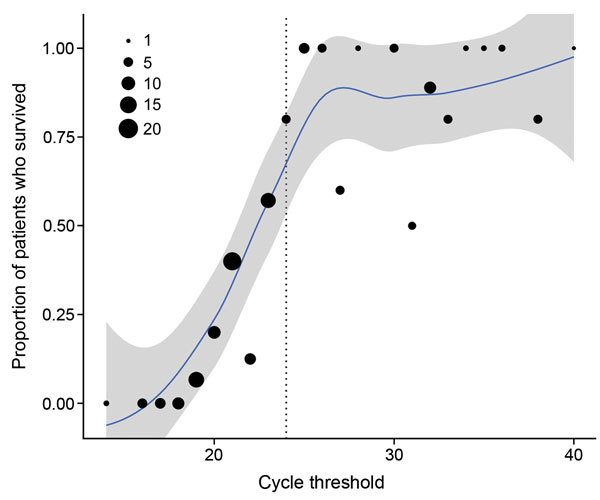
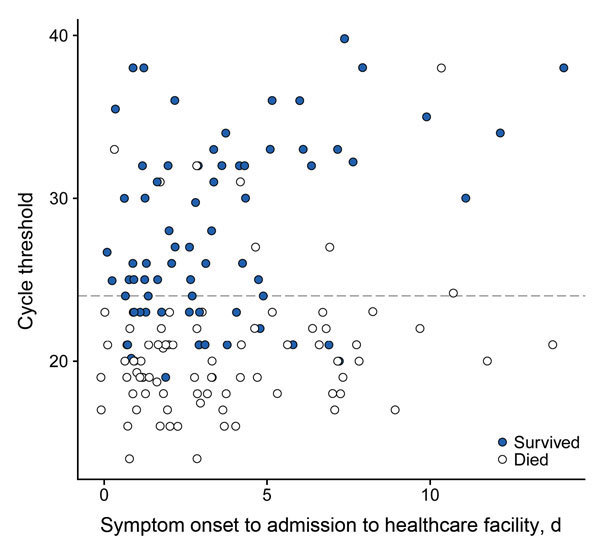
To determine whether 2 readily available indicators predicted survival among patients with Ebola virus disease in Sierra Leone, we evaluated information for 216 of the 227 patients in Bo District during a 4-month period. The indicators were time from symptom onset to healthcare facility admission and quantitative real-time reverse transcription PCR cycle threshold (Ct), a surrogate for viral load, in first Ebola virus-positive blood sample tested. Of these patients, 151 were alive when detected and had reported healthcare facility admission dates and Ct values available. Time from symptom onset to healthcare facility admission was not associated with survival, but viral load in the first Ebola virus-positive blood sample was inversely associated with survival: 52 (87%) of 60 patients with a Ct of >24 survived and 20 (22%) of 91 with a Ct of <24 survived. Ct values may be useful for clinicians making treatment decisions or managing patient or family expectations.
Keywords: Ebola; Ebola virus; Ebola virus disease; Sierra Leone; hemorrhagic fever; prognosis; survival; viruses; zoonoses.
Figures
References
-
- World Health Organization. Ebola virus disease [cited 2015 Nov 19]. http://www.who.int/mediacentre/factsheets/fs103/en/
-
- Centers for Disease Control and Prevention. Ebola (Ebola virus disease): treatment [cited 2015 Nov 19]. http://www.cdc.gov/vhf/ebola/treatment/
MeSH terms
LinkOut - more resources
Full Text Sources
Other Literature Sources
Medical