


A longitudinal study of anxiety and cognitive decline in dementia with Lewy bodies and Alzheimer's disease
- PMID: 26812908
- PMCID: PMC4729131
- DOI: 10.1186/s13195-016-0171-4
A longitudinal study of anxiety and cognitive decline in dementia with Lewy bodies and Alzheimer's disease
Abstract
Background: Anxiety in dementia is common but not well studied. We studied the associations of anxiety longitudinally in Alzheimer's disease (AD) and dementia with Lewy bodies (DLB).
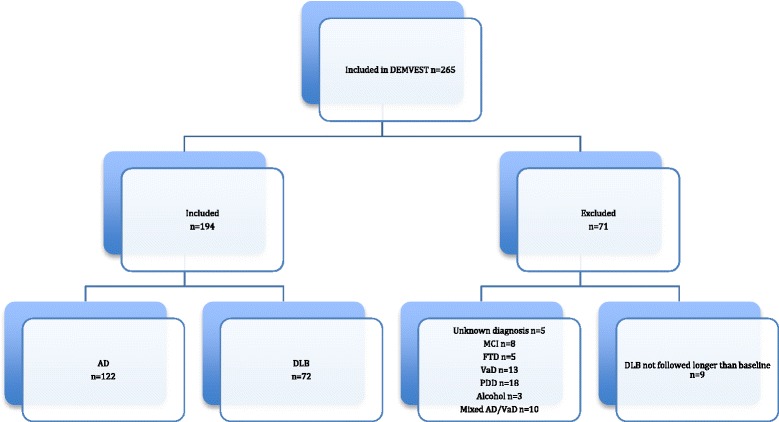
Methods: In total, 194 patients with a first-time diagnosis of dementia were included (n = 122 patients with AD, n = 72 patients with DLB). Caregivers rated the patients' anxiety using the Neuropsychiatric Inventory, and self-reported anxiety was assessed with the anxiety and tension items on the Montgomery-Åsberg Depression Rating Scale. The Mini Mental State Examination was used to assess cognitive outcome, and the Clinical Dementia Rating (CDR)-Global and CDR boxes were used for dementia severity. Linear mixed effects models were used for longitudinal analysis.
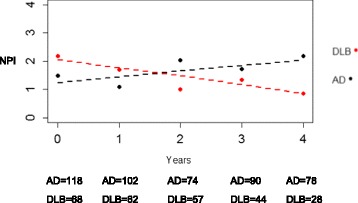
Results: Neither in the total sample nor in AD or DLB was caregiver-rated anxiety significantly associated with cognitive decline or dementia severity over a 4-year period. However, in patients with DLB, self-reported anxiety was associated with a slower cognitive decline than in patients with AD. No support was found for patients with DLB with clinical anxiety having a faster decline than patients with DLB without clinical anxiety. Over the course of 4 years, the level of anxiety declined in DLB and increased in AD.
Conclusions: Anxiety does not seem to be an important factor for the rate of cognitive decline or dementia severity over time in patients with a first-time diagnosis of dementia. Further research into anxiety in dementia is needed.
Figures
References
-
- Mintzer JE, Brawman-Mintzer O, Mirski DF, Barkin K. Anxiety in the behavioral and psychological symptoms of dementia. Int Psychogeriatr. 1999;12 Suppl S1:139–42.
-
- Gibbons LE, Teri L, Logsdon R, McCurry SM, Kukull W, Bowen J, et al. Anxiety symptoms as predictors of nursing home placement in patients with Alzheimer’s disease. J Clin Geropsychol. 2002;8:335–42. doi: 10.1023/A:1019635525375. - DOI
MeSH terms
LinkOut - more resources
Full Text Sources
Other Literature Sources
Medical
