


A Microarray-Based Analysis Reveals that a Short Photoperiod Promotes Hair Growth in the Arbas Cashmere Goat
- PMID: 26814503
- PMCID: PMC4731399
- DOI: 10.1371/journal.pone.0147124
A Microarray-Based Analysis Reveals that a Short Photoperiod Promotes Hair Growth in the Arbas Cashmere Goat
Abstract
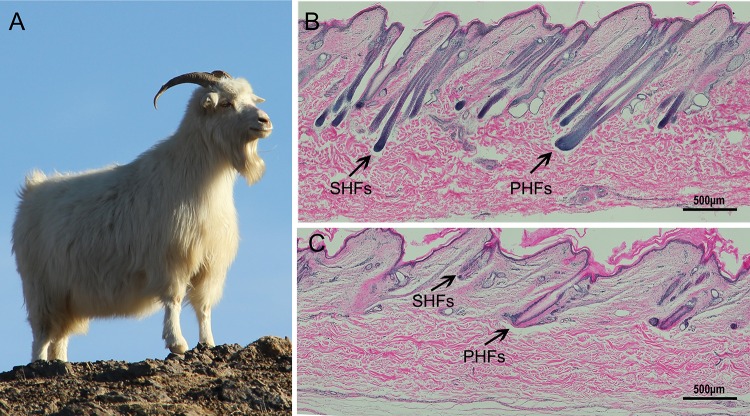
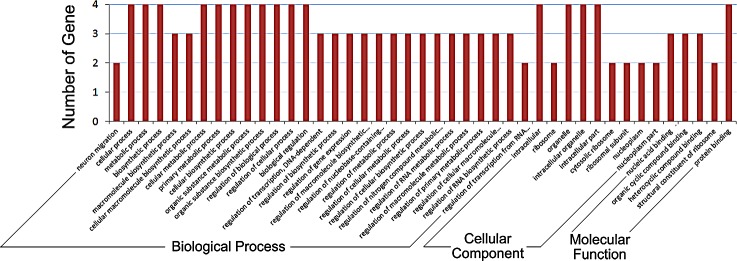
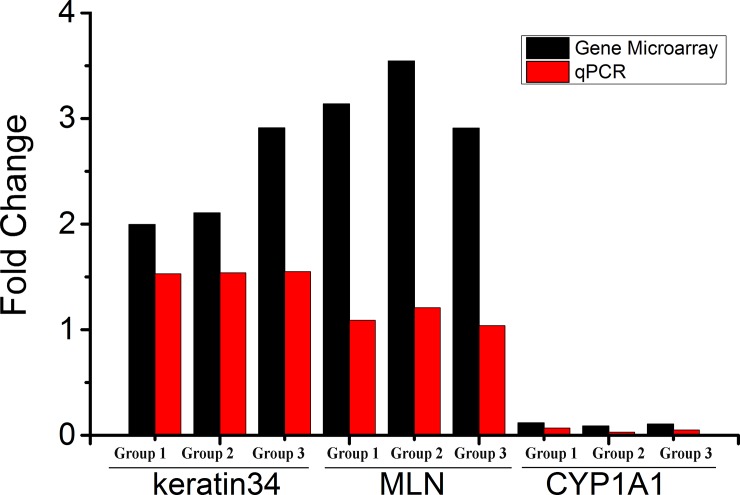
Many animals exhibit different behaviors in different seasons. The photoperiod can have effects on migration, breeding, fur growth, and other processes. The cyclic growth of the fur and feathers of some species of mammals and birds, respectively, is stimulated by the photoperiod as a result of hormone-dependent regulation of the nervous system. To further examine this phenomenon, we evaluated the Arbas Cashmere goat (Capra hircus), a species that is often used in this type of research. The goats were exposed to an experimentally controlled short photoperiod to study the regulation of cyclic cashmere growth. Exposure to a short photoperiod extended the anagen phase of the Cashmere goat hair follicle to increase cashmere production. Assessments of tissue sections indicated that the short photoperiod significantly induced cashmere growth. This conclusion was supported by a comparison of the differences in gene expression between the short photoperiod and natural conditions using gene chip technology. Using the gene chip data, we identified genes that showed altered expression under the short photoperiod compared to natural conditions, and these genes were found to be involved in the biological processes of hair follicle growth, structural composition of the hair follicle, and the morphogenesis of the surrounding skin appendages. Knowledge about differences in the expression of these genes as well as their functions and periodic regulation patterns increases our understanding of Cashmere goat hair follicle growth. This study also provides preliminary data that may be useful for the development of an artificial method to improve cashmere production by controlling the light cycle, which has practical significance for livestock breeding.
Conflict of interest statement
Figures

References
-
- Burns R, Bergen WV, Young S. Cashmere and the undercoat of domestic and wild animals. J Textile Inst Trans. 1962;53(2):T45–T68.
-
- Müller-Röver S, Handjiski B, van der Veen C, Eichmüller S, Foitzik K, McKay IA, et al. A comprehensive guide for the accurate classification of murine hair follicles in distinct hair cycle stages. J Invest Dermatol. 2001;117(1):3–15. - PubMed
-
- McGregor BA. Nutrition, management and other environmental influences on the quality and production of mohair and cashmere: A review with particular reference to mediterranean and annual temperate climatic zones. Small Rum Res. 1998;28(3):199–215. 10.1016/S0921-4488(97)00100-4. - DOI
Publication types
MeSH terms
Substances
LinkOut - more resources
Full Text Sources
Other Literature Sources
Molecular Biology Databases
