


A randomized factorial trial of disulfiram and contingency management to enhance cognitive behavioral therapy for cocaine dependence
- PMID: 26817621
- PMCID: PMC4767616
- DOI: 10.1016/j.drugalcdep.2015.12.036
A randomized factorial trial of disulfiram and contingency management to enhance cognitive behavioral therapy for cocaine dependence
Abstract
Background: This study evaluated the extent to which the addition of disulfiram and contingency management for adherence and abstinence (CM), alone and in combination, might enhance the effects of cognitive behavioral therapy (CBT) for cocaine use disorders.
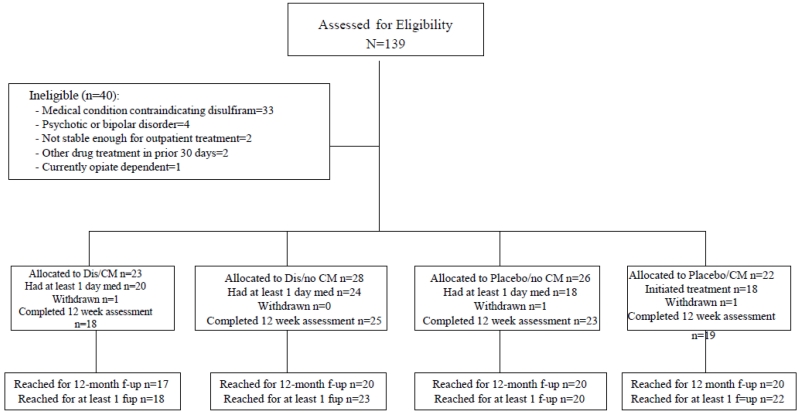
Methods: Factorial randomized double blind (for medication condition) clinical trial where CBT served as the platform and was delivered in weekly individual sessions in a community-based outpatient clinic. 99 outpatients who met DSM-IV criteria for current cocaine dependence were assigned to receive either disulfiram or placebo, and either CM or no CM. Cocaine and other substance use was assessed via a daily calendar with thrice weekly urine sample testing for 12 weeks with a one-year follow-up (80% interviewed at one year).
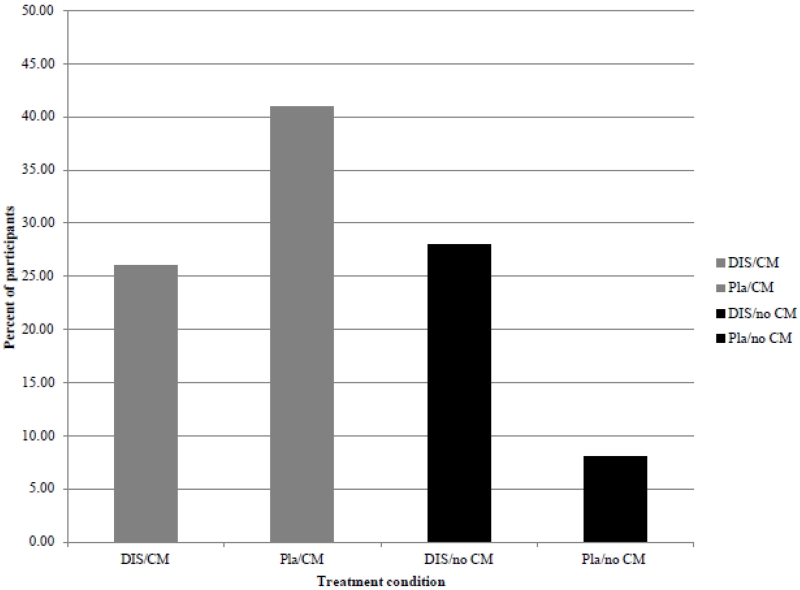
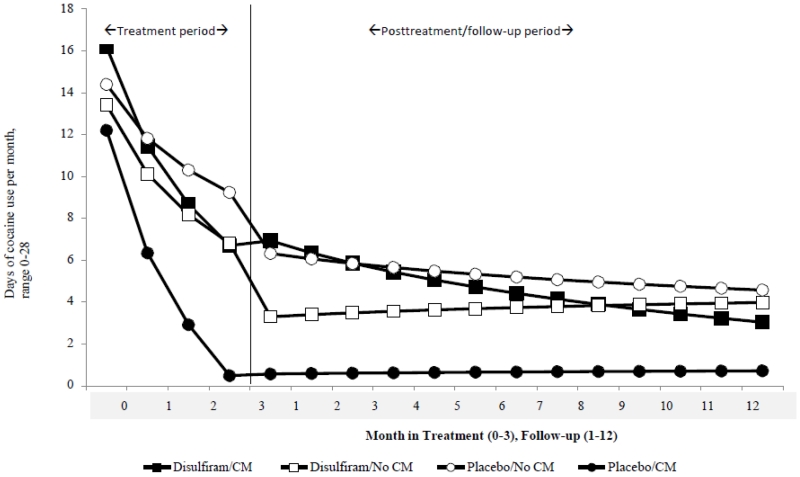
Results: The primary hypothesis that CM and disulfiram would produce the best cocaine outcomes was not confirmed, nor was there a main effect for disulfiram. For the primary outcome (percent days of abstinence, self report), there was a significant interaction, with the best cocaine outcomes were seen for the combination of CM and placebo, with the two groups assigned to disulfiram associated with intermediate outcomes, and poorest cocaine outcome among those assigned to placebo and no CM. The secondary outcome (urinalysis) indicated a significant effect favoring CM over no CM but the interaction effect was not significant. One year follow-up data indicated sustained treatment effects across conditions.
Conclusions: CM enhances outcomes for CBT treatment of cocaine dependence, but disulfiram provided no added benefit to the combination of CM and CBT.
Keywords: Cocaine dependence; Cognitive therapies; Contingency management; Disulfiram therapy; Randomized trial.
Copyright © 2016 Elsevier Ireland Ltd. All rights reserved.
Figures
References
-
- Babor TF, Steinberg K, Anton RF, Del Boca FK. Talk is cheap: measuring drinking outcomes in clinical trials. J. Stud. Alcohol. 2000;61:55–63. - PubMed
-
- Ball SA, Martino S, Nich C, Frankforter TL, Van Horn D, Crits-Christoph P, Woody GE, Obert JL, Farentinos C, Carroll KM, National Institute on Drug Abuse Clinical Trials, N. Site matters: multisite randomized trial of motivational enhancement therapy in community drug abuse clinics. J. Consult. Clin. Psychol. 2007;75:556–567. - PMC - PubMed
-
- Bryk AS, Raudenbush SW. Application of hierarchical linear models to assessing change. Psych. Bull. 1987;101:147–158.
-
- Budney AJ, Higgins ST. A Community Reinforcement Plus Vouchers Approach: Treating Cocaine Addiction. NIDA; Rockville, MD: 1998.
Publication types
MeSH terms
Substances
Grants and funding
LinkOut - more resources
Full Text Sources
Other Literature Sources
Medical
Miscellaneous
