


Editing of Cellular Self-RNAs by Adenosine Deaminase ADAR1 Suppresses Innate Immune Stress Responses
- PMID: 26817845
- PMCID: PMC4813567
- DOI: 10.1074/jbc.M115.709014
Editing of Cellular Self-RNAs by Adenosine Deaminase ADAR1 Suppresses Innate Immune Stress Responses
Abstract
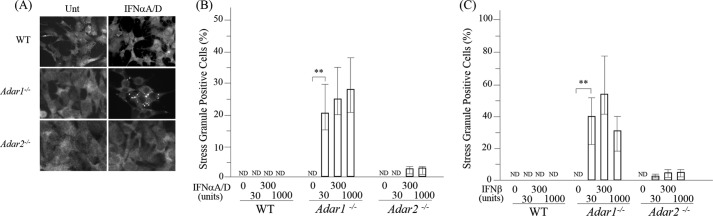
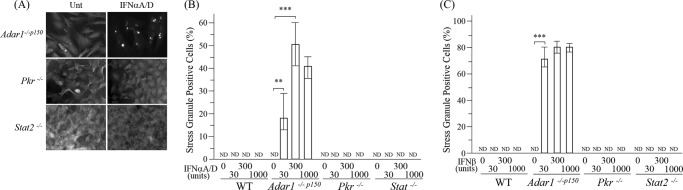
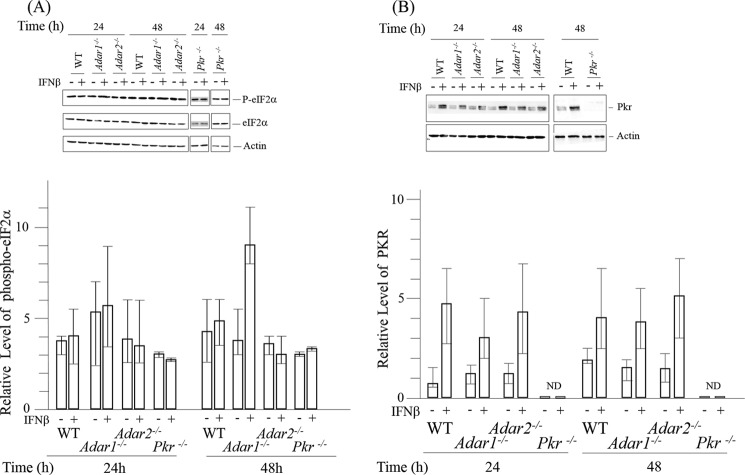
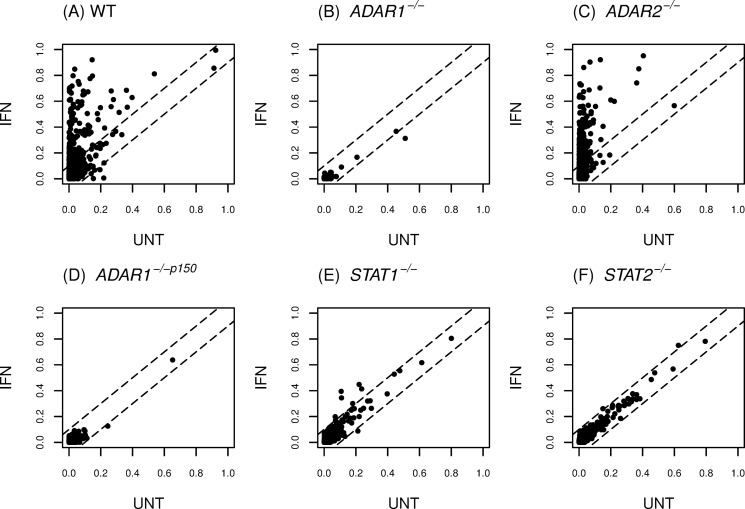
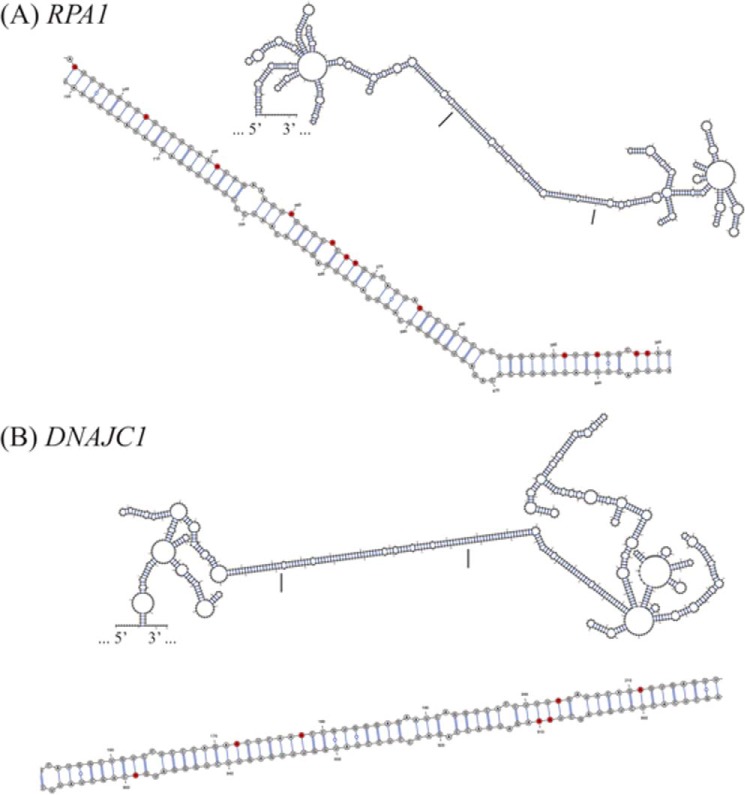
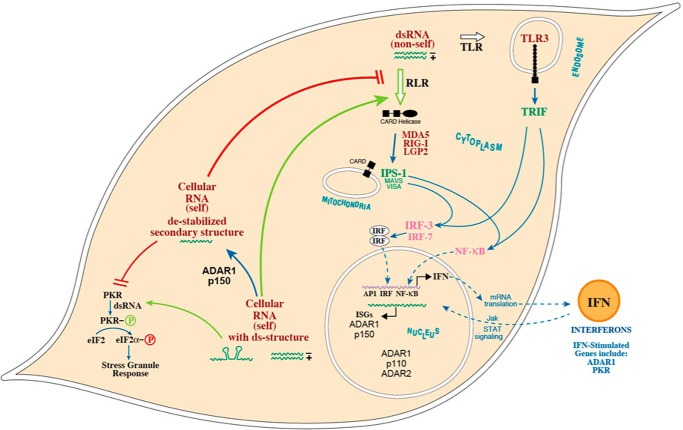
Adenosine deaminases acting on double-stranded RNA (ADARs) catalyze the deamination of adenosine (A) to produce inosine (I) in double-stranded (ds) RNA structures, a process known as A-to-I RNA editing. dsRNA is an important trigger of innate immune responses, including interferon (IFN) production and action. We examined the role of A-to-I RNA editing by two ADARs, ADAR1 and ADAR2, in the sensing of self-RNA in the absence of pathogen infection, leading to activation of IFN-induced, RNA-mediated responses in mouse embryo fibroblasts. IFN treatment of Adar1(-/-) cells lacking both the p110 constitutive and p150 IFN-inducible ADAR1 proteins induced formation of stress granules, whereas neither wild-type (WT) nor Adar2(-/-) cells displayed a comparable stress granule response following IFN treatment. Phosphorylation of protein synthesis initiation factor eIF2α at serine 51 was increased in IFN-treated Adar1(-/-) cells but not in either WT or Adar2(-/-) cells following IFN treatment. Analysis by deep sequencing of mouse exonic loci containing A-to-I-editing sites revealed that the majority of editing in mouse embryo fibroblasts was carried out by ADAR1. IFN treatment increased editing in both WT and Adar2(-/-) cells but not in either Adar1(-/-) or Adar1(-/-) (p150) cells or Stat1(-/-) or Stat2(-/-) cells. Hyper-edited sites found in predicted duplex structures showed strand bias of editing for some RNAs. These results implicate ADAR1 p150 as the major A-to-I editor in mouse embryo fibroblasts, acting as a feedback suppressor of innate immune responses otherwise triggered by self-RNAs possessing regions of double-stranded character.
Keywords: RNA editing; adenosine deaminase acting on RNA (ADAR); innate immunity; interferon; protein kinase RNA-activated (PKR); stress granule.
© 2016 by The American Society for Biochemistry and Molecular Biology, Inc.
Figures
References
-
- Holcik M., and Sonenberg N. (2005) Translational control in stress and apoptosis. Nat. Rev. Mol. Cell Biol. 6, 318–327 - PubMed
-
- Samuel C. E. (1993) The eIF-2α protein kinases, regulators of translation in eukaryotes from yeasts to humans. J. Biol. Chem. 268, 7603–7606 - PubMed
-
- Wek R. C., Jiang H. Y., and Anthony T. G. (2006) Coping with stress: eIF2 kinases and translational control. Biochem. Soc. Trans. 34, 7–11 - PubMed
-
- Anderson P., and Kedersha N. (2009) RNA granules: post-transcriptional and epigenetic modulators of gene expression. Nat. Rev. Mol. Cell Biol. 10, 430–436 - PubMed
Publication types
MeSH terms
Substances
Grants and funding
LinkOut - more resources
Full Text Sources
Other Literature Sources
Molecular Biology Databases
Research Materials
Miscellaneous
