


A National Study of the Impact of Initial Débridement Timing on Outcomes for Patients with Deep Sternal Wound Infection
- PMID: 26818332
- PMCID: PMC5096730
- DOI: 10.1097/01.prs.0000475785.14328.b2
A National Study of the Impact of Initial Débridement Timing on Outcomes for Patients with Deep Sternal Wound Infection
Abstract
Background: Excisional débridement for patients with deep sternal wound infection is a main component of treatment. This study aims to evaluate the impact of delayed excisional débridement on mortality and associated outcomes.
Methods: The authors analyzed the MarketScan database from 2009 to 2013 to identify patients with deep sternal wound infection who received surgical intervention. A logistic regression model was created to model mortality. Poisson regression models were used to model number of procedures, number of hospitalizations, and length of stay. A log-linear regression model was used for cost analysis. All analyses were adjusted for patient risk factors.
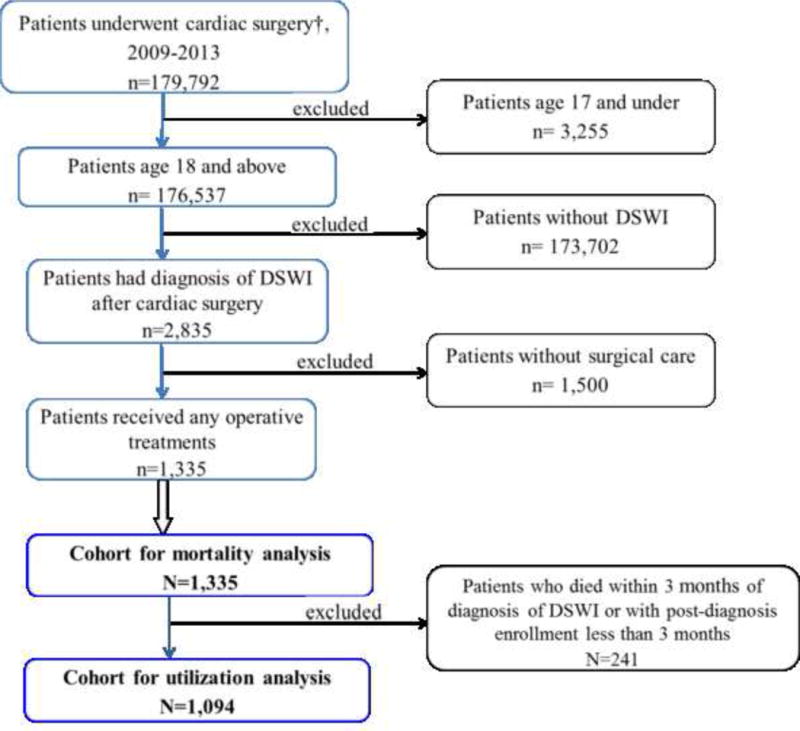
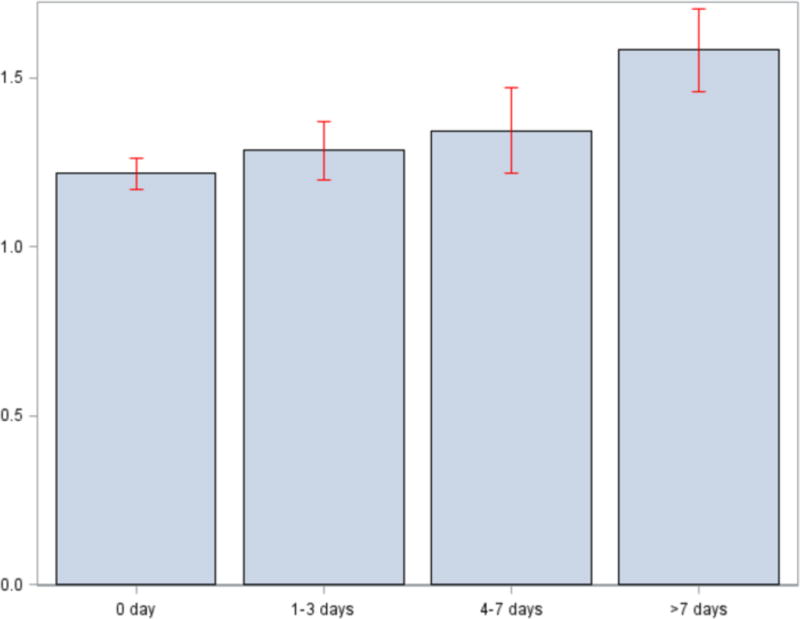
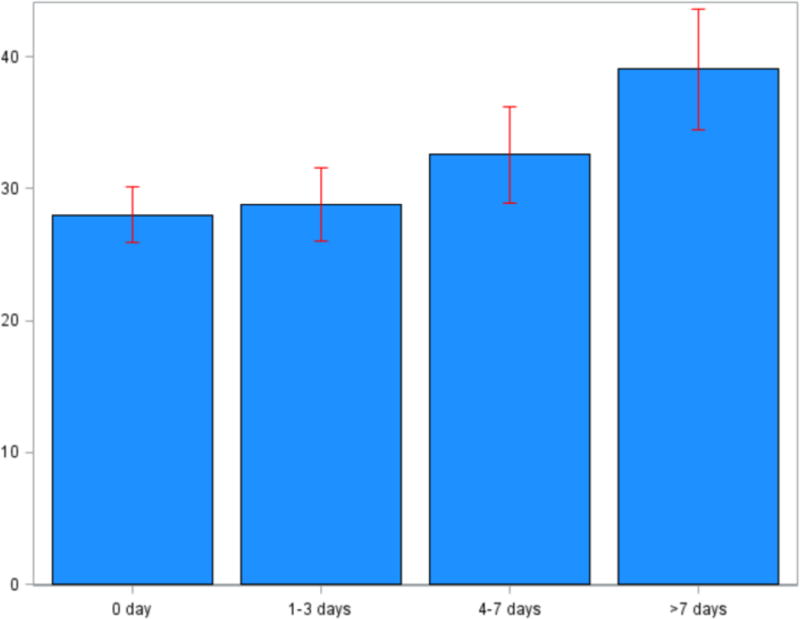
Results: The final cohort included 1335 patients with 12 percent in-hospital mortality. There was considerable variation in timing of débridement among patients with deep sternal wound infection, with more than 25 percent undergoing initial débridement 4 or more days after diagnosis, and 10 percent undergoing débridement more than 1 week after diagnosis. Patients undergoing delayed débridement had progressively higher risk for greater number of admissions and total hospital days compared with those undergoing early débridement. Patients undergoing débridement on the day of diagnosis of deep sternal wound infection had a predicted 34 total hospital days, compared with 49 total hospital days for patients undergoing débridement more than 7 days after diagnosis.
Conclusions: Patients treated with early surgical intervention had fewer hospital admissions and fewer hospital days than patients undergoing delayed surgical treatment. Protocols to facilitate early débridement have the potential to improve quality and efficiency of deep sternal wound infection care.
Clinical question/level of evidence: Therapeutic, III.
Conflict of interest statement
Disclosures: None reported.
Figures
References
-
- Kaye AE, Kaye AJ, Pahk B, McKenna ML, Low DW. Sternal wound reconstruction: management in different cardiac populations. Annals of plastic surgery. 2010;64(5):658–666. - PubMed
-
- Atkins BZ, Onaitis MW, Hutcheson KA, Kaye K, Petersen RP, Wolfe WG. Does method of sternal repair influence long-term outcome of postoperative mediastinitis? The American Journal of Surgery. 2011;202(5):565–567. - PubMed
-
- Floros P, Sawhney R, Vrtik M, et al. Risk factors and management approach for deep sternal wound infection after cardiac surgery at a tertiary medical centre. Heart, Lung and Circulation. 2011;20(11):712–717. - PubMed
-
- Francel TJ. A rational approach to sternal wound complications. Paper presented at: Seminars in thoracic and cardiovascular surgery. 2004 - PubMed
-
- Graf K, Ott E, Vonberg R-P, Kuehn C, Haverich A, Chaberny IF. Economic aspects of deep sternal wound infections. European Journal of Cardio-Thoracic Surgery. 2010;37(4):893–896. - PubMed
Publication types
MeSH terms
Grants and funding
LinkOut - more resources
Full Text Sources
Other Literature Sources
Research Materials
