


Evidence for Intramyocardial Disruption of Lipid Metabolism and Increased Myocardial Ketone Utilization in Advanced Human Heart Failure
- PMID: 26819374
- PMCID: PMC4779339
- DOI: 10.1161/CIRCULATIONAHA.115.017545
Evidence for Intramyocardial Disruption of Lipid Metabolism and Increased Myocardial Ketone Utilization in Advanced Human Heart Failure
Abstract
Background: The failing human heart is characterized by metabolic abnormalities, but these defects remains incompletely understood. In animal models of heart failure there is a switch from a predominance of fatty acid utilization to the more oxygen-sparing carbohydrate metabolism. Recent studies have reported decreases in myocardial lipid content, but the inclusion of diabetic and nondiabetic patients obscures the distinction of adaptations to metabolic derangements from adaptations to heart failure per se.
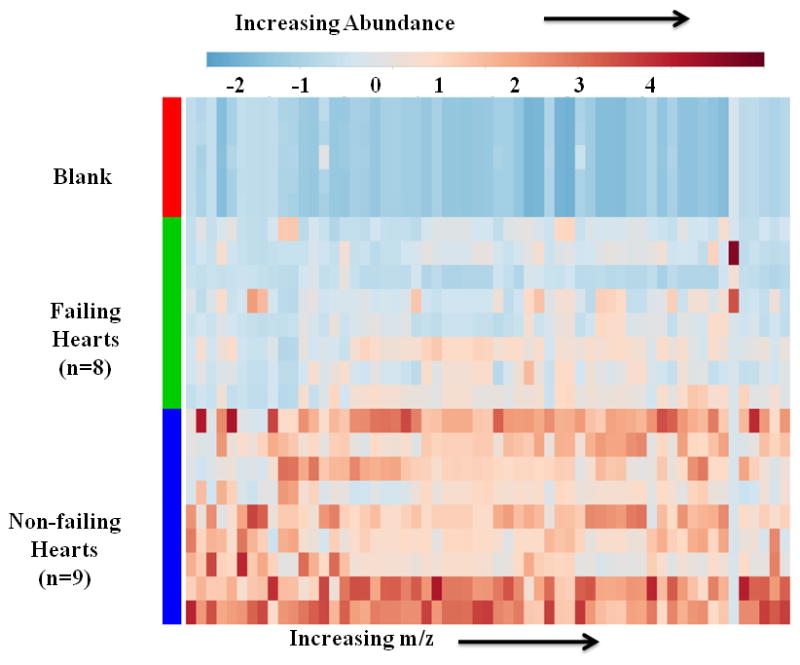
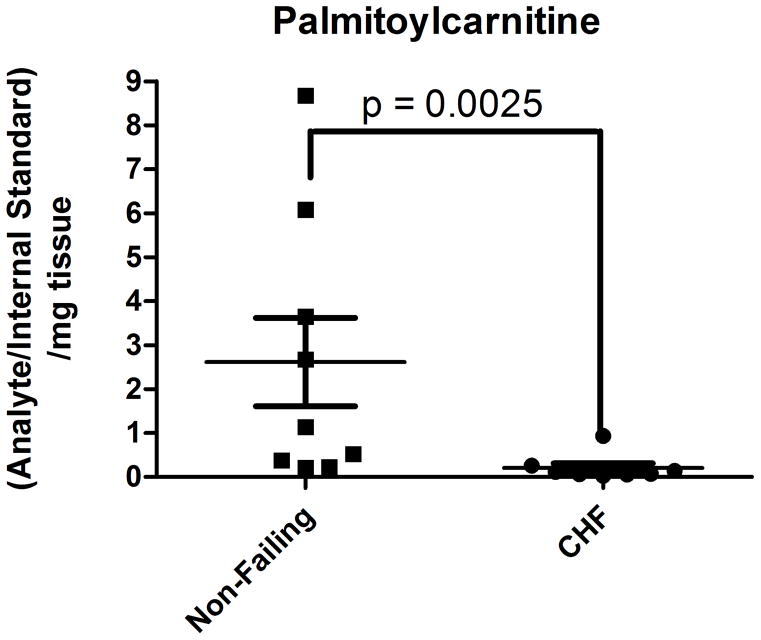
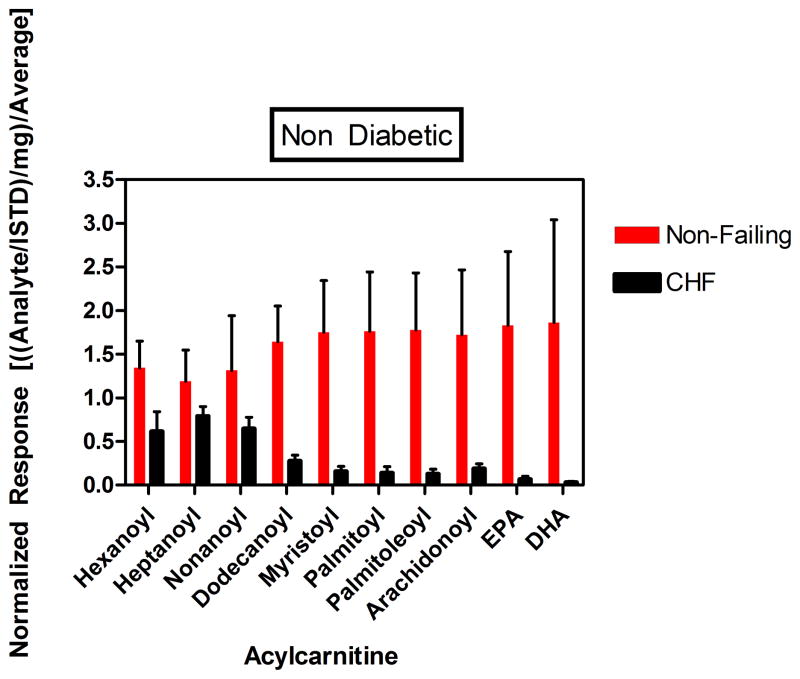
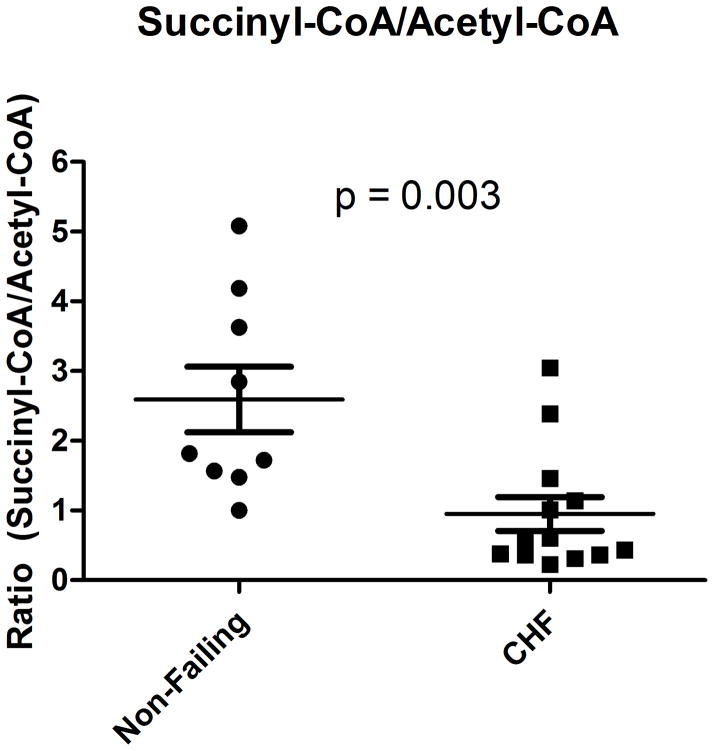
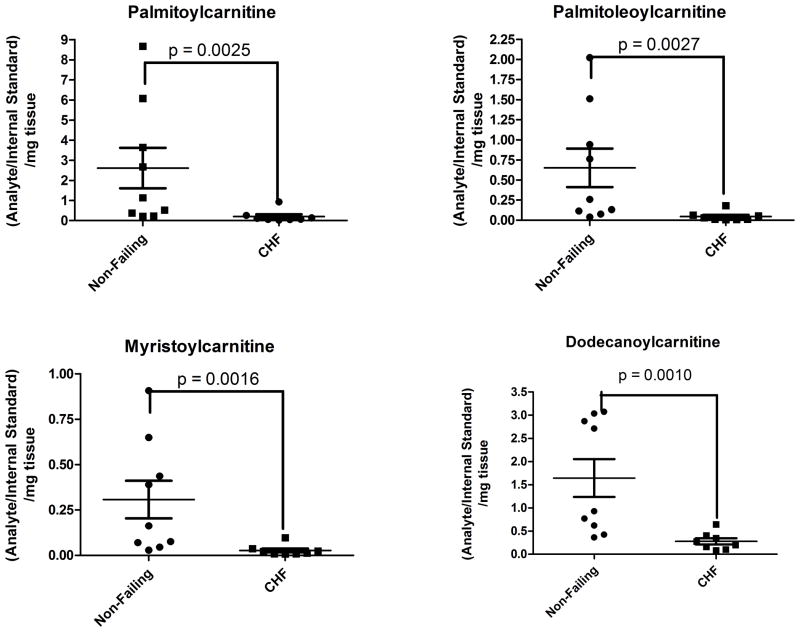
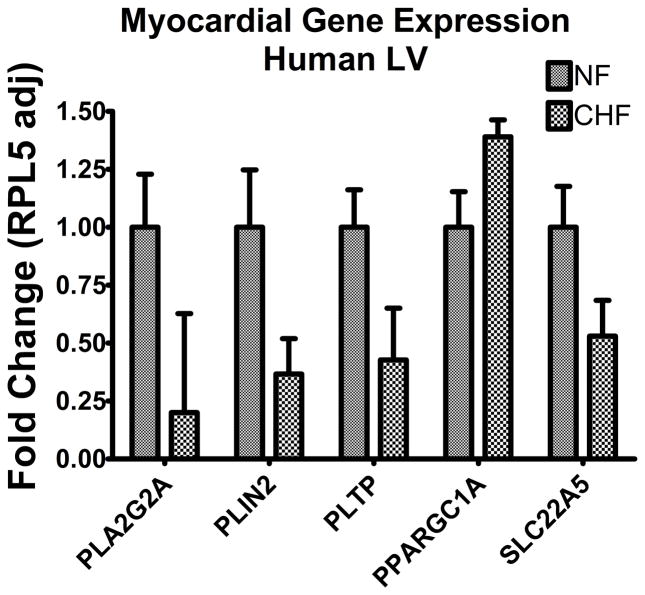
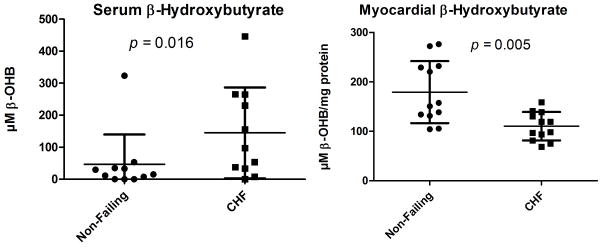
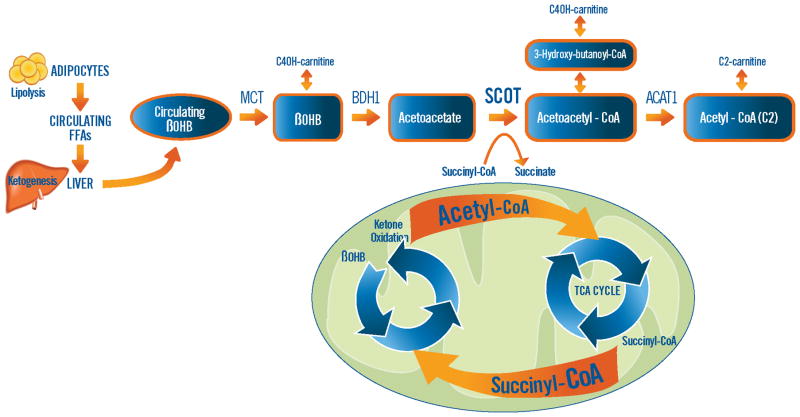
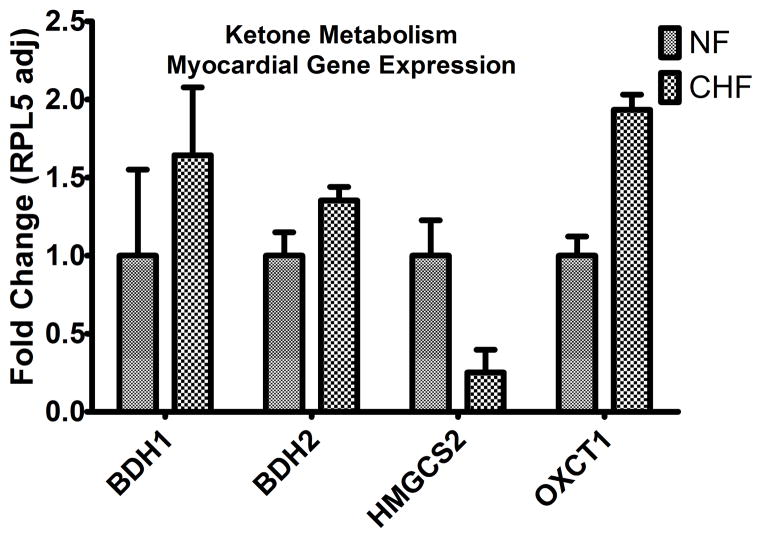
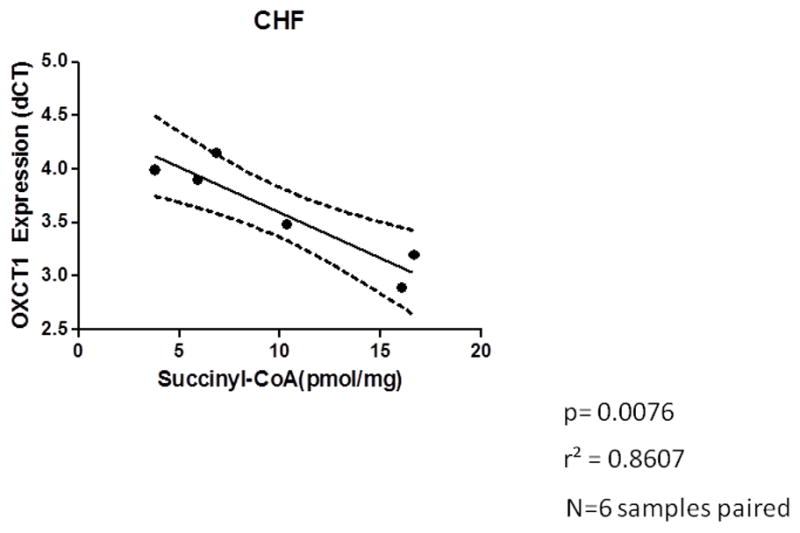
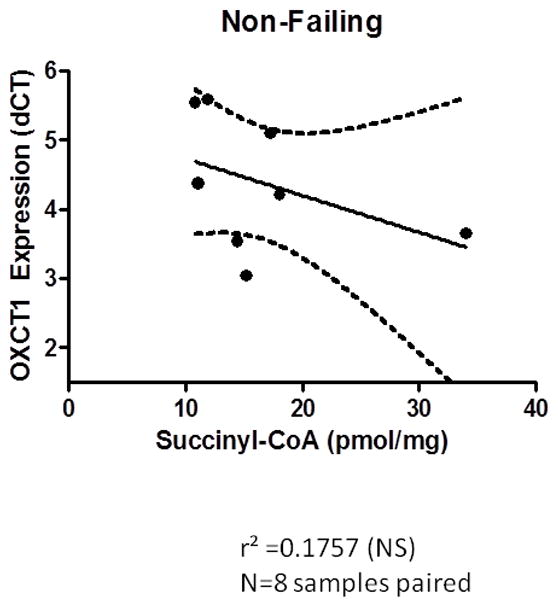
Methods and results: We performed both unbiased and targeted myocardial lipid surveys using liquid chromatography-mass spectroscopy in nondiabetic, lean, predominantly nonischemic, advanced heart failure patients at the time of heart transplantation or left ventricular assist device implantation. We identified significantly decreased concentrations of the majority of myocardial lipid intermediates, including long-chain acylcarnitines, the primary subset of energetic lipid substrate for mitochondrial fatty acid oxidation. We report for the first time significantly reduced levels of intermediate and anaplerotic acyl-coenzyme A (CoA) species incorporated into the Krebs cycle, whereas the myocardial concentration of acetyl-CoA was significantly increased in end-stage heart failure. In contrast, we observed an increased abundance of ketogenic β-hydroxybutyryl-CoA, in association with increased myocardial utilization of β-hydroxybutyrate. We observed a significant increase in the expression of the gene encoding succinyl-CoA:3-oxoacid-CoA transferase, the rate-limiting enzyme for myocardial oxidation of β-hydroxybutyrate and acetoacetate.
Conclusions: These findings indicate increased ketone utilization in the severely failing human heart independent of diabetes mellitus, and they support the role of ketone bodies as an alternative fuel and myocardial ketone oxidation as a key metabolic adaptation in the failing human heart.
Keywords: cardiomyopathies; heart failure; ketones; lipids; metabolism.
© 2016 American Heart Association, Inc.
Figures
Comment in
-
Ketones Step to the Plate: A Game Changer for Metabolic Remodeling in Heart Failure?Circulation. 2016 Feb 23;133(8):689-91. doi: 10.1161/CIRCULATIONAHA.116.021230. Epub 2016 Jan 27. Circulation. 2016. PMID: 26819375 Free PMC article. No abstract available.
-
Heart failure: Ketone bodies as fuel in heart failure.Nat Rev Cardiol. 2016 Mar;13(3):122-3. doi: 10.1038/nrcardio.2016.22. Epub 2016 Feb 11. Nat Rev Cardiol. 2016. PMID: 26864914 No abstract available.
References
-
- Lopaschuk GD, Ussher JR, Folmes CD, Jaswal JS, Stanley WC. Myocardial fatty acid metabolism in health and disease. Physiol Rev. 2010;90:207–258. - PubMed
-
- Chokshi A, Drosatos K, Cheema FH, Ji R, Khawaja T, Yu S, Kato T, Khan R, Takayama H, Knoll R, Milting H, Chung CS, Jorde U, Naka Y, Mancini DM, Goldberg IJ, Schulze PC. Ventricular assist device implantation corrects myocardial lipotoxicity, reverses insulin resistance, and normalizes cardiac metabolism in patients with advanced heart failure. Circulation. 2012;125:2844–2853. - PMC - PubMed
-
- Gupte AA, Hamilton DJ, Cordero-Reyes AM, Youker KA, Yin Z, Estep JD, Stevens RD, Wenner B, Ilkayeva O, Loebe M, Peterson LE, Lyon CJ, Wong ST, Newgard CB, Torre-Amione G, Taegtmeyer H, Hsueh WA. Mechanical unloading promotes myocardial energy recovery in human heart failure. Circ Cardiovasc Genet. 2014;7:266–276. - PMC - PubMed
Publication types
MeSH terms
Substances
Grants and funding
LinkOut - more resources
Full Text Sources
Other Literature Sources
Medical
