


Pharmacoeconomic effect of compliance with pharmacist's intervention based on cancer chemotherapy regimens: a cohort study
- PMID: 26819721
- PMCID: PMC4728767
- DOI: 10.1186/s40780-014-0007-y
Pharmacoeconomic effect of compliance with pharmacist's intervention based on cancer chemotherapy regimens: a cohort study
Erratum in
-
Erratum to: Pharmacoeconomic effect of compliance with pharmacist's intervention based on cancer chemotherapy regimens: a cohort study.J Pharm Health Care Sci. 2016 Jan 26;2:3. doi: 10.1186/s40780-016-0037-8. eCollection 2016. J Pharm Health Care Sci. 2016. PMID: 26820811 Free PMC article.
Abstract
Background: It is important for pharmacists to manage cancer chemotherapy regimens in order to achieve safe treatment. We examined whether there was a useful pharmacoeconomic benefit of compliance the exclusion criteria of neutropenia, and the importance of a pharmacist's intervention was considered.
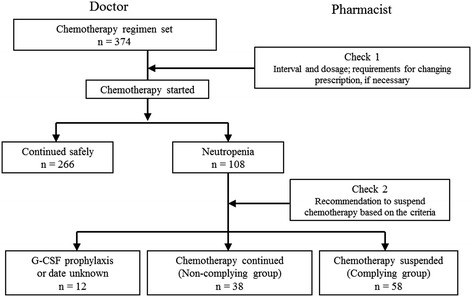
Methods: A prospective observational cohort study was conducted at a community-based medical center. Among 374 patients who received chemotherapy between April 2010 and March 2011, 108 patients developed neutropenia and pharmacists recommended suspension of chemotherapy. These patients were divided into a group in whom chemotherapy was suspended (complying group) and a group in whom it was continued (non-complying group). Then the relative dose intensity (RDI) was compared between the two groups, and medical expenses related to the treatment of neutropenia (neutropenia-related costs: NRC) were compared. Analysis was carried out from the perspective of the health insurance provider, so only the direct medical costs were evaluated.
Results: There was a significant difference of the RDI between a complying group (85.2 ± 10.0%) and a non-complying group (79.3 ± 15.0%) (P = 0.021). The average NRC per patient showed a significant difference between the two groups (complying group: 1,944 ± 412 dollars, non-complying group: 4,394 ± 837 dollars, P = 0.044). The economic effect over one year was 54,205 dollars.
Conclusion: The present findings suggest that ensuring compliance with chemotherapy regimens (including the criteria for neutropenia) is effective from a pharmacoeconomic perspective. Accordingly, pharmacists should intervene as required to improve regimen compliance.
Keywords: Pharmacist intervention; Pharmacoeconomics; Regimen management.
Figures
References
-
- Kohler DR, Montello MJ, Green L, Huntley C, High JL, Fallavollita A, Jr, Goldspiel BR. Standardizing the expression and nomenclature of cancer treatment regimens. American Society of Health-System Pharmacist (ASHP), American Medical Association (AMA), American Nurses Association (ANA) Am J Health Syst Pharm. 1998;55:137–144. - PubMed
-
- Cohen MR, Anderson RW, Attilio RM, Green L, Muller RJ, Pruemer JM. Preventing medication errors in cancer chemotherapy. Am J Health Syst Pharm. 1996;53:737–746. - PubMed
-
- Sánchez Ulayar A, Gallardo López S, Pons Llobet N, Murgadella Sancho A, Campins Bernadàs L, Merino Méndez R. Pharmaceutical intervention upon hospital discharge to strengthen understanding and adherence to pharmacological treatment. Farm Hosp. 2012;36:118–123. doi: 10.1016/j.farma.2011.02.003. - DOI - PubMed
LinkOut - more resources
Full Text Sources
Other Literature Sources
Miscellaneous
