


Worrying about the future: An episodic specificity induction impacts problem solving, reappraisal, and well-being
- PMID: 26820166
- PMCID: PMC4792686
- DOI: 10.1037/xge0000142
Worrying about the future: An episodic specificity induction impacts problem solving, reappraisal, and well-being
Abstract
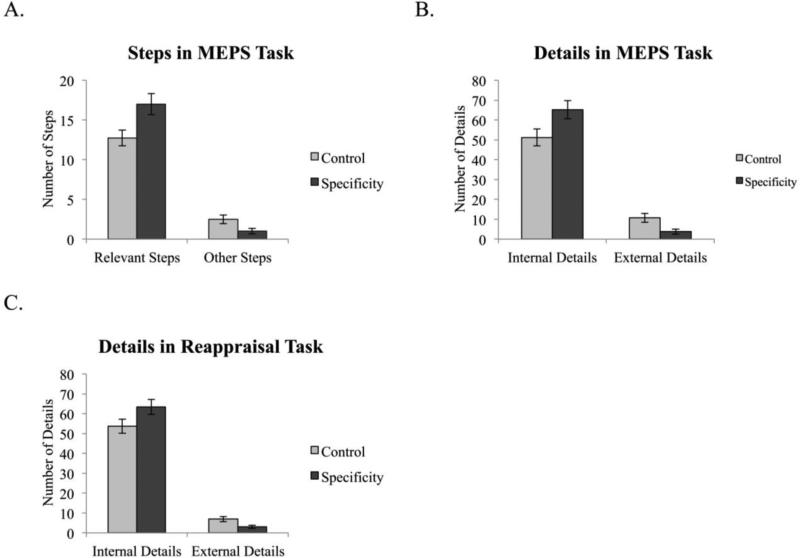
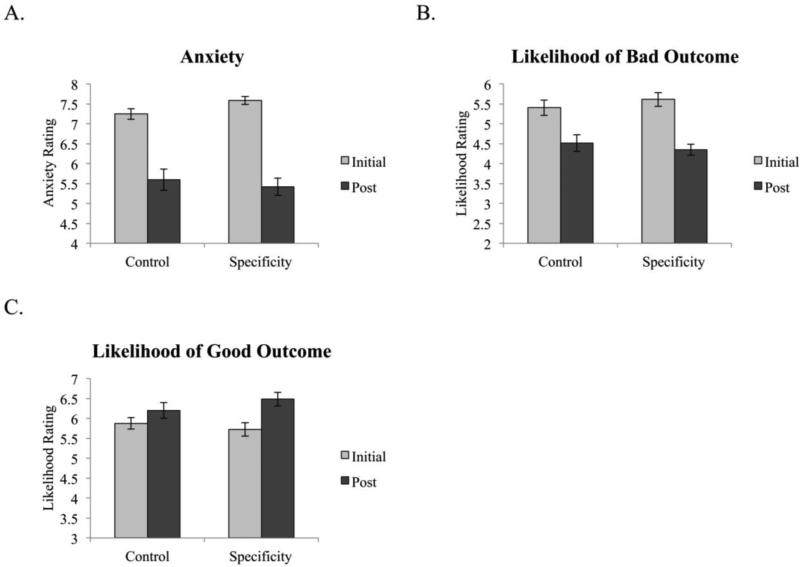
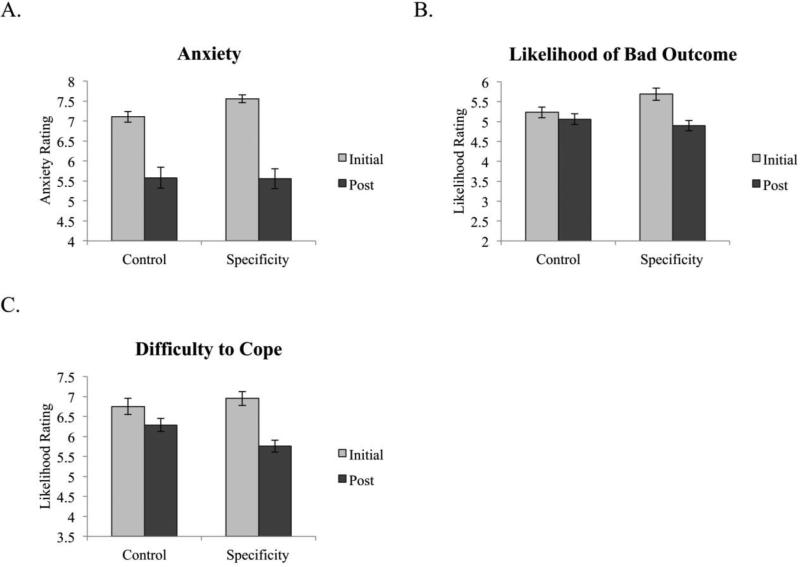
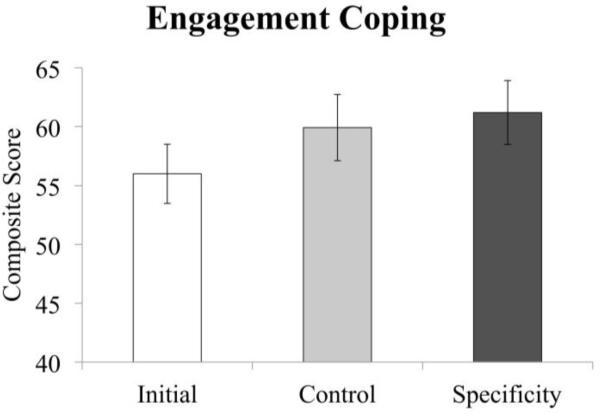
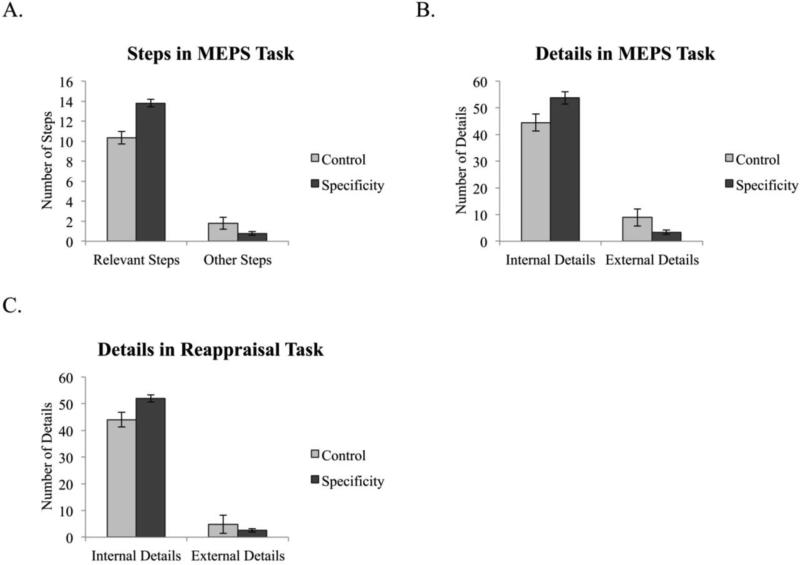
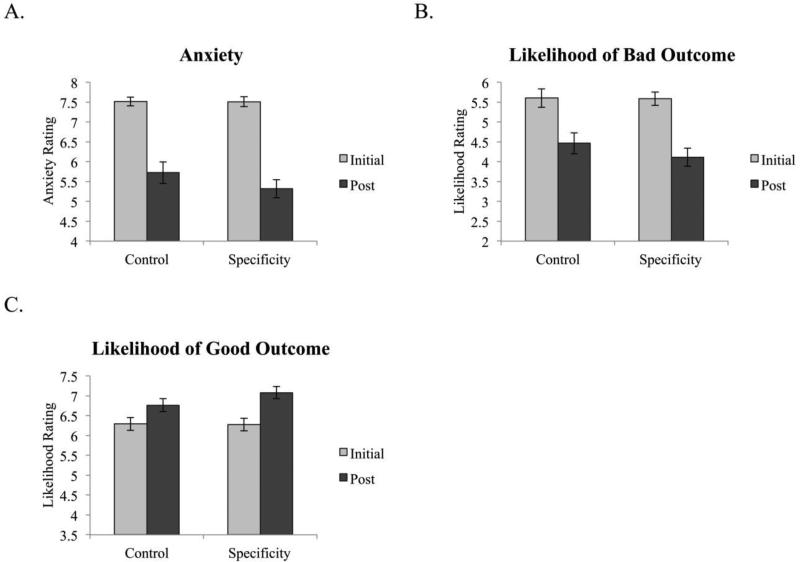
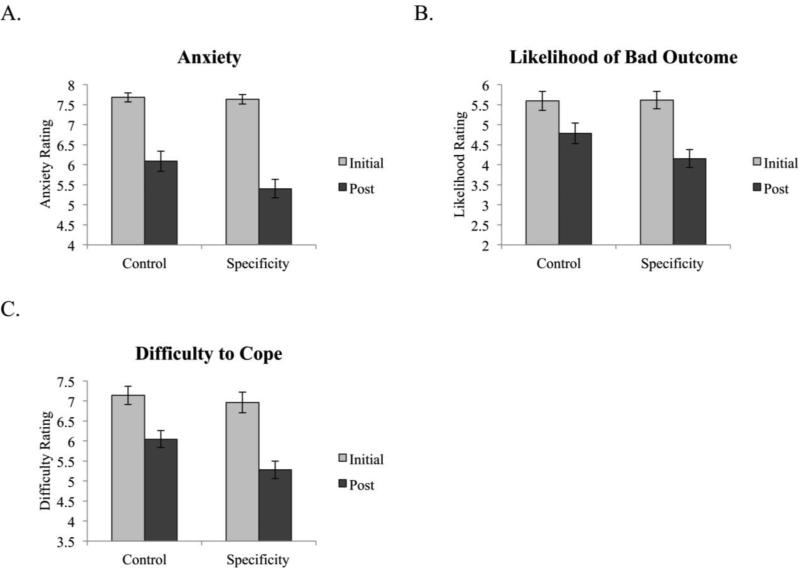
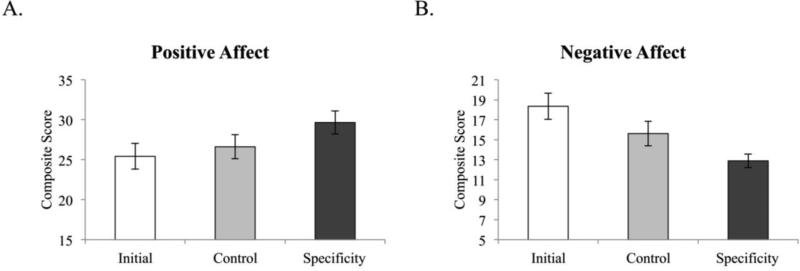
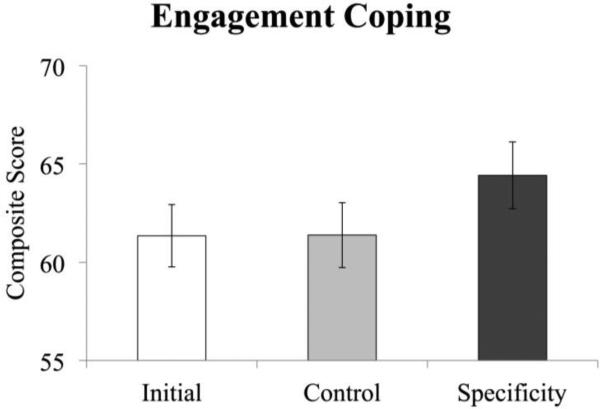
Previous research has demonstrated that an episodic specificity induction--brief training in recollecting details of a recent experience--enhances performance on various subsequent tasks thought to draw upon episodic memory processes. Existing work has also shown that mental simulation can be beneficial for emotion regulation and coping with stressors. Here we focus on understanding how episodic detail can affect problem solving, reappraisal, and psychological well-being regarding worrisome future events. In Experiment 1, an episodic specificity induction significantly improved participants' performance on a subsequent means-end problem solving task (i.e., more relevant steps) and an episodic reappraisal task (i.e., more episodic details) involving personally worrisome future events compared with a control induction not focused on episodic specificity. Imagining constructive behaviors with increased episodic detail via the specificity induction was also related to significantly larger decreases in anxiety, perceived likelihood of a bad outcome, and perceived difficulty to cope with a bad outcome, as well as larger increases in perceived likelihood of a good outcome and indicated use of active coping behaviors compared with the control. In Experiment 2, we extended these findings using a more stringent control induction, and found preliminary evidence that the specificity induction was related to an increase in positive affect and decrease in negative affect compared with the control. Our findings support the idea that episodic memory processes are involved in means-end problem solving and episodic reappraisal, and that increasing the episodic specificity of imagining constructive behaviors regarding worrisome events may be related to improved psychological well-being.
(c) 2016 APA, all rights reserved).
Figures
References
-
- Addis DR, Wong AT, Schacter DL. Age-related changes in the episodic simulation of future events. Psychological Science. 2008;19:33–41. DOI:10.1111/j.1467-9280.2008.02043.x. - PubMed
-
- Anderson CA. Imagination and expectation: The effect of imagining behavioral scripts on personal intentions. Journal of Personality and Social Psychology. 1983;45:293–305. DOI: 10.1037/0022-3514.45.2.293.
-
- Arntz A, Tiesema M, Kindt M. Treatment of PTSD: A comparison of imaginal exposure with and without imagery rescripting. Journal of Behavior Therapy and Experimental Psychiatry. 2007;38:345–370. DOI: 10.1016/j.jbtep.2007.10.006. - PubMed
-
- Barlow DH. Unraveling the mysteries of anxiety and its disorders from the perspective of emotion theory. American Psychologist. 2000;55:1247–1263. DOI: 10.1037/0003-066X.55.11.1247. - PubMed
Publication types
MeSH terms
Grants and funding
LinkOut - more resources
Full Text Sources
Other Literature Sources
Medical
Research Materials
