


PD-1 Pathway Inhibitors: Immuno-Oncology Agents for Restoring Antitumor Immune Responses
- PMID: 26822752
- PMCID: PMC5071694
- DOI: 10.1002/phar.1714
PD-1 Pathway Inhibitors: Immuno-Oncology Agents for Restoring Antitumor Immune Responses
Abstract
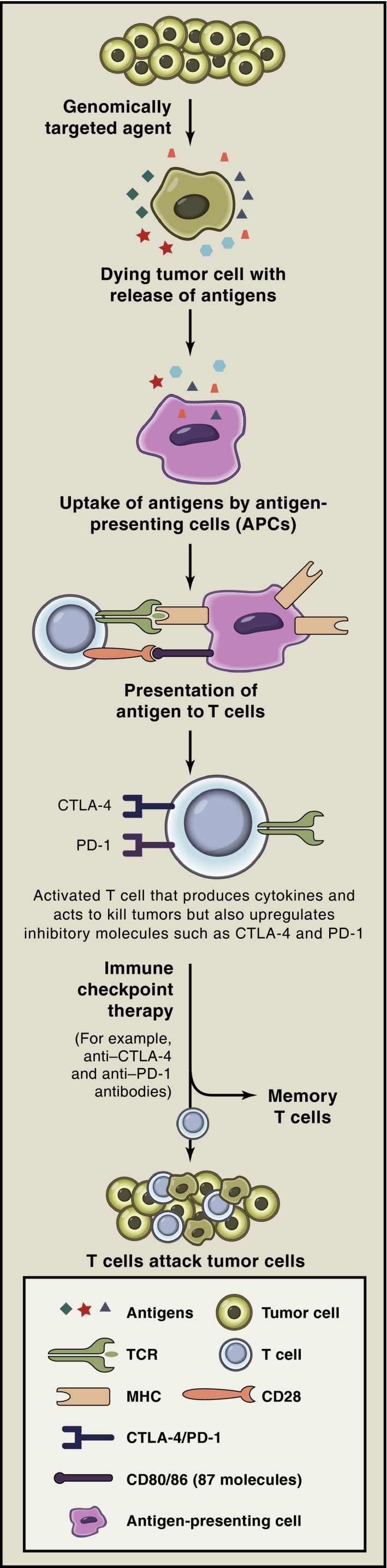
Immune checkpoint inhibitors are designed to restore a patient's own antitumor immune response that has been suppressed during tumor development. The first monoclonal antibodies against the immune checkpoint programmed death 1 (PD-1) receptor, nivolumab and pembrolizumab, are now approved for clinical use. Both agents are indicated for the treatment of advanced melanoma, as well as for the treatment of metastatic non-small cell lung cancer (NSCLC). Nivolumab is also approved for the treatment of advanced renal cell carcinoma. In patients with melanoma, these agents result in objective response rates of ~25-40%, with durable responses lasting more than 2 years in some cases. Results from phase III trials have shown improved survival with nivolumab versus standard-of-care chemotherapy in both patients with advanced melanoma and those with advanced NSCLC. In patients with advanced melanoma, both PD-1 inhibitors (nivolumab and pembrolizumab) have shown improved survival versus ipilimumab. PD-1 inhibitors are associated with adverse events that have immune etiologies, with grade greater than 3 adverse events typically reported in 16% or less of patients. However, most immune-mediated adverse events (including grade 3-4 adverse events) can be managed by using published management algorithms without permanent discontinuation of the agent. As nivolumab and pembrolizumab enter the clinic, and with more PD-1 pathway agents in development for a range of tumor types, this review aims to provide pharmacists with a basic understanding of the role of PD-1 in modulating the immune system and their use in the cancer treatment. The most recent clinical efficacy and safety data are discussed, highlighting the response characteristics distinctive to immune checkpoint inhibitors, along with pharmacokinetic and pharmacodynamic data and cost considerations.
Keywords: PD-1; adverse event; cancer; immune checkpoint blockade; immuno-oncology; oncology; programmed death-1 pathway.
© 2016 The Authors. Pharmacotherapy published by Wiley Periodicals, Inc. on behalf of Pharmacotherapy Publications, Inc.
Figures
References
-
- Yervoy (ipilimumab) prescribing information. Princeton, NJ: Bristol‐Myers Squibb; 2015.
-
- Keytruda (pembrolizumab) prescribing information. Whitehouse Station, NJ: Merck & Co; 2015.
-
- Opdivo (nivolumab) prescribing information. Princeton, NJ: Bristol‐Myers Squibb; 2015.
-
- Wang C, Thudium KB, Han M, et al. In vitro characterization of the anti–PD‐1 antibody nivolumab, BMS‐936558, and in vivo toxicology in non‐human primates. Cancer Immunol Res 2014;2:846–56. - PubMed
-
- Robert C, Ribas A, Wolchok JD, et al. Anti‐programmed‐death‐receptor‐1 treatment with pembrolizumab in ipilimumab‐refractory advanced melanoma: a randomised dose‐comparison cohort of a phase 1 trial. Lancet 2014;384:1109–17. - PubMed
Publication types
MeSH terms
Substances
LinkOut - more resources
Full Text Sources
Other Literature Sources
Research Materials
