


The potential role of regulator of G-protein signaling 16 in cell motility mediated by δEF1 family proteins
- PMID: 26823172
- PMCID: PMC4819697
- DOI: 10.1002/1873-3468.12042
The potential role of regulator of G-protein signaling 16 in cell motility mediated by δEF1 family proteins
Abstract
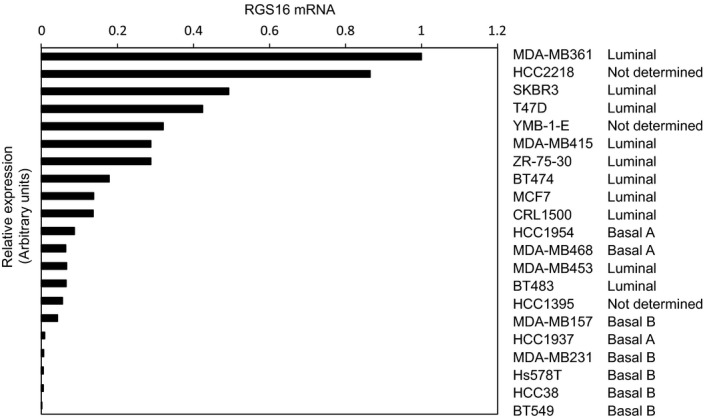
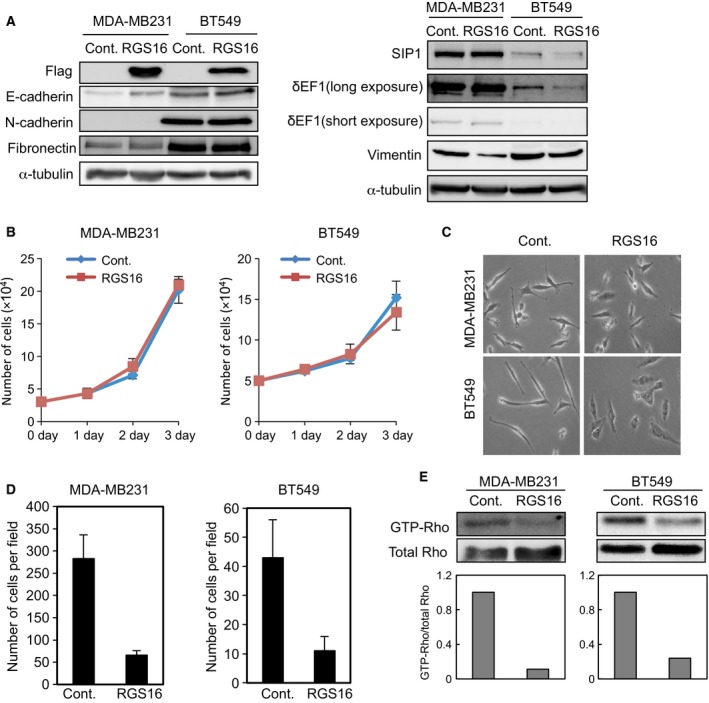
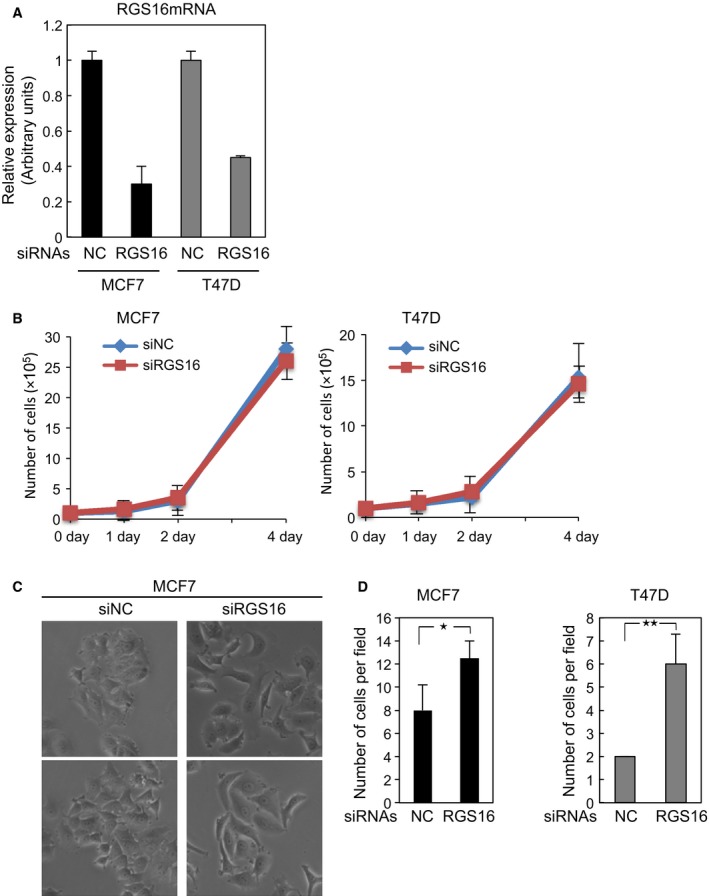
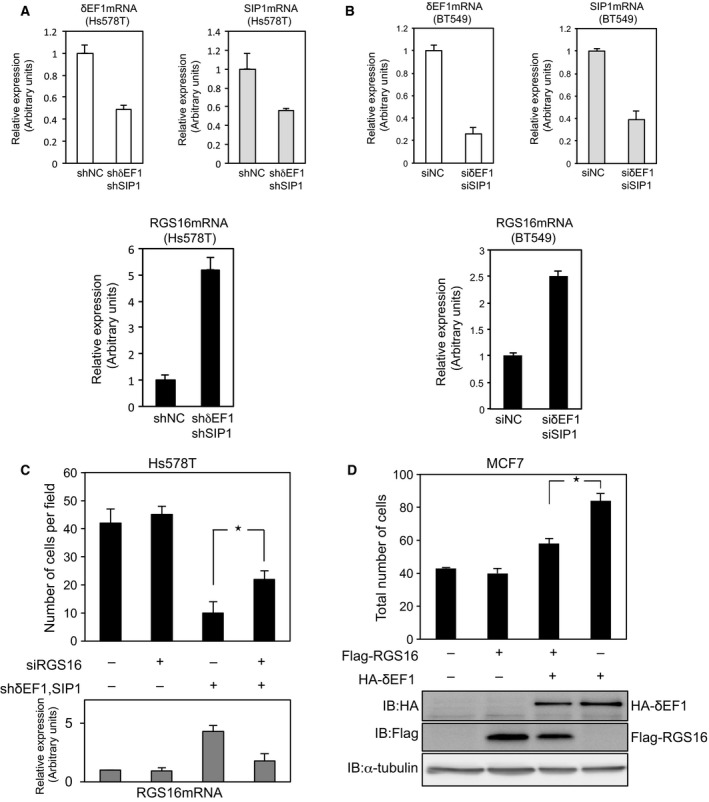
The epithelial-mesenchymal transition (EMT) is associated with tumor progression. We reported previously that expression of the δEF1 family proteins (δEF1/ZEB1 and SIP1/ZEB2), key regulators of the EMT, is positively correlated with EMT phenotypes and aggressiveness of breast cancer. Here, we show that the expression levels of regulator of G-protein signaling 16 (RGS16) are negatively correlated with those of the δEF1 family proteins. On the basis of the results of gain- and loss-of-function analyses, we suggest that δEF1 family proteins promote cell motility of breast cancer cells directly or indirectly through repressing expression of RGS16.
Keywords: epithelial-mesenchymal transition; regulator of G-protein signaling 16; smad-interacting protein 1; δEF1; δEF1 family proteins.
© 2015 The Authors. FEBS Letters published by John Wiley & Sons Ltd on behalf of Federation of European Biochemical Societies.
Figures
References
-
- Wiechec E, Overgaard J and Hansen LL (2008) A fragile site within the HPC1 region at 1q25.3 affecting RGS16, RGSL1, and RGSL2 in human breast carcinomas. Genes Chromosom Cancer 47, 766–780. - PubMed
-
- Kim JH, Lee JY, Lee KT, Lee JK, Lee KH, Jang KT, Heo JS, Choi SH and Rhee JC (2010) RGS16 and FosB underexpressed in pancreatic cancer with lymph node metastasis promote tumor progression. Tumour Biol 31, 541–548. - PubMed
-
- Thiery JP, Acloque H, Huang RY and Nieto MA (2009) Epithelial‐mesenchymal transitions in development and disease. Cell 139, 871–890. - PubMed
Publication types
MeSH terms
Substances
LinkOut - more resources
Full Text Sources
Other Literature Sources
Molecular Biology Databases
Research Materials
