


Molecular systematics of Barbatosphaeria (Sordariomycetes): multigene phylogeny and secondary ITS structure
- PMID: 26823626
- PMCID: PMC4713105
- DOI: 10.3767/003158515X687434
Molecular systematics of Barbatosphaeria (Sordariomycetes): multigene phylogeny and secondary ITS structure
Abstract
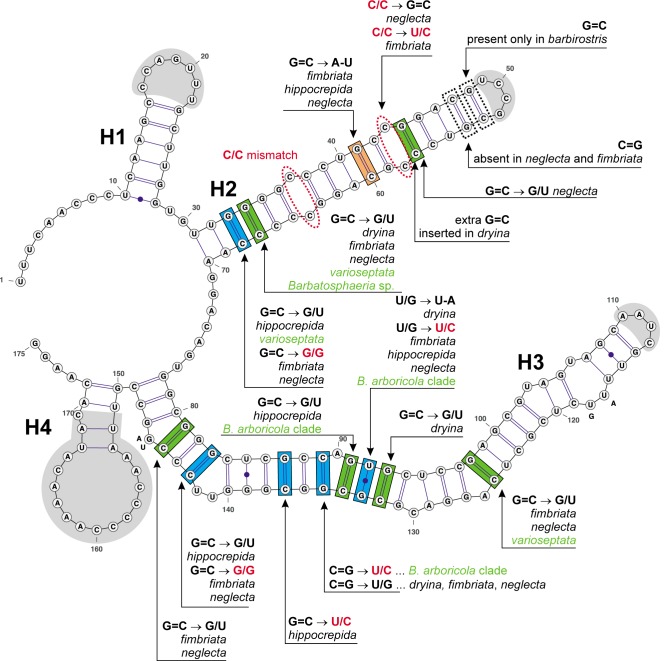
Thirteen morphologically similar strains of barbatosphaeria- and tectonidula-like fungi were studied based on the comparison of cultural and morphological features of sexual and asexual morphs and phylogenetic analyses of five nuclear loci, i.e. internal transcribed spacer rDNA operon (ITS), large and small subunit nuclear ribosomal DNA, β-tubulin, and second largest subunit of RNA polymerase II. Phylogenetic results were supported by in-depth comparative analyses of common core secondary structure of ITS1 and ITS2 in all strains and the identification of non-conserved, co-evolving nucleotides that maintain base pairing in the RNA transcript. Barbatosphaeria is defined as a well-supported monophyletic clade comprising several lineages and is placed in the Sordariomycetes incertae sedis. The genus is expanded to encompass nine species with both septate and non-septate ascospores in clavate, stipitate asci with a non-amyloid apical annulus and non-stromatic ascomata with a long decumbent neck and carbonised wall often covered by pubescence. The asexual morphs are dematiaceous hyphomycetes with holoblastic conidiogenesis belonging to Ramichloridium and Sporothrix types. The morphologically similar Tectonidula, represented by the type species T. hippocrepida, grouped with members of Barbatosphaeria and is transferred to that genus. Four new species are introduced and three new combinations in Barbatosphaeria are proposed. A dichotomous key to species accepted in the genus is provided.
Keywords: Ramichloridium; Sporothrix; Tectonidula; phylogenetics; sequence analysis; spacer regions.
Figures




References
-
- Amato A, Kooistra WHCF, Ghiron JHL, et al. 2007. Reproductive isolation among sympatric cryptic species in marine diatoms. Protist 158: 193–207. - PubMed
-
- Bridge PD, Schlitt T, Cannon PF, et al. 2008. Domain II hairpin structure in ITS1 sequences as an aid in differentiating recently evolved animal and plant pathogenic fungi. Mycopathologia 166: 1–16. - PubMed
-
- Campbell J, Shearer CA. 2004. Annulusmagnus and Ascitendus, two new genera in the Annulatascaceae. Mycologia 96: 822–833. - PubMed
LinkOut - more resources
Full Text Sources
Molecular Biology Databases