


Overview of Polycyclic Aromatic Compounds (PAC)
- PMID: 26823644
- PMCID: PMC4714235
- DOI: 10.1080/10406638.2014.994071
Overview of Polycyclic Aromatic Compounds (PAC)
Abstract
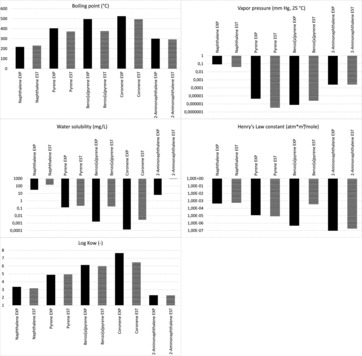
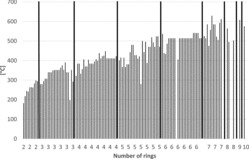
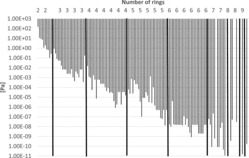
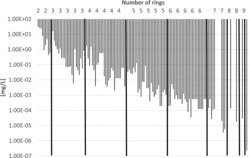
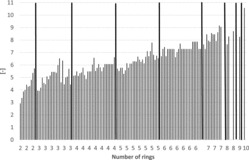
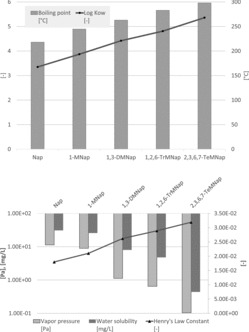
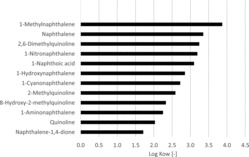
The chemical group of polycyclic aromatic compounds (PAC), including the better-known subgroup of polycyclic aromatic hydrocarbons (PAH) and the heterocyclic aromatic compounds (NSO-PAC, heterocycles), comprise several thousand individual compounds. It is hard to find a comprehensive overview in the literature of these PACs that includes a substantial amount of relevant properties. Here an attempt is made to summarize the most studied but also some less well-known PACs. In addition to basic data such as recommended names, abbreviations, CAS numbers, molecular formulas, chemical structures, and exact mono-isotopic molecular weights, physico-chemical properties taken from the literature like boiling points, vapor pressures, water solubilities, Henry's Law constants, n-octanol-water partition coefficients (log KOW), and pKa are summarized. Selected toxicological data are listed indicating carcinogenic and mutagenic activity or effects on different organisms. PAC nomenclature is a complex topic, so suggestions for practical use are made. Regarding available data, estimated (instead of measured) values should be used with caution because considerable deviations from experimentally determined values can occur. For an enhanced understanding of the behavior of single PACs in comparison with each other, some of the properties mentioned above are plotted vs. the number of rings or the degree of alkylation. Also, some physico-chemical data are correlated with different functional groups as substituents of the PAHs. This article reveals that rather little is known about the less common PACs, e.g., higher molecular weight compounds, alkylated or otherwise substituted aromatics, for instance, keto-, oxo-, amino-, nitro-, cyano-PAHs, or some heterocyclic aromatic compounds, including their derivatives. It mirrors the limited state of knowledge about the variety of PACs that do not belong to the 16 EPA PAHs.
Keywords: environmental occurrence; polycyclic aromatic compounds; polycyclic aromatic hydrocarbons; properties of polycyclic aromatic compounds; toxicity.
Figures
References
-
- Andersson J.T. PAH or PAC, that is the Question. Polycyclic Aromatic Compounds. 2009;29:1–2.
-
- http://www.sisweb.com/referenc/tools/exactmass.htm (accessed November 20, 2014)
-
- chem.sis.nlm.nih.gov/chemidplus/ (accessed November 20, 2014)
-
- www.GSBL.de (accessed November 20, 2014)
-
- Greim H. Gesundheitsschädliche Arbeitsstoffe, Toxikologische arbeitsmedizinische Begründungen von MAK-Werten und Einstufungen, DFG, Wiley-Verlag GmbH and Co. Vol. 35. Weinheim, Germany: KgaA; 2008. Lieferung.
LinkOut - more resources
Full Text Sources
Other Literature Sources
Research Materials