


From Six Gene Polymorphisms of the Antioxidant System, Only GPX Pro198Leu and GSTP1 Ile105Val Modulate the Risk of Acute Myeloid Leukemia
- PMID: 26823947
- PMCID: PMC4707325
- DOI: 10.1155/2016/2536705
From Six Gene Polymorphisms of the Antioxidant System, Only GPX Pro198Leu and GSTP1 Ile105Val Modulate the Risk of Acute Myeloid Leukemia
Abstract
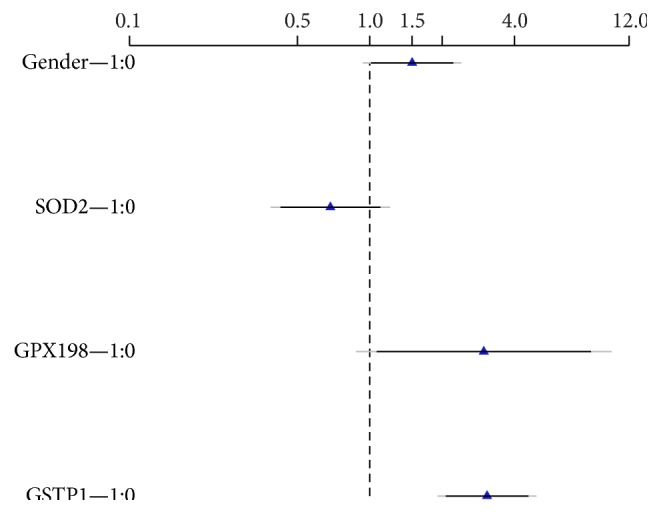
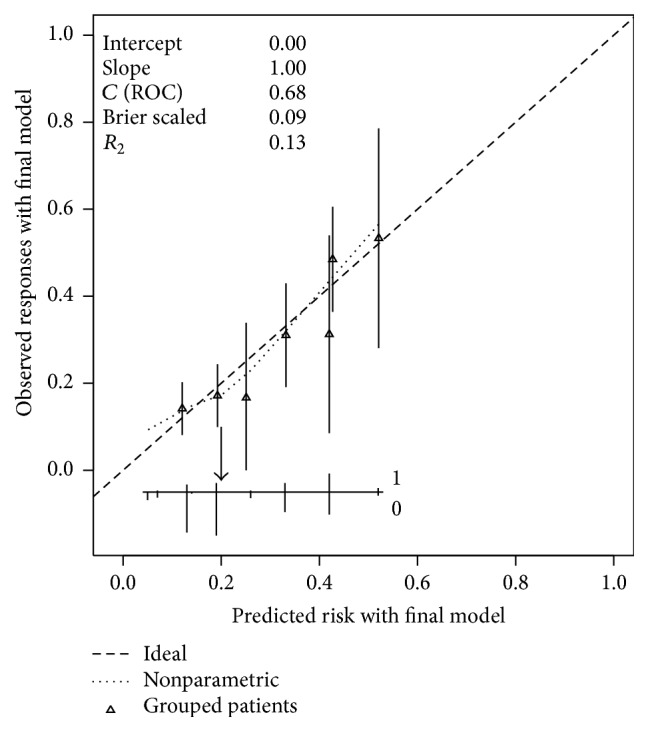
Oxidative stress might contribute to the occurrence of cancers, including the hematological ones. Various genetic polymorphisms were shown to increase the quantity of reactive oxygen species, a phenomenon that is able to induce mutations and thus promote cancers. The purpose of the study was to evaluate the association between CAT C262T, GPX1 Pro198Leu, MnSOD Ala16Val, GSTM1, GSTT1, and GSTP1 Ile105Val gene polymorphisms and acute myeloid leukemia risk, in a case-control study comprising 102 patients and 303 controls. No association was observed between AML and variant genotypes of CAT, MnSOD, GSTM1, and GSTT1 polymorphisms. Our data revealed a statistically significant difference regarding the frequencies of GPX1 Pro198Leu and GSTP1 Ile105Val variant genotypes between AML patients and controls (p < 0.001). Our results showed no association in the distribution of any of the CAT C262T, GPX1 Pro198Leu, GSTM1, GSTT1, and GSTP1 polymorphisms regarding age, gender, FAB subtype, cytogenetic risk groups, FLT3 and DNMT3 gene mutations, and overall survival. Our data suggests that the presence of variant allele and genotype of GPX1 Pro198Leu and GSTP1 Ile105Val gene polymorphisms may modulate the risk of developing AML.
Figures
References
-
- Naz A., Shamsi T. S., Sattar A., Mahboob T. Oxidative stress and total antioxidant status in acute leukemia at diagnosis and post remission induction phase. Pakistan Journal of Pharmaceutical Sciences. 2013;26(6):1123–1130. - PubMed
Publication types
MeSH terms
Substances
LinkOut - more resources
Full Text Sources
Other Literature Sources
Medical
Molecular Biology Databases
Research Materials
Miscellaneous
