


Differential regulation of mTOR signaling determines sensitivity to AKT inhibition in diffuse large B cell lymphoma
- PMID: 26824321
- PMCID: PMC4891033
- DOI: 10.18632/oncotarget.7036
Differential regulation of mTOR signaling determines sensitivity to AKT inhibition in diffuse large B cell lymphoma
Abstract
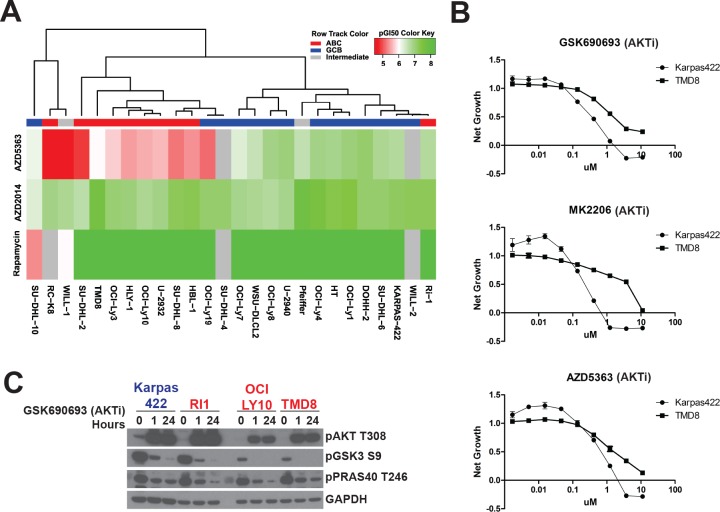
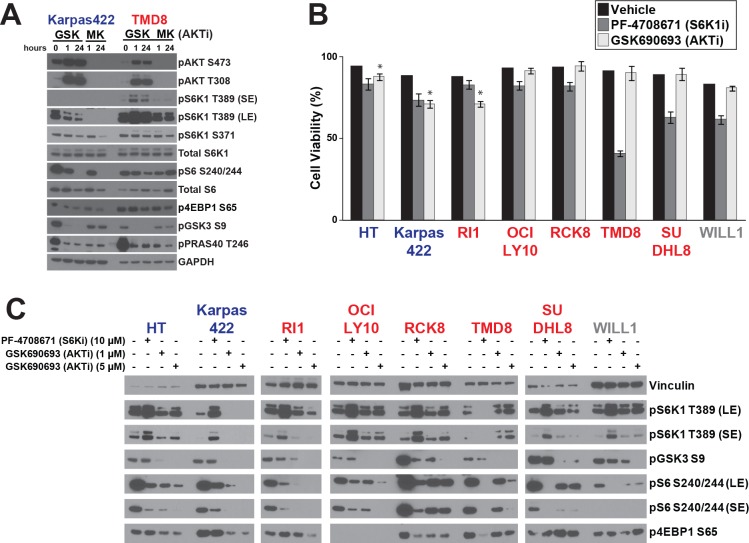
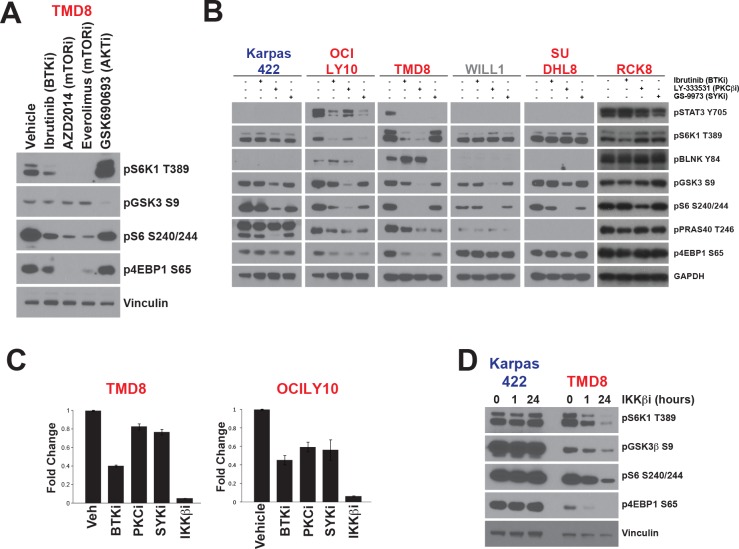
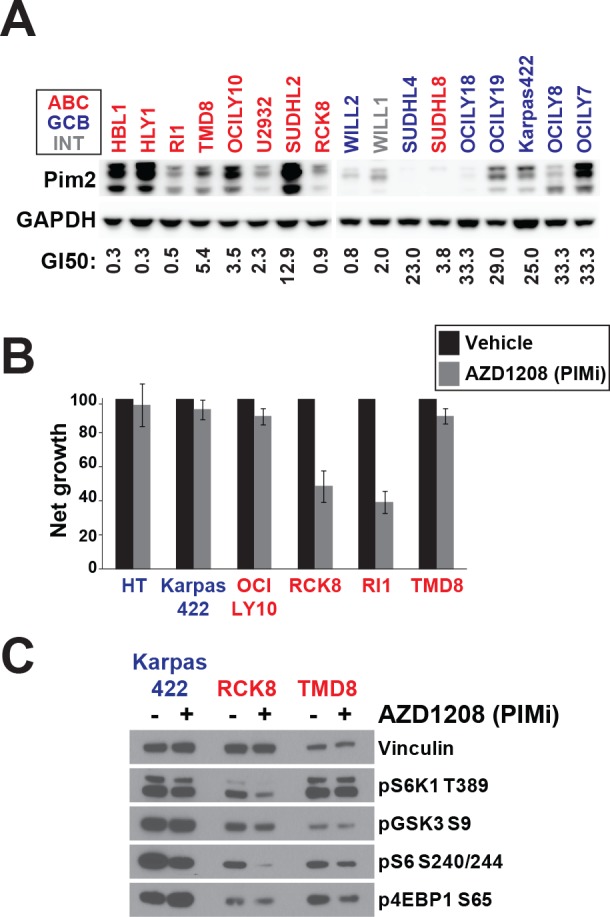
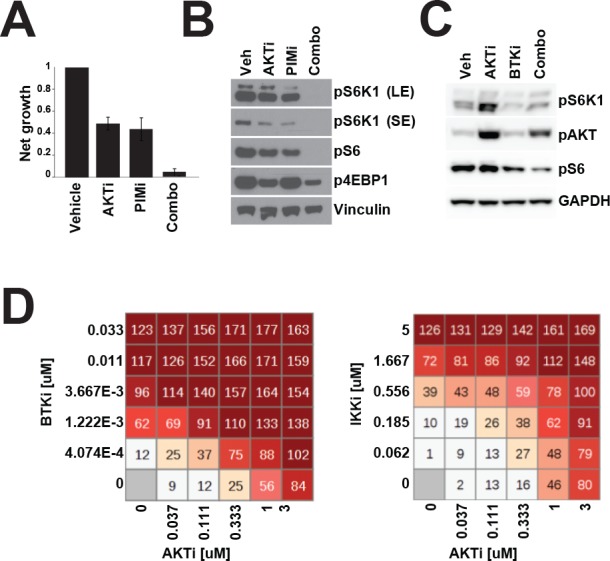
Agents that target components of the PI3K/AKT/mTOR pathway are under investigation for the treatment of diffuse large B cell lymphoma (DLBCL). Given the highly heterogeneous nature of DLBCL, it is not clear whether all subtypes of DLBCL will be susceptible to PI3K pathway inhibition, or which kinase within this pathway is the most favorable target. Pharmacological profiling of a panel of DLBCL cell lines revealed a subset of DLBCL that was resistant to AKT inhibition. Strikingly, sensitivity to AKT inhibitors correlated with the ability of these inhibitors to block phosphorylation of S6K1 and ribosomal protein S6. Cell lines resistant to AKT inhibition activated S6K1 independent of AKT either through upregulation of PIM2 or through activation by B cell receptor (BCR) signaling components. Finally, combined inhibition of AKT and BTK, PIM2, or S6K1 proved to be an effective strategy to overcome resistance to AKT inhibition in DLBCL.
Keywords: AKT; DLBCL; Ibrutinib; S6K1; mTOR.
Conflict of interest statement
All authors are current or former employees of AstraZeneca.
Figures
References
-
- Lenz G, Davis RE, Ngo VN, Lam L, George TC, Wright GW, Dave SS, Zhao H, Xu W, Rosenwald A, Ott G, Muller-Hermelink HK, Gascoyne RD, Connors JM, Rimsza LM, Campo E, et al. Oncogenic CARD11 mutations in human diffuse large B cell lymphoma. Science. 2008;319:1676–1679. - PubMed
Publication types
MeSH terms
Substances
LinkOut - more resources
Full Text Sources
Other Literature Sources
Molecular Biology Databases
Miscellaneous
