


Maximum Entropy-Based Ecological Niche Model and Bio-Climatic Determinants of Lone Star Tick (Amblyomma americanum) Niche
- PMID: 26824880
- PMCID: PMC4779976
- DOI: 10.1089/vbz.2015.1837
Maximum Entropy-Based Ecological Niche Model and Bio-Climatic Determinants of Lone Star Tick (Amblyomma americanum) Niche
Abstract
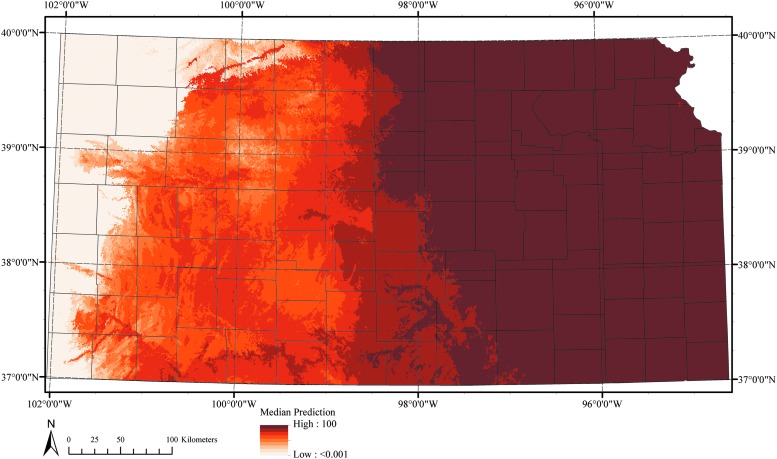
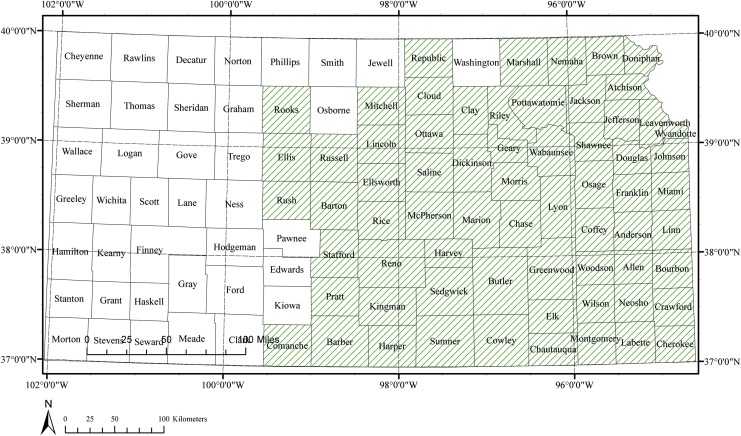
The potential distribution of Amblyomma americanum ticks in Kansas was modeled using maximum entropy (MaxEnt) approaches based on museum and field-collected species occurrence data. Various bioclimatic variables were used in the model as potentially influential factors affecting the A. americanum niche. Following reduction of dimensionality among predictor variables using principal components analysis, which revealed that the first two principal axes explain over 87% of the variance, the model indicated that suitable conditions for this medically important tick species cover a larger area in Kansas than currently believed. Soil moisture, temperature, and precipitation were highly correlated with the first two principal components and were influential factors in the A. americanum ecological niche. Assuming that the niche estimated in this study covers the occupied distribution, which needs to be further confirmed by systematic surveys, human exposure to this known disease vector may be considerably under-appreciated in the state.
Keywords: Amblyomma americanum; Climate; Lone star tick; MaxEnt; Precipitation; Soil moisture; Temperature.
Figures
References
-
- Berger KA, Wang Y, Mather TN. MODIS-derived land surface moisture conditions for monitoring blacklegged tick habitat in southern New England. Int J Remote Sens 2013; 34:73–85
-
- Bishopp FC, Trembley HL. Distribution and hosts of certain North American ticks. J Parasitol 1945; 31:1–54
-
- Centers for Disease Control and Prevention. Ehrlichiosis Website. 2015a. Available at www.cdc.gov/ehrlichiosis/
-
- Centers for Disease Control and Prevention. Tularemia Website. 2015b. Available at www.cdc.gov/tularemia/transmission/
-
- Centers for Disease Control and Prevention. Southern Tick–Associated Rash Illness Website. 2015c. Available at www.cdc.gov/stari/
Publication types
MeSH terms
Substances
Grants and funding
LinkOut - more resources
Full Text Sources
Other Literature Sources
