


"Eat me" imaging and therapy
- PMID: 26826436
- PMCID: PMC4865253
- DOI: 10.1016/j.addr.2016.01.009
"Eat me" imaging and therapy
Abstract
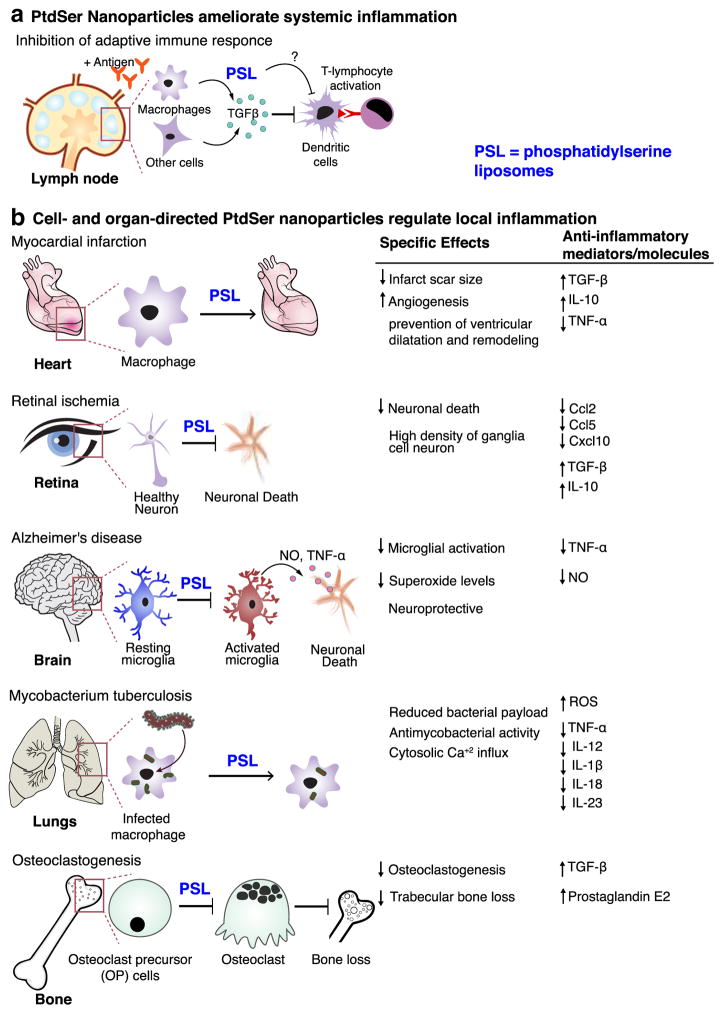
Clearance of apoptotic debris is a vital role of the innate immune system. Drawing upon principles of apoptotic clearance, convenient delivery vehicles including intrinsic anti-inflammatory characteristics and specificity to immune cells can be engineered to aid in drug delivery. In this article, we examine the use of phosphatidylserine (PtdSer), the well-known "eat-me" signal, in nanoparticle-based therapeutics making them highly desirable "meals" for phagocytic immune cells. Use of PtdSer facilitates engulfment of nanoparticles allowing for imaging and therapy in various pathologies and may result in immunomodulation. Furthermore, we discuss the targeting of the macrophages and other cells at sites of inflammation in disease. A thorough understanding of the immunobiology of "eat-me" signals is requisite for the successful application of "eat-me"-bearing materials in biomedical applications.
Keywords: Drug delivery; Imaging; Immune response; Leukocytes; Liposomes; Phagocytes; Phosphatidylserine.
Copyright © 2016 Elsevier B.V. All rights reserved.
Figures
References
-
- Henson PM, Hume DA. Apoptotic cell removal in development and tissue homeostasis. Trends Immunol. 2006;27(5):244–250. - PubMed
-
- Lauber K, et al. Clearance of Apoptotic Cells: Getting Rid of the Corpses. Mol Cell. 2004;14(3):277–287. - PubMed
-
- Bianchi ME. DAMPs, PAMPs and alarmins: All we need to know about danger. J Leukoc Biol. 2007;81(1):1–5. - PubMed
Publication types
MeSH terms
Substances
Grants and funding
LinkOut - more resources
Full Text Sources
Other Literature Sources
Molecular Biology Databases
