


Design and Characterization of a Novel p1025 Peptide-Loaded Liquid Crystalline System for the Treatment of Dental Caries
- PMID: 26828470
- PMCID: PMC6273485
- DOI: 10.3390/molecules21020158
Design and Characterization of a Novel p1025 Peptide-Loaded Liquid Crystalline System for the Treatment of Dental Caries
Abstract
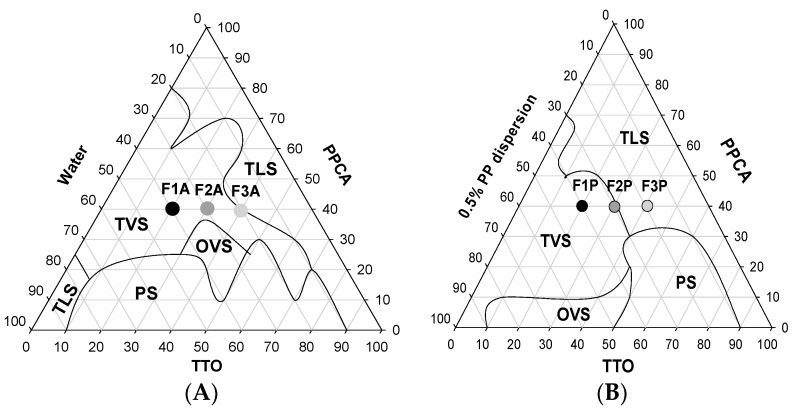
Dental caries, mainly caused by the adhesion of Streptococcus mutans to pellicle-coated tooth surfaces, is an important public health problem worldwide. A synthetic peptide (p1025) corresponding to residues 1025-1044 of the adhesin can inhibit this binding. Peptides are particularly susceptible to the biological environment; therefore, a p1025 peptide-loaded liquid crystalline system (LCS) consisting of tea tree oil as the oil phase, polyoxypropylene-(5)-polyoxyethylene-(20)-cetyl alcohol as the surfactant, and water or 0.5% polycarbophil polymer dispersions as the aqueous phase was employed as a drug delivery platform. This system exhibited anticaries and bioadhesive properties and provided a protective environment to p1025 at the site of action, thereby modulating its action, prolonging its contact with the teeth, and decreasing the frequency of administration. LCSs were characterized by polarized light microscopy (PLM), small-angle X-ray scattering (SAXS), and rheological, texture, and bioadhesive tests. PLM and SAXS revealed the presence of hexagonal liquid crystalline phases and microemulsions. Rheological analyses demonstrated that the addition of polymer dispersions favored characteristics such as shear thinning and thixotropy, hence improving buccal application. Bioadhesion tests showed that polymer dispersions contributed to the adhesion onto the teeth. Taken together, LCS could provide a novel pharmaceutical nanotechnology platform for dental caries treatment.
Keywords: bioadhesive polymers; dental caries; liquid crystalline system; nanostructured drug delivery systems; tea tree oil.
Conflict of interest statement
The authors declare no conflict of interest. The funding sponsors had no role in the design of the study; in the collection, analyses, or interpretation of data; in the writing of the manuscript, and in the decision to publish the results.
Figures


References
-
- Young D.A., Nový B.B., Zeller G.G., Hale R., Hart T.C., Truelove E.L. The American Dental Association Caries Classification System for Clinical Practice: A report of the American Dental Association Council on Scientific Affairs. J. Am. Dent. Assoc. 2015;146:79–86. doi: 10.1016/j.adaj.2014.11.018. - DOI - PubMed
Publication types
MeSH terms
Substances
LinkOut - more resources
Full Text Sources
Other Literature Sources
Medical
