


Genetic Variation in the Vesicular Monoamine Transporter: Preliminary Associations With Cognitive Outcomes After Severe Traumatic Brain Injury
- PMID: 26828714
- PMCID: PMC4967045
- DOI: 10.1097/HTR.0000000000000224
Genetic Variation in the Vesicular Monoamine Transporter: Preliminary Associations With Cognitive Outcomes After Severe Traumatic Brain Injury
Abstract
Introduction: Traumatic brain injury (TBI) frequently results in impaired cognition, a function that can be modulated by monoaminergic signaling. Genetic variation among monoaminergic genes may affect post-TBI cognitive performance. The vesicular monoamine transporter-2 (VMAT2) gene may be a novel source of genetic variation important for cognitive outcomes post-TBI given VMAT2's role in monoaminergic neurotransmission.
Objective: To evaluate associations between VMAT2 variability and cognitive outcomes post-TBI.
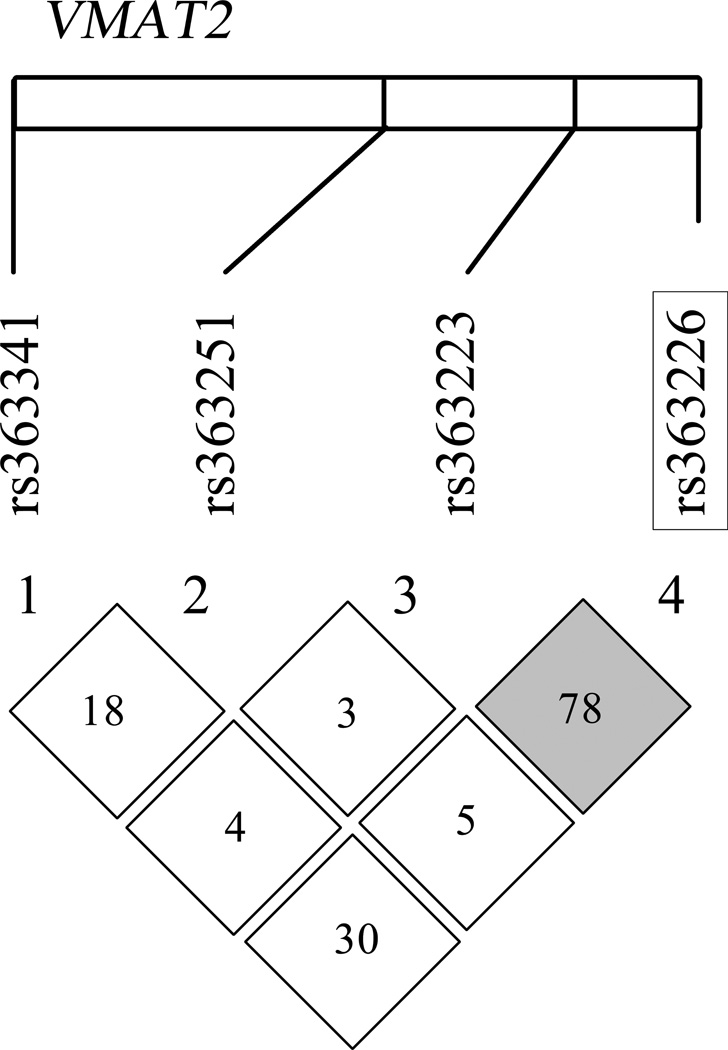
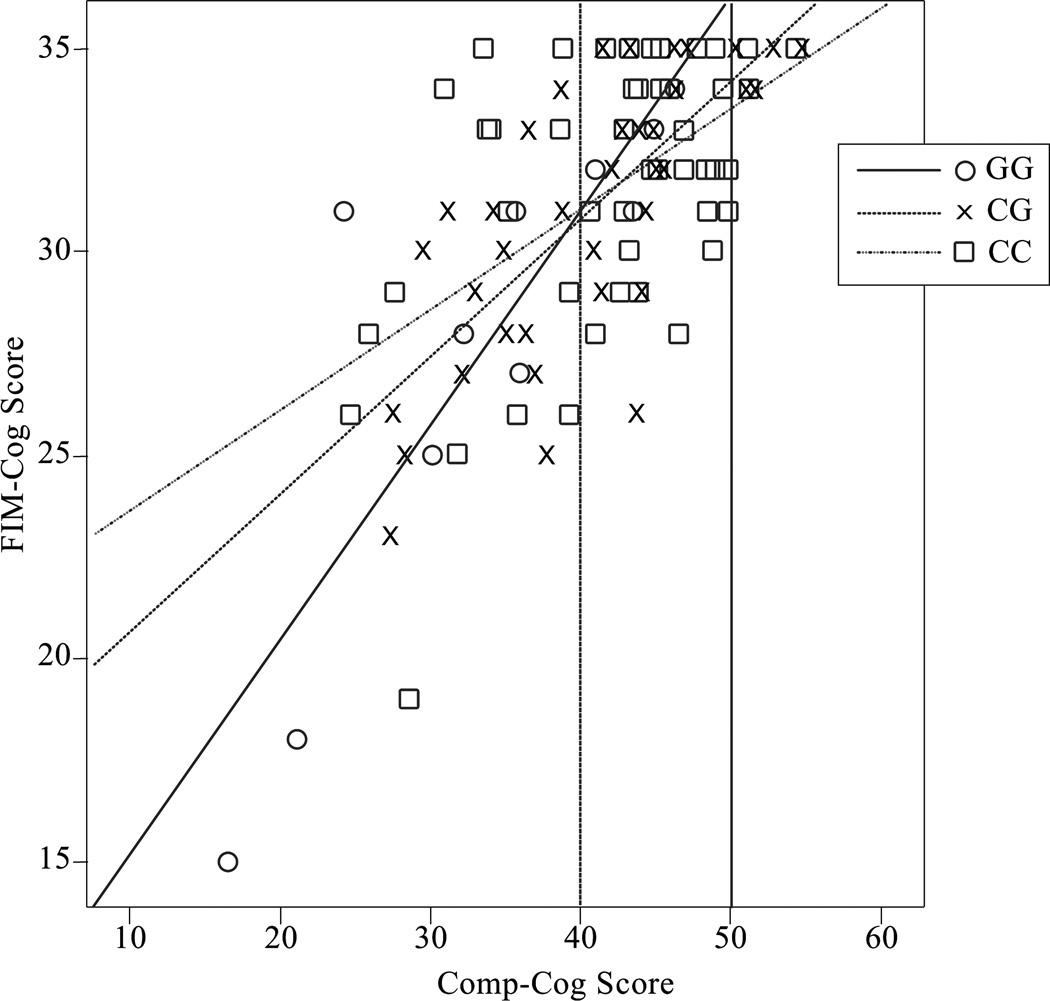
Methods: We evaluated 136 white adults with severe TBI for variation in VMAT2 using a tagging single nucleotide polymorphism (tSNP) approach (rs363223, rs363226, rs363251, and rs363341). We show genetic variation interacts with assessed cognitive impairment (cognitive composite [Comp-Cog] T-scores) to influence functional cognition (functional independence measure cognitive [FIM-Cog] subscale] 6 and 12 months postinjury.
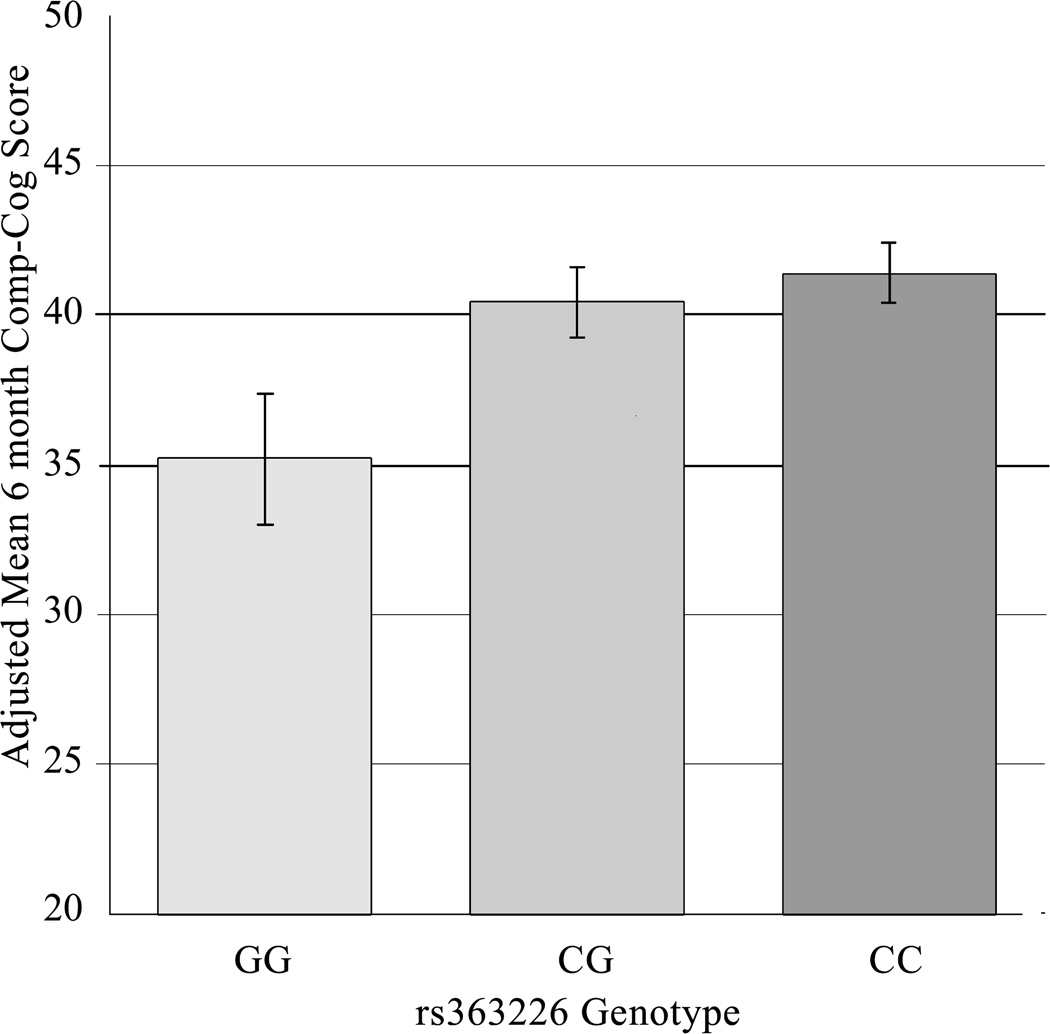
Results: Multivariate analyses at 6 months postinjury showed rs363226 genotype was associated with Comp-Cog (P = .040) and interacted with Comp-Cog to influence functional cognition (P < .001). G-homozygotes had the largest cognitive impairment, and their cognitive impairment had the greatest adverse effect on functional cognition.
Discussion: We provide the first evidence that genetic variation within VMAT2 is associated with cognitive outcomes after TBI. Further work is needed to validate this finding and elucidate mechanisms by which genetic variation affects monoaminergic signaling, mediating differences in cognitive outcomes.
Conflict of interest statement
The authors declare no conflicts of interest.
Figures
References
-
- Langlois JA, Rutland-Brown W, Wald MM. The epidemiology and impact of traumatic brain injury: a brief overview. J Head Trauma Rehabil. 2006;21(5):375–378. - PubMed
-
- Cristofori I, Levin HS. Traumatic brain injury and cognition. Handb Clin Neurol. 2015;128:579–611. - PubMed
-
- Thurman DJ, et al. Traumatic brain injury in the United States: A public health perspective. J Head Trauma Rehabil. 1999;14(6):602–615. - PubMed
-
- Arciniegas DB, Held K, Wagner P. Cognitive Impairment Following Traumatic Brain Injury. Curr Treat Options Neurol. 2002;4(1):43–57. - PubMed
Publication types
MeSH terms
Substances
Grants and funding
LinkOut - more resources
Full Text Sources
Other Literature Sources
Medical
Miscellaneous
