Review
. 2016 Mar;10(1):68-74.
doi: 10.1007/s12105-016-0694-9. Epub 2016 Feb 1.

Sinonasal Adenocarcinoma: Update on Classification, Immunophenotype and Molecular Features

Affiliations
Review

Sinonasal Adenocarcinoma: Update on Classification, Immunophenotype and Molecular Features

Ilmo Leivo. Head Neck Pathol. 2016 Mar.

Abstract

Adenocarcinomas of the sinonasal tract may originate from respiratory surface epithelium or the underlying seromucinous glands. These malignancies are divided into salivary-type adenocarcinomas and non-salivary-type adenocarcinomas. The latter are further divided into intestinal-type and nonintestinal-type adenocarcinomas. This review provides an update on tumor classification, differential diagnostic considerations and molecular features, as well as new adenocarcinoma entities in the sinonasal area.

Keywords: Immunohistochemistry; Intestinal-type adenocarcinoma; Molecular pathology; Nonintestinal-type adenocarcinoma; Salivary-type adenocarcinoma; Sinonasal adenocarcinoma; Wood dust exposure.


Figures
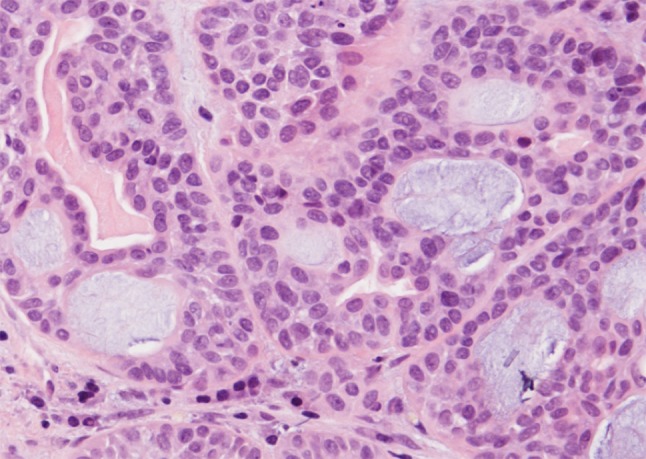
Fig. 1
Fig. 1
Adenoid cystic carcinoma of nasal cavity. Classic cribriform pattern with bland nuclear morphology. H–E stain ×400
Fig. 2
Fig. 2
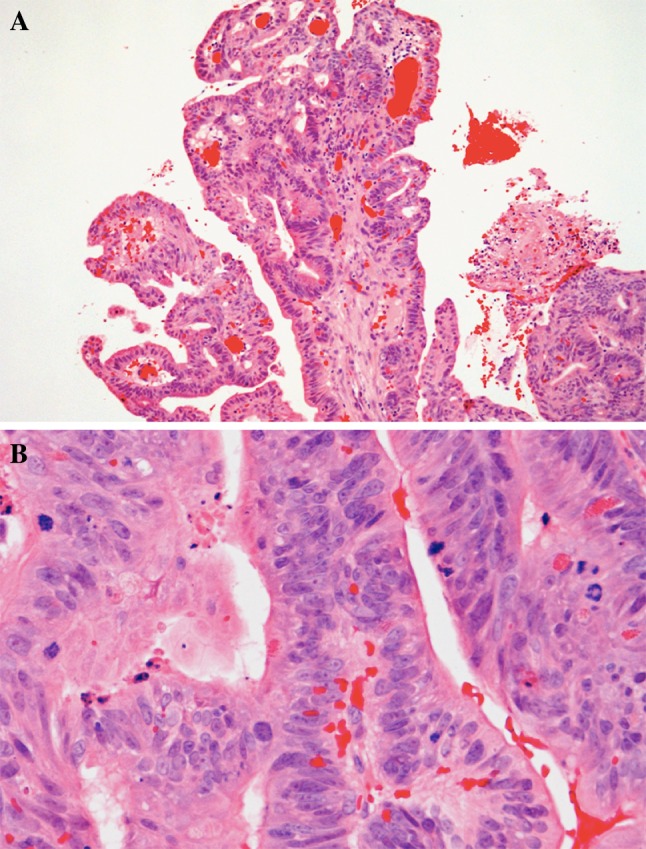
a Intestinal-type adenocarcinoma, papillary growth pattern. The pattern is composed of papillary projections and glandular and tubular structures. H–E stain ×250. b Tumor of Fig. 3a. The nuclei are elongated, irregular and often hyperchromatic. There is some nuclear piling. Cellular form is mostly cylindrical. There are many mitotic figures. H–E stain ×400
Fig. 3
Fig. 3
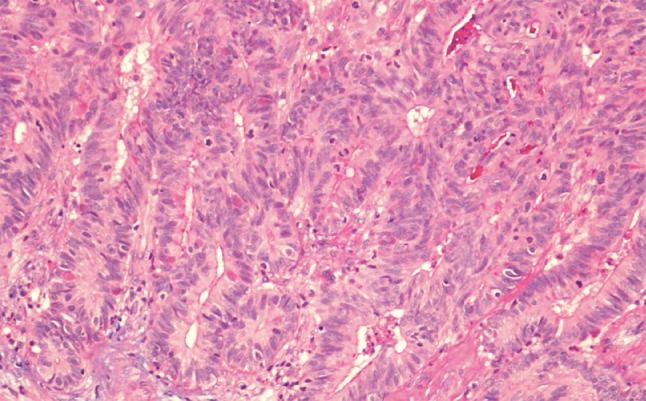
Intestinal-type adenocarcinoma, colonic growth pattern. Glandular structures and some trabecular areas. High mitotic activity. H–E stain ×250
Fig. 4
Fig. 4
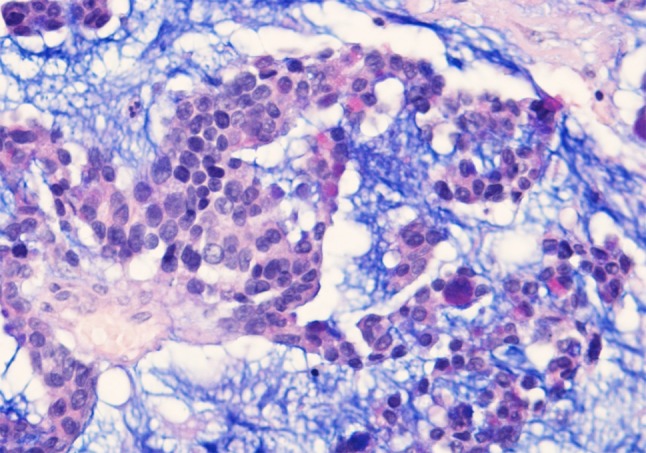
Intestinal-type adenocarcinoma, mucinous growth pattern. Clusters of tumor cells contain a few goblet-type cells, and are suspended in a pool of Alcian Blue-positive mucin. Alcian-Blue PAS stain ×400
Fig. 5
Fig. 5
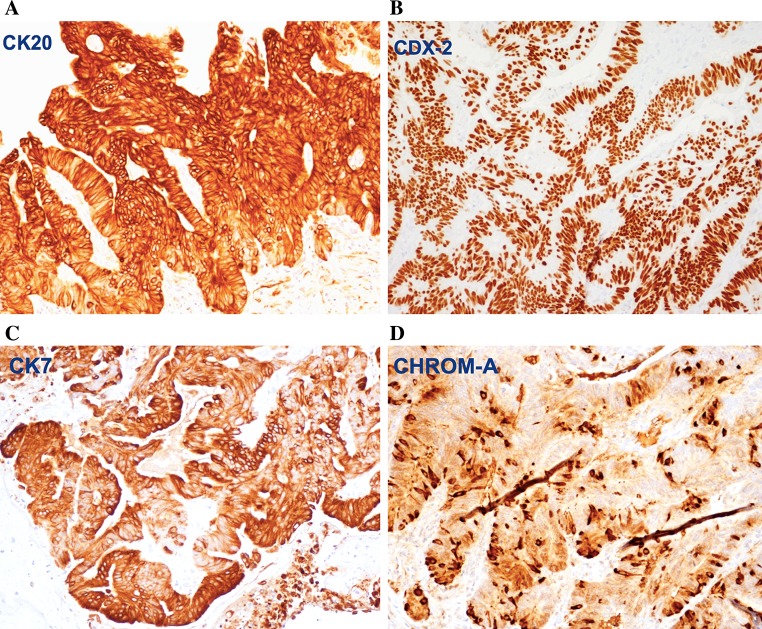
Immunohistochemical staining of intestinal-type adenocarcinoma, papillary growth pattern, for a CK20, b CDX-2, c CK7, and d chromogranin A. Peroxidase conjugated ABC Kit (Dako) ×250
Fig. 6
Fig. 6
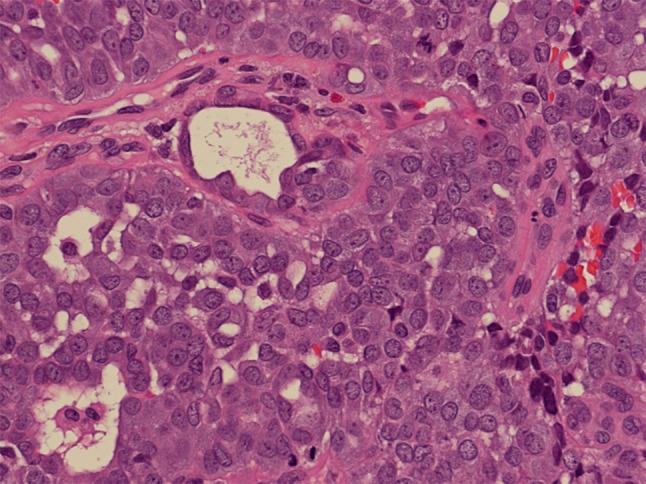
High-grade nonintestinal-type adenocarcinoma of nasal cavity. This high-grade tumor is poorly differentiated and displays atypical mitotic figures. It has areas of glandular differentiation, but does not exhibit intestinal or salivary-type features. H–E stain ×400
Fig. 7
Fig. 7
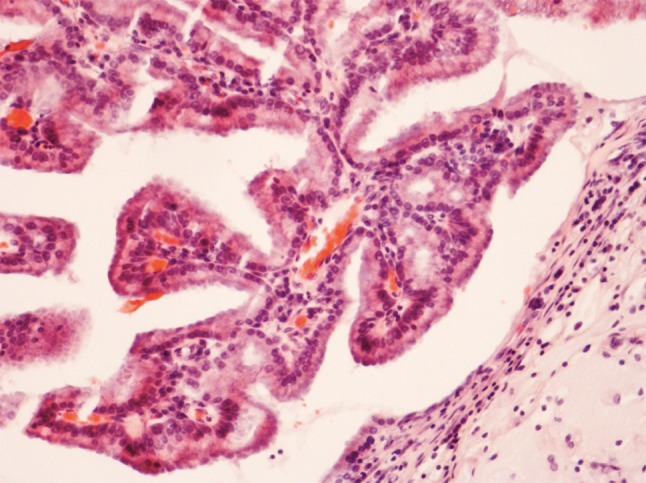
Low-grade nonintestinal-type adenocarcinoma of nasal cavity. A complex papillary growth pattern with some glandular structures. A single layer of bland columnar cells line the papillae. Nuclear pleomorphism is minimal and no mitotic figures are seen ×400
Fig. 8
Fig. 8
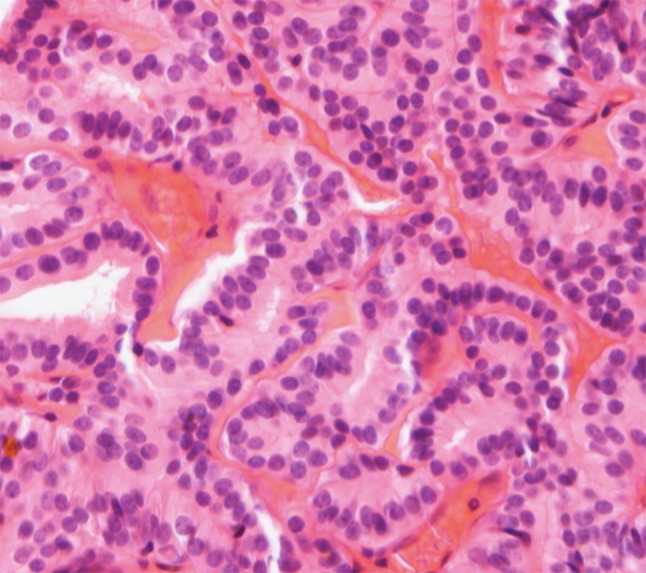
Low-grade nonintestinal-type adenocarcinoma, tubulopapillary pattern. A papillary and tubular growth pattern with a single layer of cuboidal to columnar cells with round uniform nuclei, indistinct nucleoli and eosinophilic cytoplasm. H–E stain ×400

References

    1. Gnepp DR, Heffner DK. Mucosal origin of sinonasal tract adenomatous neoplasms. Mod Pathol. 1989;2:365–371. - PubMed
    1. Eveson J. Salivary gland-type carcinomas. WHO histological classification of tumors of the nasal cavity and paranasal sinuses. In: Barnes L, Eveson JW, Reichardt P, Sidransky D, editors. Pathology & genetics, head and neck tumors. Lyon: IARC Press; 2005. pp. 24–25.
    1. Batsakis JG, Rice DH, Solomon AR. The pathology of head and neck tumors: squamous and mucous-gland carcinomas of the nasal cavity, paranasal sinuses, and larynx. Part 6. Head Neck Surg. 1980;2:497–508. doi: 10.1002/hed.2890020610. - DOI - PubMed
    1. Thompson LDR, Penner C, Ho NJ, Foss RD, Miettinen M, Wieneke JA, Moskaluk CA, Stelow EB. Sinonasal tract and nasopharyngeal adenoid cystic carcinoma: a clinicopathologic and immunophenotypic study of 86 cases. Head Neck Pathol. 2014;8:88–109. doi: 10.1007/s12105-013-0487-3. - DOI - PMC - PubMed
    1. Bishop JA, Ogawa T, Stelow EB, Moskaluk CA, Koch WM, Pai SI, Westra WH. Human papillomavirus-related carcinoma with adenoid cystic-like features. A peculiar variant of head and neck cancer restricted to the sinonasal tract. Am J Surg Pathol. 2013;37:836–844. doi: 10.1097/PAS.0b013e31827b1cd6. - DOI - PMC - PubMed

MeSH terms

Substances