


Targeting autophagy to sensitive glioma to temozolomide treatment
- PMID: 26830677
- PMCID: PMC4736617
- DOI: 10.1186/s13046-016-0303-5
Targeting autophagy to sensitive glioma to temozolomide treatment
Abstract
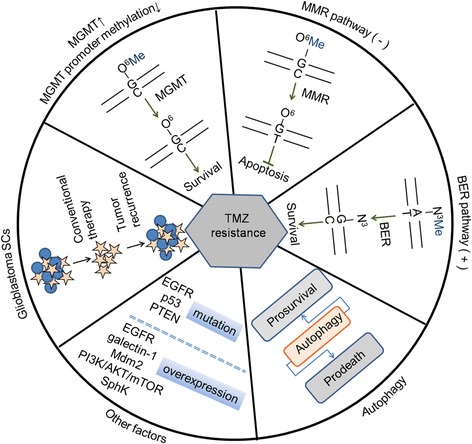
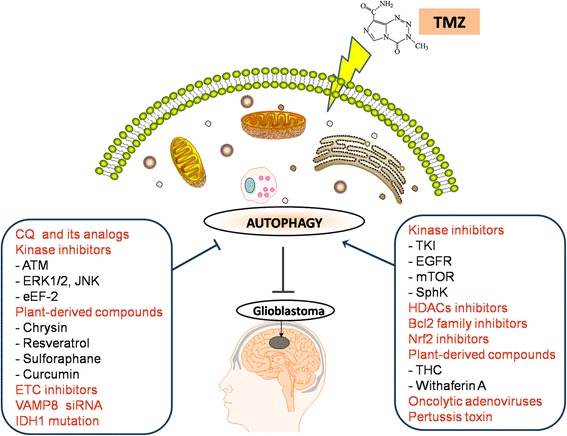
Temozolomide (TMZ), an alkylating agent, is widely used for treating primary and recurrent high-grade gliomas. However, the efficacy of TMZ is often limited by the development of resistance. Recently, studies have found that TMZ treatment could induce autophagy, which contributes to therapy resistance in glioma. To enhance the benefit of TMZ in the treatment of glioblastomas, effective combination strategies are needed to sensitize glioblastoma cells to TMZ. In this regard, as autophagy could promote cell survival or autophagic cell death, modulating autophagy using a pharmacological inhibitor, such as chloroquine, or an inducer, such as rapamycin, has received considerably more attention. To understand the effectiveness of regulating autophagy in glioblastoma treatment, this review summarizes reports on glioblastoma treatments with TMZ and autophagic modulators from in vitro and in vivo studies, as well as clinical trials. Additionally, we discuss the possibility of using autophagy regulatory compounds that can sensitive TMZ treatment as a chemotherapy for glioma treatment.
Figures
References
Publication types
MeSH terms
Substances
LinkOut - more resources
Full Text Sources
Other Literature Sources
Medical
