


Age-related effects of chronic restraint stress on ethanol drinking, ethanol-induced sedation, and on basal and stress-induced anxiety response
- PMID: 26830848
- PMCID: PMC5123306
- DOI: 10.1016/j.alcohol.2015.11.009
Age-related effects of chronic restraint stress on ethanol drinking, ethanol-induced sedation, and on basal and stress-induced anxiety response
Abstract
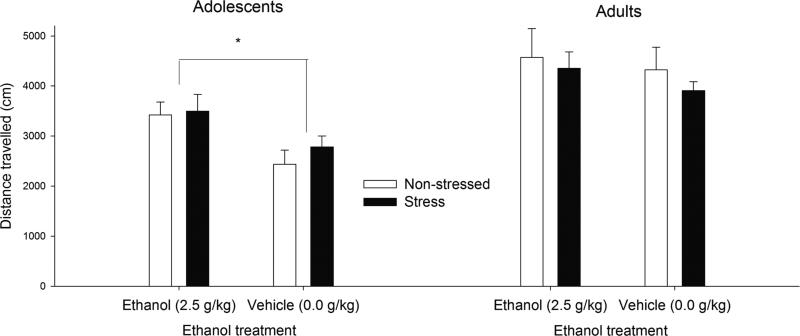
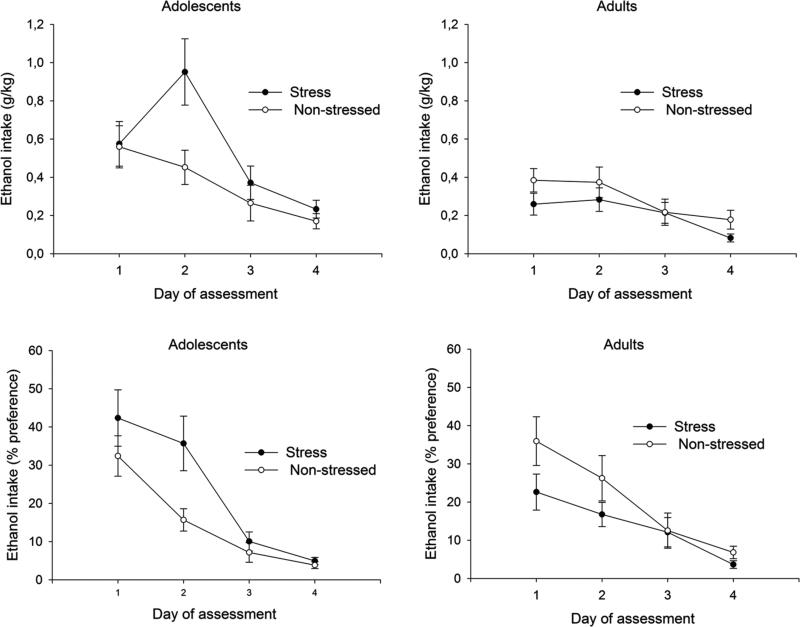
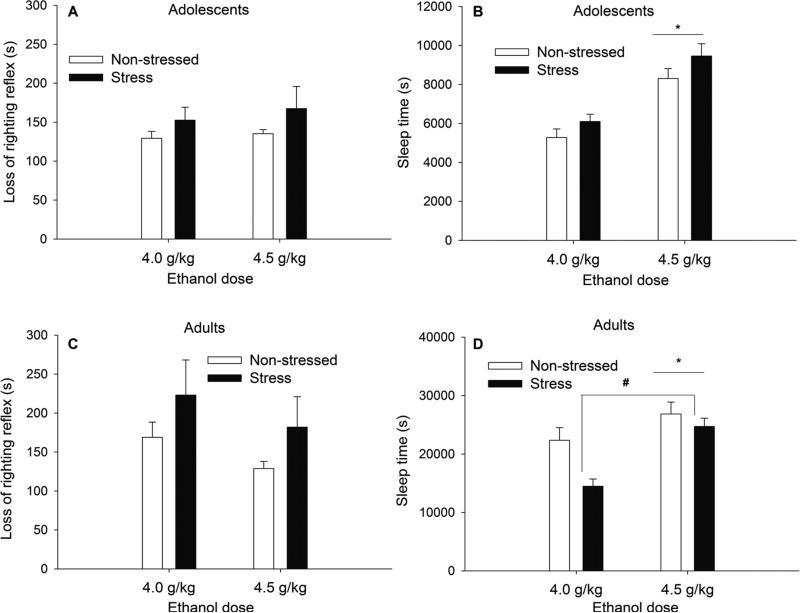
Adolescents are sensitive to the anxiolytic effect of ethanol, and evidence suggests that they may be more sensitive to stress than adults. Relatively little is known, however, about age-related differences in stress modulation of ethanol drinking or stress modulation of ethanol-induced sedation and hypnosis. We observed that chronic restraint stress transiently exacerbated free-choice ethanol drinking in adolescent, but not in adult, rats. Restraint stress altered exploration patterns of a light-dark box apparatus in adolescents and adults. Stressed animals spent significantly more time in the white area of the maze and made significantly more transfers between compartments than their non-stressed peers. Behavioral response to acute stress, on the other hand, was modulated by prior restraint stress only in adults. Adolescents, unlike adults, exhibited ethanol-induced motor stimulation in an open field. Stress increased the duration of loss of the righting reflex after a high ethanol dose, yet this effect was similar at both ages. Ethanol-induced sleep time was much higher in adult than in adolescent rats, yet stress diminished ethanol-induced sleep time only in adults. The study indicates age-related differences that may increase the risk for initiation and escalation in alcohol drinking.
Keywords: Adolescent; Adult; Ethanol; Rat; Restraint stress.
Copyright © 2016 Elsevier Inc. All rights reserved.
Figures


References
-
- Balaszczuk V, Bender C, Pereno GL, Beltramino CA. Alcohol-induced neuronal death in central extended amygdala and pyriform cortex during the postnatal period of the rat. International Journal of Developmental Neuroscience. 2011;29:733–742. - PubMed
-
- Bertholomey ML, Henderson AN, Badia-Elder NE, Stewart RB. Neuropeptide Y (NPY)-induced reductions in alcohol intake during continuous access and following alcohol deprivation are not altered by restraint stress in alcohol-preferring (P) rats. Pharmacology, Biochemistry, and Behavior. 2011;97:453–461. - PMC - PubMed
Publication types
MeSH terms
Substances
Grants and funding
LinkOut - more resources
Full Text Sources
Other Literature Sources
Medical
