


Central Gain Restores Auditory Processing following Near-Complete Cochlear Denervation
- PMID: 26833137
- PMCID: PMC4760846
- DOI: 10.1016/j.neuron.2015.12.041
Central Gain Restores Auditory Processing following Near-Complete Cochlear Denervation
Abstract
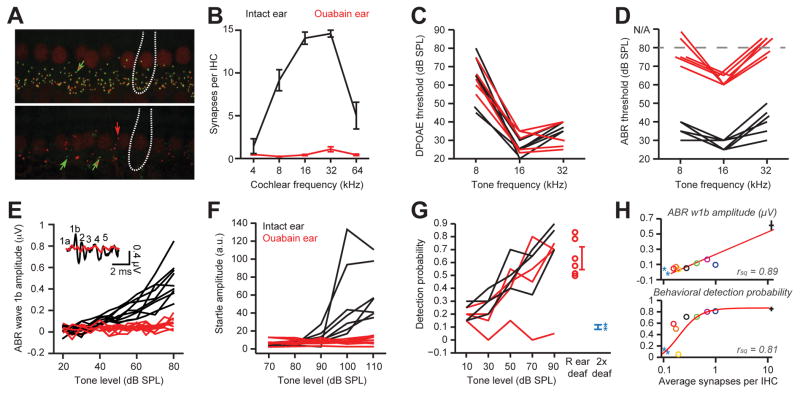
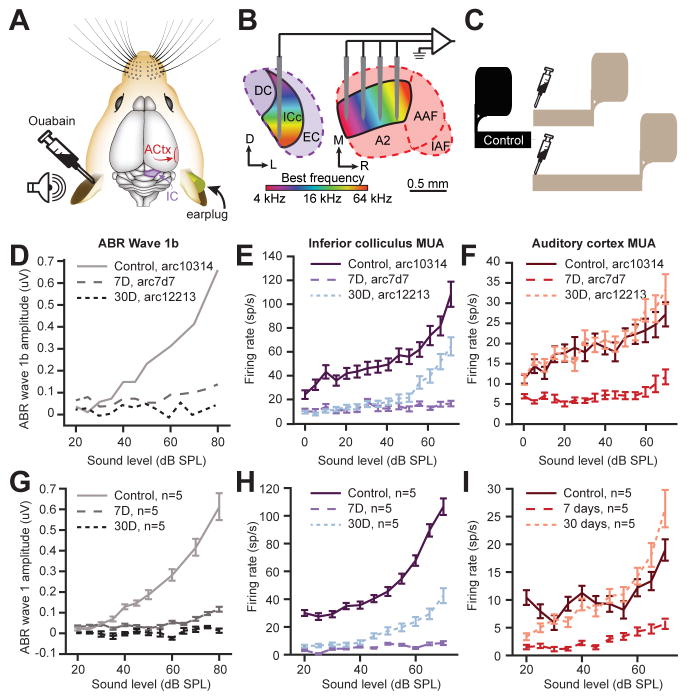
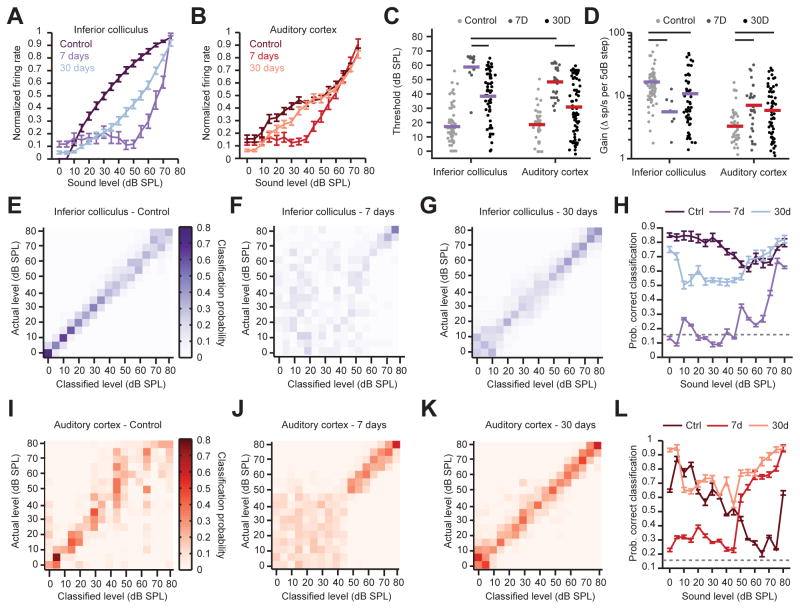
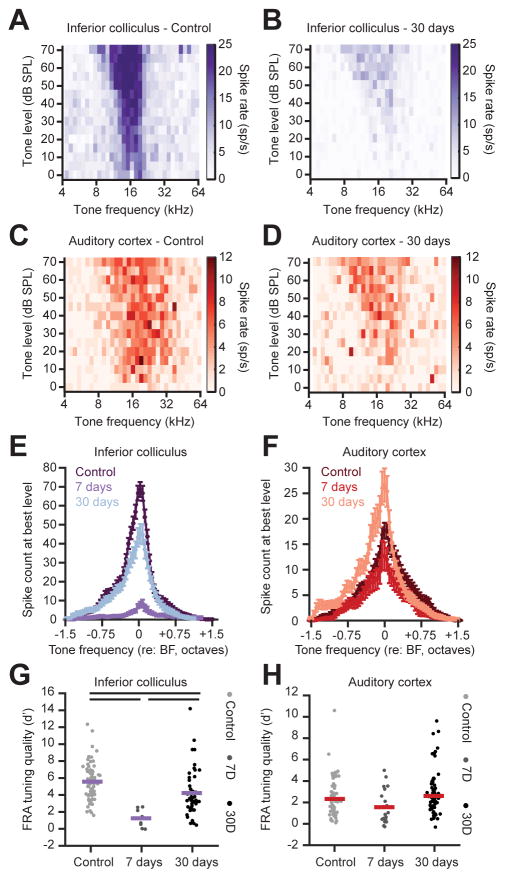
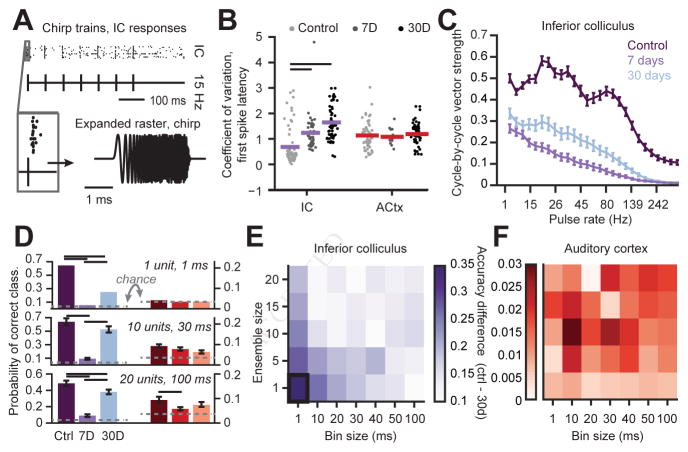
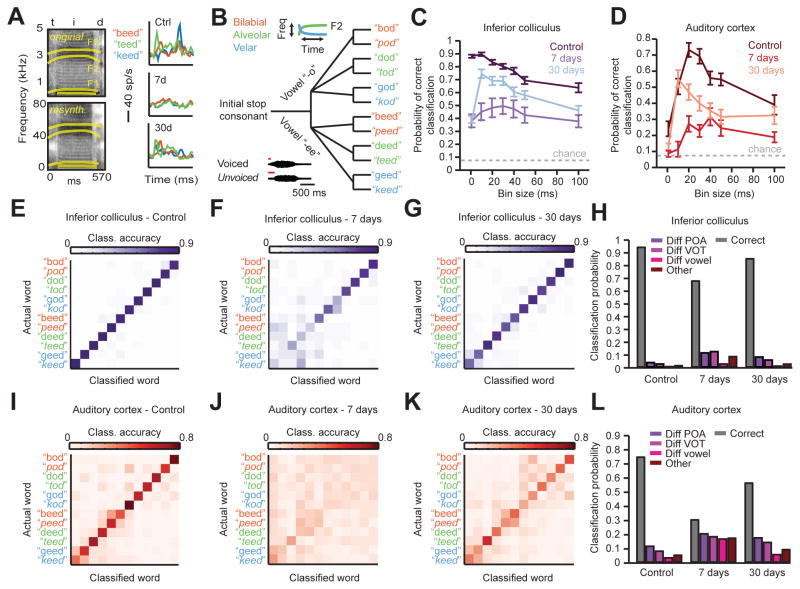
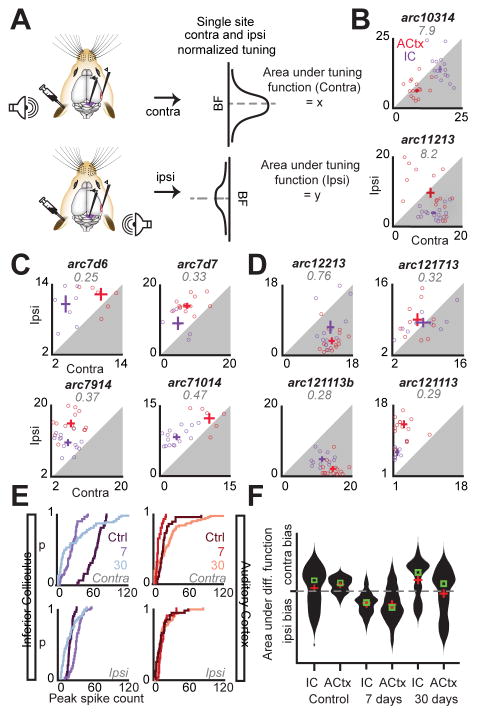
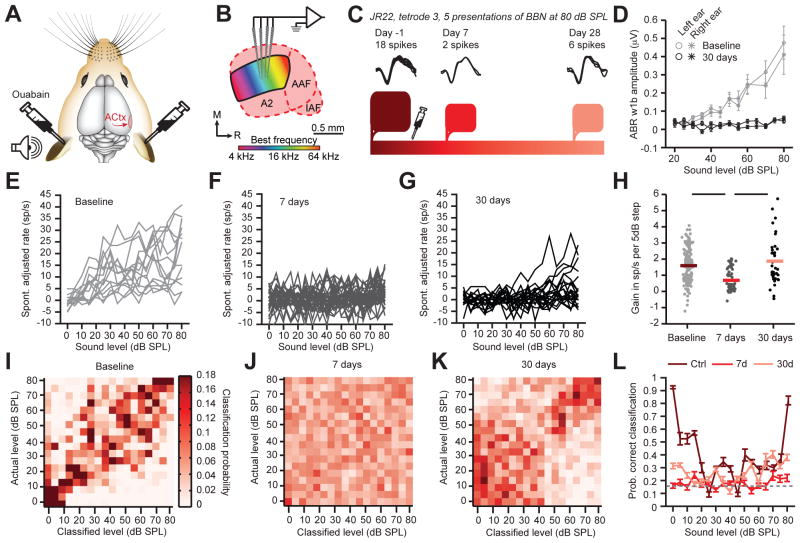
Sensory organ damage induces a host of cellular and physiological changes in the periphery and the brain. Here, we show that some aspects of auditory processing recover after profound cochlear denervation due to a progressive, compensatory plasticity at higher stages of the central auditory pathway. Lesioning >95% of cochlear nerve afferent synapses, while sparing hair cells, in adult mice virtually eliminated the auditory brainstem response and acoustic startle reflex, yet tone detection behavior was nearly normal. As sound-evoked responses from the auditory nerve grew progressively weaker following denervation, sound-evoked activity in the cortex-and, to a lesser extent, the midbrain-rebounded or surpassed control levels. Increased central gain supported the recovery of rudimentary sound features encoded by firing rate, but not features encoded by precise spike timing such as modulated noise or speech. These findings underscore the importance of central plasticity in the perceptual sequelae of cochlear hearing impairment.
Copyright © 2016 Elsevier Inc. All rights reserved.
Figures
Comment in
-
The Ying and Yang of Auditory Nerve Damage.Neuron. 2016 Feb 17;89(4):680-2. doi: 10.1016/j.neuron.2016.02.007. Neuron. 2016. PMID: 26889808
References
-
- Berlin CI, Hood LJ, Morlet T, Wilensky D, Li L, Mattingly KR, Taylor-Jeanfreau J, Keats BJB, John PS, Montgomery E, et al. Multi-site diagnosis and management of 260 patients with Auditory Neuropathy/Dys-synchrony (Auditory Neuropathy Spectrum Disorder) Int J Audiol. 2010;49:30–43. - PubMed
Publication types
MeSH terms
Substances
Grants and funding
LinkOut - more resources
Full Text Sources
Other Literature Sources
Medical
Research Materials
