


Virtual dual-task treadmill training using video recording for gait of chronic stroke survivors: a randomized controlled trial
- PMID: 26834334
- PMCID: PMC4713773
- DOI: 10.1589/jpts.27.3693
Virtual dual-task treadmill training using video recording for gait of chronic stroke survivors: a randomized controlled trial
Abstract
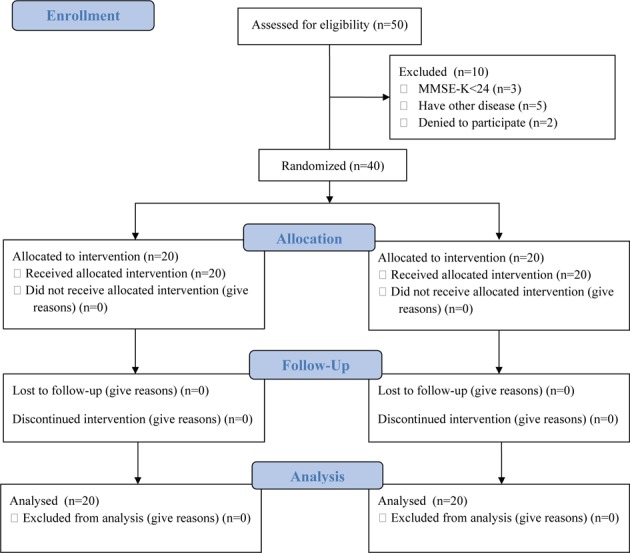
[Purpose] The aim of this study was to examine the effects of virtual dual-task treadmill training using a real-world video recording of the gait of individuals with chronic stroke. [Subjects] Forty chronic stroke survivors were randomly divided into two groups of 20 subjects each. [Methods] The experimental group performed virtual dual-task treadmill training using a video recording for 30 minutes per session, three times a week for 4 weeks, whereas the control group performed only treadmill training for 30 minutes per session, three times a week for 4 weeks. A video recording was performed in a large supermarket, and the subjects could walk at their favorable speed on a treadmill. The temporospatial gait variables were measured to examine the training effect. [Results] The experimental and control groups showed statistically significant improvements in the gait variables after training. The enhancement of gait ability was statistically better in the experimental group than in the control group. [Conclusion] Our findings suggest that virtual dual-task treadmill training using a video recording can improve the gait parameters of chronic stroke survivors.
Keywords: Gait; Stroke; Video recording.
Figures
References
-
- Chen C, Leys D, Esquenazi A: The interaction between neuropsychological and motor deficits in patients after stroke. Neurology, 2013, 80: S27–S34. - PubMed
-
- Smulders K, van Swigchem R, de Swart BJ, et al. : Community-dwelling people with chronic stroke need disproportionate attention while walking and negotiating obstacles. Gait Posture, 2012, 36: 127–132. - PubMed
LinkOut - more resources
Full Text Sources
Other Literature Sources