Review
. 2016 Jan 19:9:70.
doi: 10.3389/fnint.2015.00070. eCollection 2015.

Role of Glycogenolysis in Memory and Learning: Regulation by Noradrenaline, Serotonin and ATP

Affiliations
Review

Role of Glycogenolysis in Memory and Learning: Regulation by Noradrenaline, Serotonin and ATP

Marie E Gibbs. Front Integr Neurosci. .

Abstract

This paper reviews the role played by glycogen breakdown (glycogenolysis) and glycogen re-synthesis in memory processing in two different chick brain regions, (1) the hippocampus and (2) the avian equivalent of the mammalian cortex, the intermediate medial mesopallium (IMM). Memory processing is regulated by the neuromodulators noradrenaline and serotonin soon after training glycogen breakdown and re-synthesis. In day-old domestic chicks, memory formation is dependent on the breakdown of glycogen (glycogenolysis) at three specific times during the first 60 min after learning (around 2.5, 30, and 55 min). The chicks learn to discriminate in a single trial between beads of two colors and tastes. Inhibition of glycogen breakdown by the inhibitor of glycogen phosphorylase 1,4-dideoxy-1,4-imino-D-arabinitol (DAB) given at specific times prior to the formation of long-term memory prevents memory forming. Noradrenergic stimulation of cultured chicken astrocytes by a selective β2-adrenergic (AR) agonist reduces glycogen levels and we believe that in vivo this triggers memory consolidation at the second stage of glycogenolysis. Serotonin acting at 5-HT2B receptors acts on the first stage, but not on the second. We have shown that noradrenaline, acting via post-synaptic α2-ARs, is also responsible for the synthesis of glycogen and our experiments suggest that there is a readily accessible labile pool of glycogen in astrocytes which is depleted within 10 min if glycogen synthesis is inhibited. Endogenous ATP promotion of memory consolidation at 2.5 and 30 min is also dependent on glycogen breakdown. ATP acts at P2Y1 receptors and the action of thrombin suggests that it causes the release of internal calcium ([Ca(2+)]i) in astrocytes. Glutamate and GABA, the primary neurotransmitters in the brain, cannot be synthesized in neurons de novo and neurons rely on astrocytic glutamate synthesis, requiring glycogenolysis.

Keywords: ATP; astrocytes; consolidation; day-old chickens; glycogen re-synthesis; memory processing; noradrenaline; serotonin.


Figures
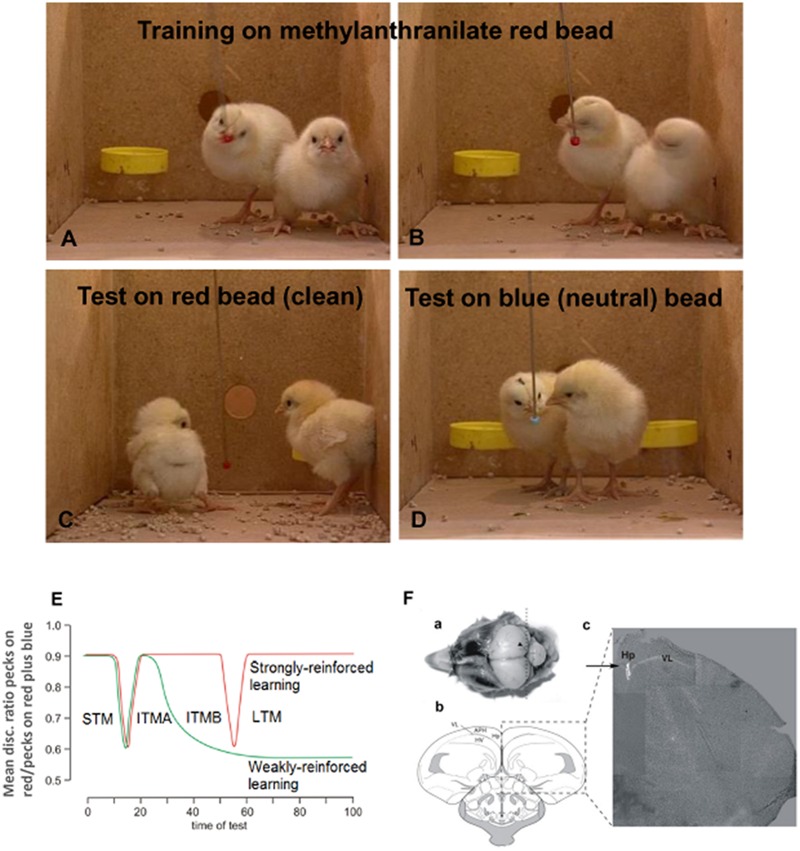
FIGURE 1
FIGURE 1
Memory model established from single trial learning in day-old chicks. Prior to training chicks are presented once with clean red and blue beads to ensure they will peck at beads of both colors. For training they are presented for 10 sec with a red bead lightly coated in methyl anthranilate (A). They peck at this once or twice before registering the bitter taste and turning away in disgust (B). On test they are then presented with clean red (C) and blue (D) beads, each for 10 s and the number of pecks on each counted using an electronic counter and converted by computer to discrimination ratios (DRs). Perfect learning equals a DR of 1, and complete forgetting or inhibition of learning a DR of 0.5. Normally the DR after unimpaired learning is ∼0.9. The chicks are kept in pairs and 8–10 pairs are included in the group used in each experiment, which allows reliable determination of significance. Each data point on subsequent graphs represents one group. (E) Memory stages following strongly reinforced (red line) after exposure to undiluted aversant and weakly reinforced training (green line) after exposure to diluted aversant. The loss of labile, weakly reinforced memory coincides with the transition between two phases of intermediate memory (ITM A and B) 30 min post-training. Drugs are used to inhibit strongly reinforced learning or rescue weakly reinforced learning, as indicated by memory retained 120 min after training. (F) Illustration of injection for hippocampal administration of drugs. (a) Image of head with scull removed and injection site indicated by arrowhead. Dotted line indicates coronal section presented in panels (b) and (c). see Gibbs et al., 2008a for details. (1F from Gibbs et al., 2008a).
FIGURE 2
FIGURE 2
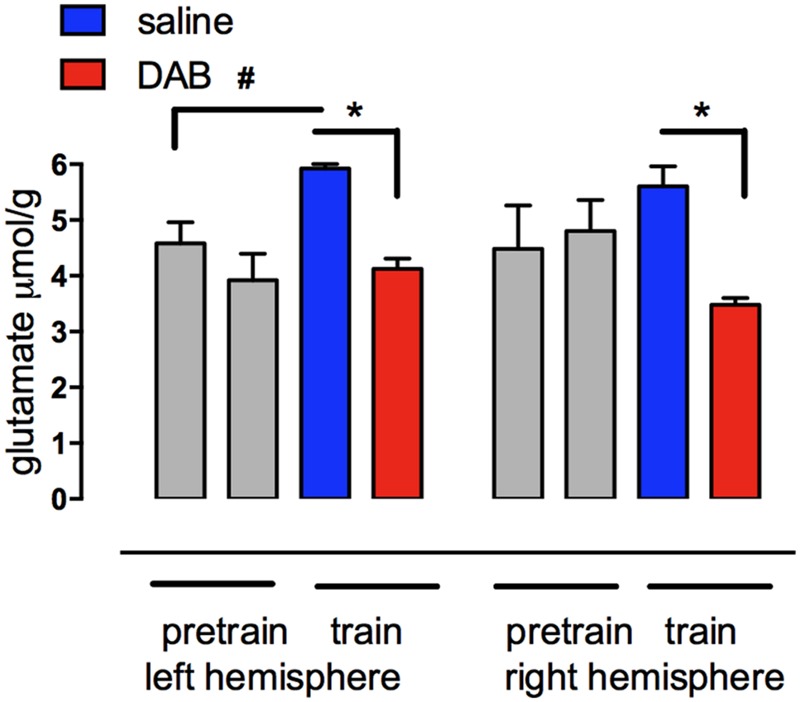
Glutamate content measured with HPLC in left and right forebrain hemispheres of chicks before and after training in the presence of DAB or saline. Chicks were injected with either saline or DAB 5 min before strongly reinforced training and brains rapidly removed 5 min after training. The increase in glutamate in the left hemisphere is prevented by DAB. No concomitant decrease occurred in aspartate or glutamine. #,*P < 0.05. (From Gibbs et al., 2007).
FIGURE 3
FIGURE 3
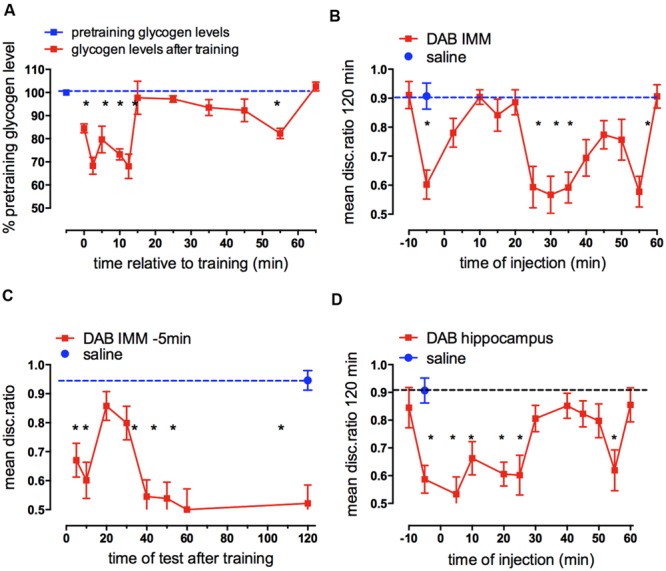
Glycogen levels after training in chick forebrain and effect on memory consolidation of inhibition of glycogen breakdown. (A) Glycogen levels in combined left and right hemispheres after training compared with the glycogen content at pre-training. Glycogen was measured as described by Lo et al. (1970) with minor modifications. Brains were excised and transferred to pre-weighted tubes and their weight determined by the increase in weight. After digestion of the tissue, glycogen was precipitated by the addition of 95% ethanol, hydrolyzed to glucose in a phenol-sulphuric acid solution and the absorbance measured at 490 nm and calibrated by aid of a standard glucose curve (From O’Dowd et al., 1994; Hertz et al., 2003). (B) Times of injection of DAB into IMM after strongly reinforced training showing those times at which memory processing requires glycogen breakdown; (C) Times of test after strongly reinforced training following DAB injection 5 min before training revealing when memory is affected by DAB; (D) Times of injection of DAB into the hippocampus following strongly reinforced training. (From Gibbs et al., 2007, 2008b). In this figure and all subsequent graphs the dashed line represents saline control value for strongly reinforced training (high DR) or weakly reinforced training (DR approaching 0.5) *P < 0.05.
FIGURE 4
FIGURE 4
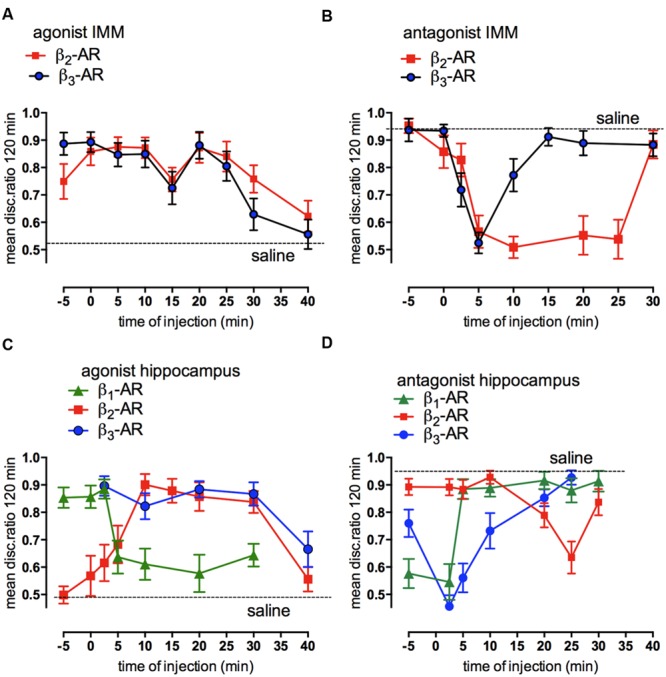
Involvement of β-adrenoceptors in weakly- and strongly reinforced memory in both avian cortex (IMM) and hippocampus. Injections of selective β-AR agonists at different times after weakly reinforced training in IMM (A) or hippocampus (C) and of selective antagonists for β-ARs in IMM (B) or hippocampus (D) after strongly reinforced learning. Memory tested 120 min after training. (From Gibbs, 2008).
FIGURE 5
FIGURE 5
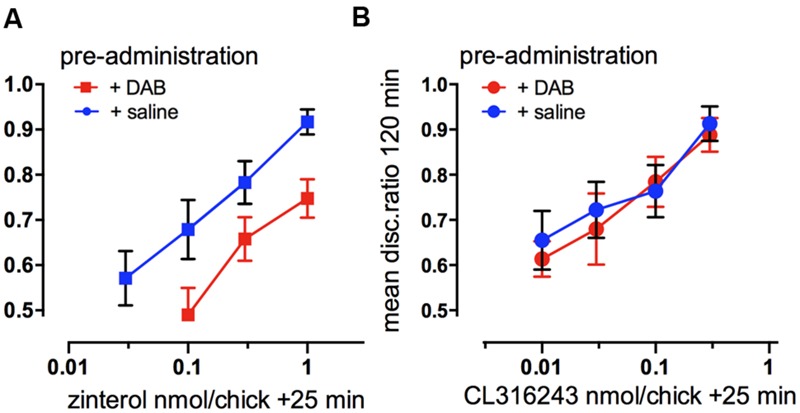
Functional selectivity of drug interaction. (A) Consolidation of memory for weakly reinforced training with the β2-AR agonist zinterol or (B) the β3-AR agonist CL316243, challenged by preadministration at 20 min of a suboptimal dose of DAB. Zinterol in the presence of DAB, inhibiting the breakdown of glycogen, was less effective in promoting memory consolidation. (From Gibbs et al., 2008c).
FIGURE 6
FIGURE 6
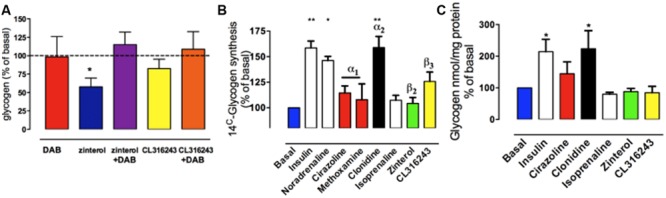
The effect of adrenoceptor agonists on glycogen levels turnover and new synthesis in cultured astrocytes from chick forebrain. (A) Astrocytes were incubated for 2 h under basal conditions with no drug added, or for 2 h in the presence of zinterol or CL316243. DAB was added 20 min prior to the 2 h incubation (adapted from from Gibbs et al., 2006). (B) Glycogen synthesis assessed by [14C]-glucose incorporation into glycogen in response to 3 hr stimulation with AR agonists, noradrenaline or insulin. (C) Glycogen levels expressed as % of basal after incubation with AR agonists or insulin. *P < 0.05; **P < 0.001. (From Hutchinson et al., 2011).
FIGURE 7
FIGURE 7
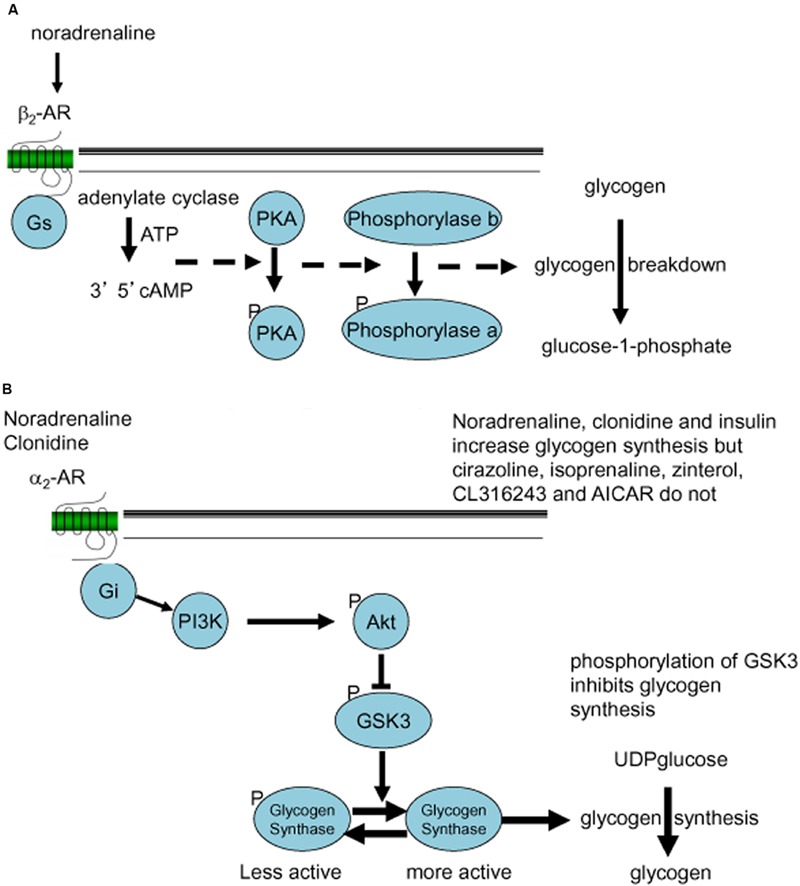
Noradrenergic signaling stimulating glycogenolysis (A) or glycogen synthesis (B). (A) β2-Adrenergic Gs-mediated formation of cAMP and phosphorylation of proteinkinase A (PKA) leads to conversion (phosphorylation) of phosphorylase b to the active phosphorylase a, which stimulates glycogen breakdown (conversion of glycogen to glucose-1-phosphate). (B) α2-Adrenergic Gi-mediated stimulation of the PI3K-AKT pathway leads to phosphorylation of glycogen synthase kinase (GSK) and dephosphorylation of glycogen synthase, which stimulates glycogen synthesis (incorporation of UDPglucose into glycogen).
FIGURE 8
FIGURE 8
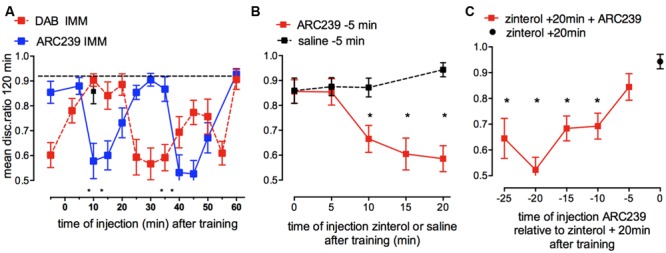
Effect of inhibition of glycogen re-synthesis by the α2B/C-AR antagonist ARC239 on strongly reinforced memory and challenges to inhibition of re-synthesis by β2-AR stimulation (glycogen breakdown) and vice versa. (A) ARC239 was injected into IMM at different times after training. The timing of the effect of ARC239 is compared with that of DAB (From Gibbs et al., 2008b; Hertz and Gibbs, 2009). (B) ARC239 or saline were injected 5 min before weakly reinforced training and zinterol injected into different groups at various times after training. Inhibiting re-synthesis of glycogen prevented β2-AR stimulation from promoting memory consolidation up to 10 min prior to zinterol injection. Normal learning is indicated by black squares. (C) Zinterol was injected into all groups 20 min after weakly reinforced training and ARC239 had been injected at times from 25 to 5 min before zinterol (i.e., from 5 min before to 15 min after training). *P < 0.05. (From Gibbs and Hutchinson, 2012).
FIGURE 9
FIGURE 9
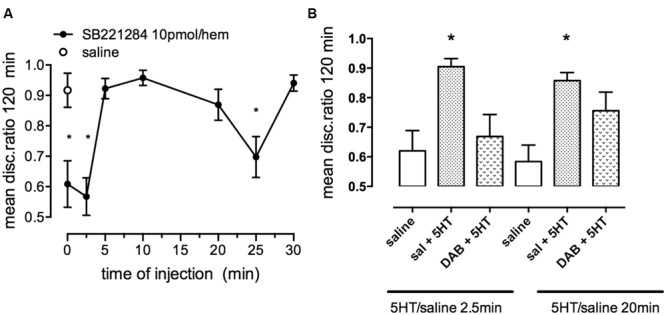
Effect of the selective 5-HT2B/C receptor antagonist SB221284 on strongly reinforced memory. (A) Time of injection of SB221284 following strongly reinforced training. (B) Ability of the inhibitor DAB to prevent consolidation of weakly reinforced memory. A suboptimal dose of DAB was given either before or 15 min after training, serotonin was given 2.5 or 20 min after training. DAB only interfered with serotonin induced consolidation at the early period. *P < 0.05. (From Gibbs and Hertz, 2014).
FIGURE 10
FIGURE 10
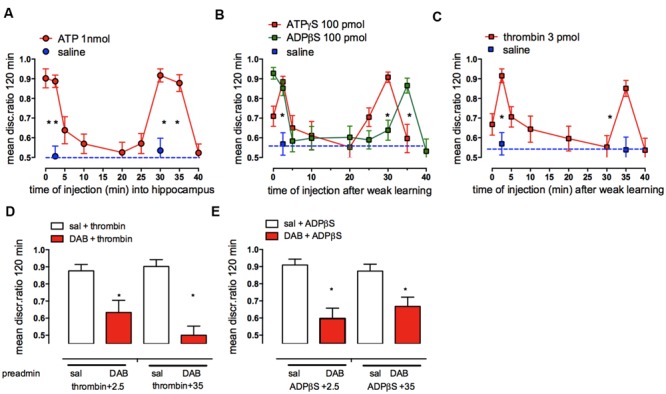
Effect of hippocampal injection of ATP, ATPγS, ADPβS, or thrombin (A–C) on consolidation of weakly reinforced training and the effect of DAB on the ability of thrombin, ADPβS to promote consolidation (D,E). Injections over two time periods after weakly reinforced training resulted in consolidation of memory 120 min after training. (A) ATP, (B) ADPβS and ATPγS and (C) thrombin. (D,E) A sub-optimal dose of DAB (red columns) was injected subcutaneously 5 min before weakly reinforced training or 5 min before injection of thrombin or ADPβS into the hippocampus 2.5 or 35 min after weakly reinforced training, i.e., at times when they normally promote consolidation (open columns). *P < 0.05. (From Gibbs et al., 2011).
FIGURE 11
FIGURE 11
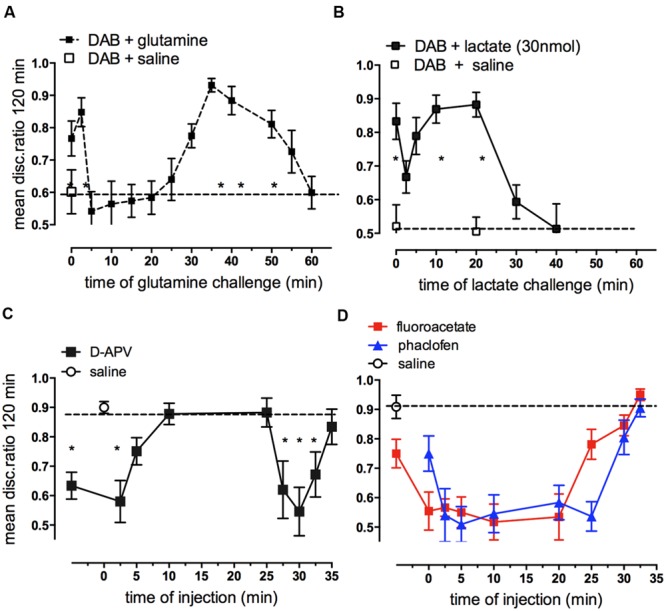
Ability of glutamine or lactate to rescue memory following DAB inhibition of glycogenolysis (A,B) and effect of hippocampal injection of antagonists of NMDA receptors, GABAB receptors or fluoroacetate on strongly reinforced training (C,D). DAB was injected into IMM 5 min before strongly reinforced training and challenged at various times by glutamine (A) or L-lactate (B) (From Hertz and Gibbs, 2009). (C) The NMDA angtagonist D-APV injected into the hippocampus inhibited memory given up to 5 min post-training and again when given 27.5–32.5 min post-training. (D) Both the GABAB receptor antagonist, phaclofen and fluoroacetate inhibited memory when given between 2.5 and 25 min post-training. *P < 0.05. (From Gibbs et al., 2008a; Gibbs and Bowser, 2009).
FIGURE 12
FIGURE 12
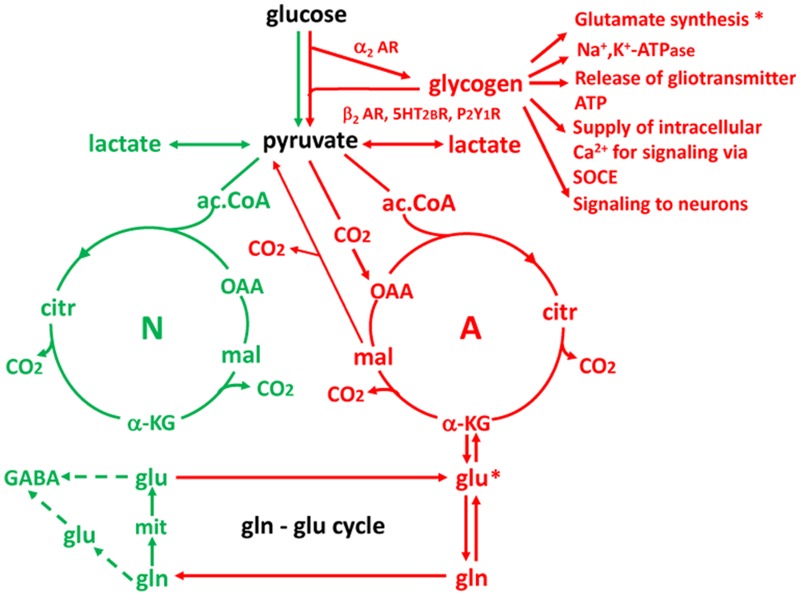
Cartoon showing key features of glucose metabolism in neurons (N and green) and astrocytes (A and red) and interactions between the two cell types. Three reactions of importance in the present review are astrocyte-specific: (1) glycogenolysis (and thus its stimulation by noradrenergic, serotonergic and purinergic subtype-specific agonists); (2) formation of the tricarboxylic acid (TCA) cycle intermediate oxaloacetate (OAA) by condensation of pyruvate with CO2 (pyruvate carboxylation); and (3) formation of glutamine from glutamate by glutamine synthetase. Reaction (1) is important for the transmitter actions on memory and for glutamate synthesis documented in this review, and for partial alleviation by β2-adrenergic activity of DAB-impaired memory resulting from Na,K-ATPase inhibition and inhibition of release of gliotransmitter ATP and of SOCE by DAB referred to. It is also important for release of lactate acting on neurons. Reaction (2) is essential for creation of a new molecule of a TCA cycle constituent OAA, allowing another molecule of a TCA cycle constituent, α-KG to leave the cycle and form glutamate. *Indicates the importance of glycogenolysis for glutamate synthesis and glutamate synthesis from α-KG. And reaction (3) is a crucial step in supplying neurons with both newly synthesized and previously released glutamate. A fourth astrocyte-specific reaction is conversion of malate to pyruvate after its exit from the TCA cycle. This reaction allows metabolic degradation of accumulated glutamate but is not discussed in the review. The Figure should not give the impression that one half of brain energy metabolism is neuronal and one half astrocytic. Astrocytes account for a smaller fraction of the volume and therefore only for about one quarter of total glucose metabolism in gray matter (reviewed by Hertz, 2011), and other cell types like microglia also contribute to total energy metabolism.

References

    1. Andersen B., Rassov A., Westergaard N., Lundgren K. (1999). Inhibition of glycogenolysis in primary rat hepatocytes by 1, 4-dideoxy-1,4-imino-D-arabinitol. Biochem. J. 342(Pt 3) 545–550. 10.1042/0264-6021:3420545 - DOI - PMC - PubMed
    1. Anlauf E., Derouiche A. (2013). Glutamine synthetase as an astrocytic marker: its cell type and vesicle localization. Front. Endocrinol. 4:144 10.3389/fendo.2013.00144 - DOI - PMC - PubMed
    1. Aoki C. (1992). Beta-adrenergic receptors: astrocytic localization in the adult visual cortex and their relation to catecholamine axon terminals as revealed by electron microscopic immunocytochemistry. J. Neurosci. 12 781–792. - PMC - PubMed
    1. Ball K. K., Cruz N. F., Mrak R. E., Dienel G. A. (2010). Trafficking of glucose, lactate and amyloid-beta from the inferior colliculus through perivascular routes. J. Cereb. Blood Flow Metab. 30 72–76. 10.1038/jcbfm.2009.206 - DOI - PMC - PubMed
    1. Bashir Z. I., Bortolotto Z. A., Davies C. H., Berretta N., Irving A. J., Seal A. J. M., et al. (1993). Induction of LTP in the hippocampus needs synaptic activation of glutamate metabotropic receptors. Nature 363 347–350. 10.1038/363347a0 - DOI - PubMed