


Eribulin in pretreated metastatic breast cancer patients: results of the TROTTER trial-a multicenter retrospective study of eribulin in real life
- PMID: 26835238
- PMCID: PMC4720621
- DOI: 10.1186/s40064-016-1700-0
Eribulin in pretreated metastatic breast cancer patients: results of the TROTTER trial-a multicenter retrospective study of eribulin in real life
Abstract
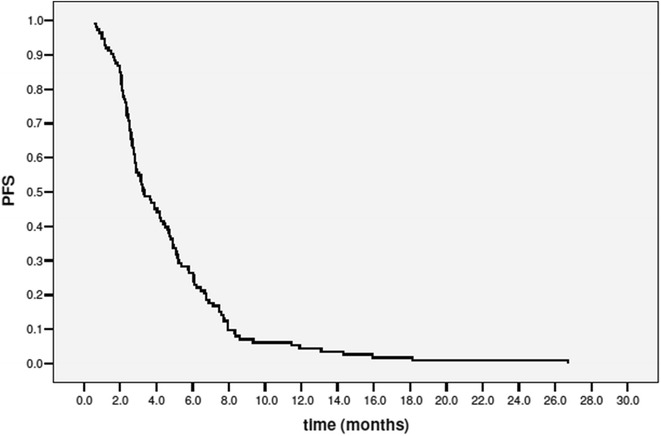
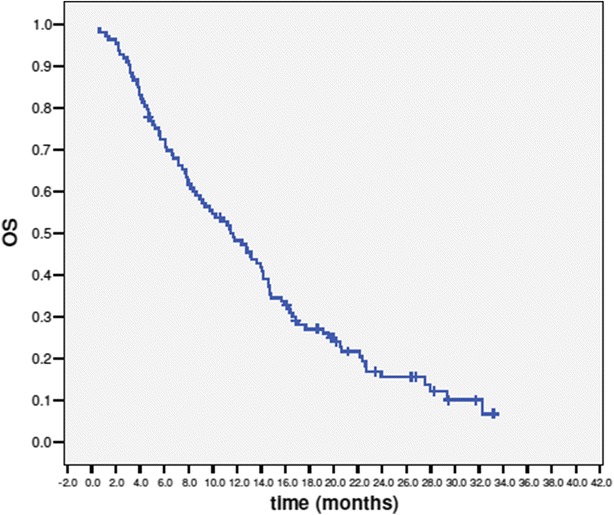
This retrospective multicenter analysis was aimed to evaluate clinical activity and tolerability of eribulin in pretreated metastatic breast cancer patients in clinical practice. Patients treated with eribulin from January 2012 to July 2013 were enrolled in the observational study from 10 italian hospitals. Tumor and toxicity evaluation were performed according to Agenzia Italiana Farmaco. One-hundred and thirteen patients were included in the study. Median age 62 years old. 71.7 % of the patients had visceral involvement and the majority had a burden of disease involving two or more organs with a median number of 2 (1-6). The median number of previous chemotherapy regimens for advanced disease was 3 (1-10). Median number of eribulin cycles was 4 (1-27). Overall response rate was 24 % (95 % CI 16.0-31.8). Clinical benefit rate, was 35.4 % (95 % CI 26.6-44.2). At a median follow-up of 29.6 months (8.3-41.9) the median progression free survival was 3.3 months (0.6-26.7; 95 % CI 2.4-4.2), and the median overall survival 11.6 months (0.6-33.3; 95 % CI 8.7-14.5). No correlation was recorded between subtypes in terms of ORR and CBR. Toxicity was manageable. Main common grade 3-4 toxicities were neutropenia (19.4 %), febrile neutropenia (0.9 %), asthenia (3.5 %), abnormal liver function test (1.8 %), stomatitis (0.9 %). Our results confirm that treatment with eribulin is feasible and safe in real-world patients.
Keywords: Eribulin; Metastatic breast cancer; Real life; Toxicity.
Figures
References
-
- Cortes J, Vahdat L, Blum JL, Twelves C, Campone M, Roché H, et al. Phase II study of the halichondrin B analog eribulin mesylate in patients with locally advanced or metastatic breast cancer previously treated with an anthracycline, a taxane, and capecitabine. JCO. 2010;28(25):3922–3928. doi: 10.1200/JCO.2009.25.8467. - DOI - PubMed
-
- Dabydeen DA, Burnett JC, Bai R, Verdier-Pinard P, Hickford SJ, Pettit GR, et al. Comparison of the activities of the truncated halichondrin B analog NSC 707389 (E7389) with those of the parent compound and a proposed binding site on tubulin. Mol Pharmacol. 2006;70(6):1866–1875. doi: 10.1124/mol.106.026641. - DOI - PubMed
LinkOut - more resources
Full Text Sources
Other Literature Sources
Miscellaneous
