A pilot trial on the treatment of gastroesophageal reflux-related cough in infants
- PMID: 26835260
- PMCID: PMC4728850
- DOI: 10.3978/j.issn.2224-4336.2012.03.03
A pilot trial on the treatment of gastroesophageal reflux-related cough in infants
Abstract
Background: Diagnosing asthma in infancy is largely made on the basis of the symptoms of cough and wheeze. A similar presentation can be seen in neurologically normal infants with excessive gastroesophageal reflux (GER). There are no randomized placebo controlled studies in infants using proton pump inhibitors (PPI) alone or in addition to prokinetic agents.
Objectives: The primary objective was to confirm the presence of excessive GER in a population of infants that also had respiratory symptoms suggestive of asthma. Second, in a randomized placebo-controlled fashion, we determined whether treatment of GER with bethanacol and omeprazole could improve these respiratory symptoms.
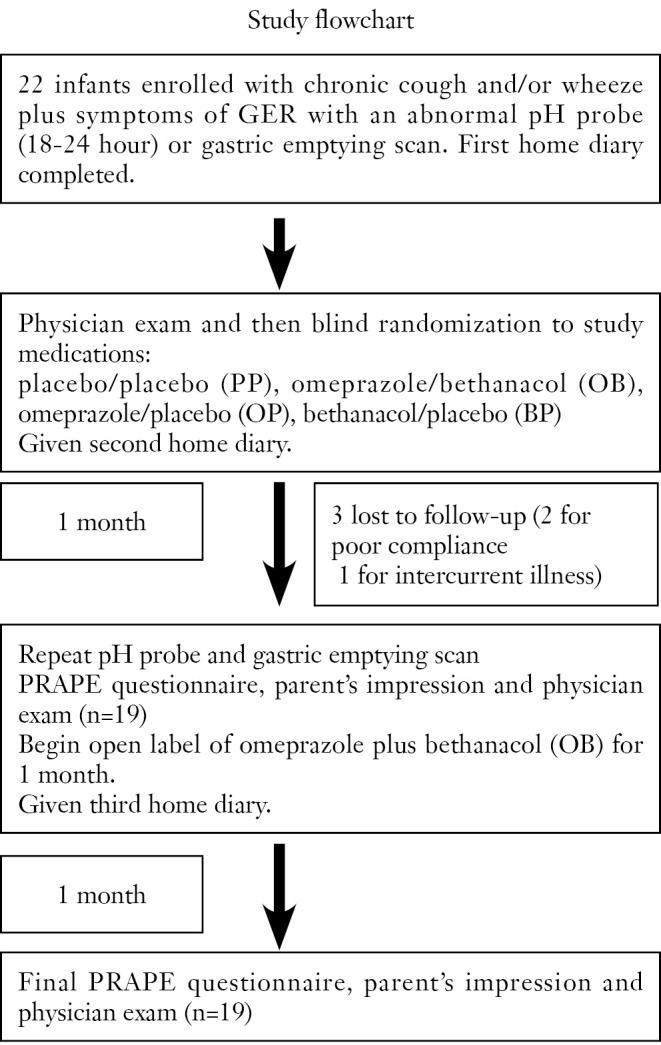
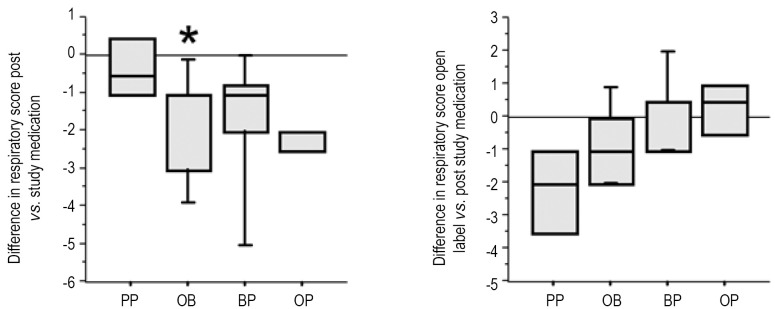
Methods: Infants (n=22) with a history of chronic cough and wheeze were enrolled, if they had evidence of GER by history and an abnormal pH probe or gastric emptying scan. Infants were randomly allocated to four treatment groups: placebo/placebo (PP), omeprazole plus bethanacol (OB), omeprazole/placebo (OP), bethanacol/placebo (BP). Evaluations by clinic questionnaire and exam, home diary, and pH probe data were done before, after study-medication and after open label of OB.
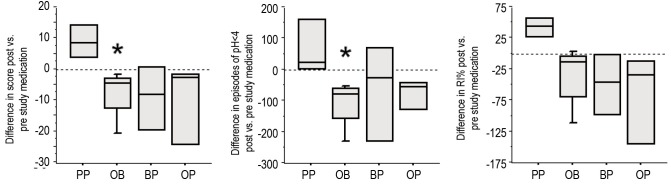
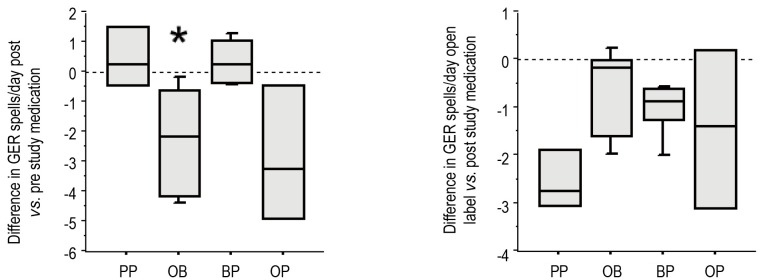
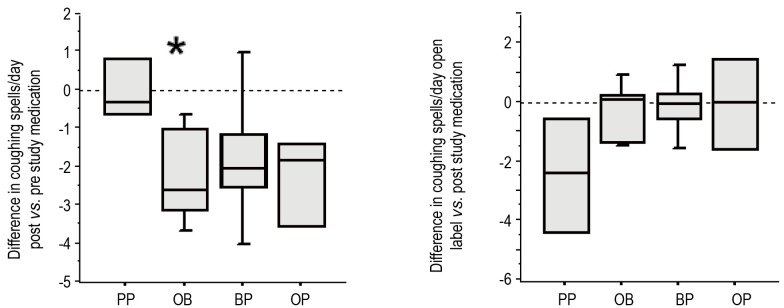
Results: Nineteen children were studied. PP did not affect GER or respiratory symptoms, and did not decrease GER measured by pH probe. In contrast, OB decreased GER as measured by pH probe indices and parental assessment. In association, OB significantly decreased daytime coughing and improved respiratory scores. No adverse effects were reported.
Conclusions: In infants with a clinical presentation suggestive of chronic GER-related cough, the use of omeprazole and bethanacol appears to be viable therapeutic option.
Keywords: Cough; esophagus; gastroesophageal reflux; pediatric asthma.
Conflict of interest statement
Figures
References
-
- Loughlin GM. Respiratory consequences of dysfunctional swallowing and aspiration. Dysphagia 1989;3:126-30. - PubMed
-
- Irwin RS, Madison JM, Fraire AE. The cough reflex and its relation to gastroesophageal reflux. Am J Med 2000;108:73S-8S. - PubMed
-
- Orenstein SR, Shalaby TM, Kelsey SF, et al. Natural history of infant reflux esophagitis: symptoms and morphometric histology during one year without pharmacotherapy. Am J Gastroenterol 2006;101:628-40. - PubMed
-
- Rudolph CD, Mazur LJ, Liptak GS, et al. Guidelines for evaluation and treatment of gastroesophageal reflux in infants and children: recommendations of the North American Society for Pediatric Gastroenterology and Nutrition. J Pediatr Gastroenterol Nutr 2001;32:S1-31. - PubMed
-
- Vakil N, van Zanten SV, Kahrilas P, et al. The Montreal definition and classification of gastroesophageal reflux disease: a global evidence-based consensus. Am J Gastroenterol 2006;101:1900-20; quiz 1943. - PubMed
LinkOut - more resources
Full Text Sources
Miscellaneous