


Different digital paths to the keg? How exposure to peers' alcohol-related social media content influences drinking among male and female first-year college students
- PMID: 26835604
- PMCID: PMC5098897
- DOI: 10.1016/j.addbeh.2016.01.011
Different digital paths to the keg? How exposure to peers' alcohol-related social media content influences drinking among male and female first-year college students
Abstract
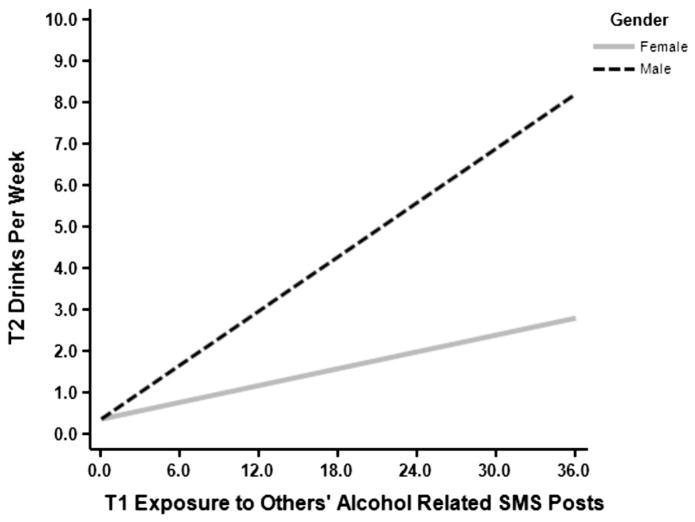
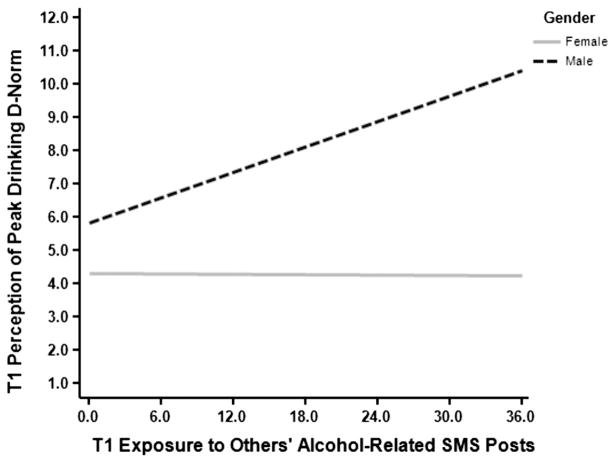
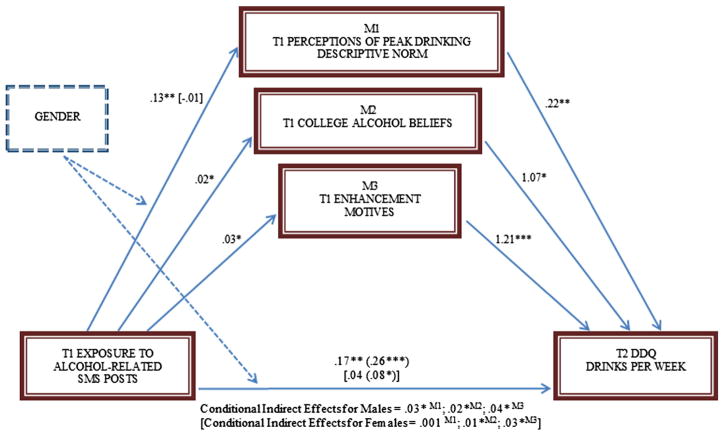
Despite speculation that peers' alcohol-related content on social media sites (SMS) may influence the alcohol use behaviors of SMS frequenting college students, this relationship has not been investigated longitudinally. The current prospective study assesses the relationship between exposure to peers' alcohol-related SMS content and later-drinking among first-year college students. Among 408 first-year students, total exposure to peers' alcohol-related content on Facebook, Instagram, and Snapchat during the initial 6 weeks of college predicted alcohol consumption 6 months later. The rather robust relationship persisted even after students' and close friends drinking were accounted for, indicating that alcohol references on SMS do not simply reflect alcohol use behaviors that would otherwise be observed in the absence of SMS and be predictive of later alcohol use. Findings also illuminate important gender differences in the degree to which peers' alcohol-related SMS content influenced later drinking behavior as well as psychological mediators of this relationship. Among females, enhancement drinking motives and beliefs about the role of alcohol in the college experience fully mediated the relationship between SMS alcohol exposure and later drinking. Males, however, evidenced a much stronger predictive relationship between SMS alcohol exposure and second semester drinking, with this relationship only partially explained by perceptions of drinking norms, enhancement drinking motives, and beliefs about the role of alcohol in the college experience. Implications of these findings for college drinking prevention efforts and directions for future research are discussed.
Keywords: College student drinking; Gender differences; Mediation analysis; Social influence; Social media.
Copyright © 2016. Published by Elsevier Ltd.
Figures
References
-
- Abar C, Turrisi R. How important are parents during the college years? A longitudinal perspective of indirect influences parents yield on their college teens’ alcohol use. Addictive Behaviors. 2008;33(10):1360–1368. http://dx.doi.org/10.1016/j.addbeh.2008.06.010. - DOI - PMC - PubMed
-
- Aiken LS, West SG. Multiple regression. Beverly Hills: Sage Publishing; 1991.
-
- Ajzen I, Fishbein M. Attitudes and normative beliefs as factors influencing behavioral intentions. Journal of Personality and Social Psychology. 1972;21(1):1–9. http://dx.doi.org/10.1037/h0031930. - DOI
-
- Bandura A. Social learning theory. Oxford, England: Prentice-Hall; 1977.
-
- Barker V. Older adolescents’ motivations for social network site use: The influence of gender, group identity, and collective self-esteem. Cyberpsychology & Behavior. 2009;12(2):209–213. http://dx.doi.org/10.1089/cpb.2008.0228. - DOI - PubMed
MeSH terms
Grants and funding
LinkOut - more resources
Full Text Sources
Other Literature Sources
