. 2016 Feb 3:7:10613.
doi: 10.1038/ncomms10613.

Major bacterial lineages are essentially devoid of CRISPR-Cas viral defence systems

Affiliations

Major bacterial lineages are essentially devoid of CRISPR-Cas viral defence systems

David Burstein et al. Nat Commun. .

Abstract

Current understanding of microorganism-virus interactions, which shape the evolution and functioning of Earth's ecosystems, is based primarily on cultivated organisms. Here we investigate thousands of viral and microbial genomes recovered using a cultivation-independent approach to study the frequency, variety and taxonomic distribution of viral defence mechanisms. CRISPR-Cas systems that confer microorganisms with immunity to viruses are present in only 10% of 1,724 sampled microorganisms, compared with previous reports of 40% occurrence in bacteria and 81% in archaea. We attribute this large difference to the lack of CRISPR-Cas systems across major bacterial lineages that have no cultivated representatives. We correlate absence of CRISPR-Cas with lack of nucleotide biosynthesis capacity and a symbiotic lifestyle. Restriction systems are well represented in these lineages and might provide both non-specific viral defence and access to nucleotides.


Figures
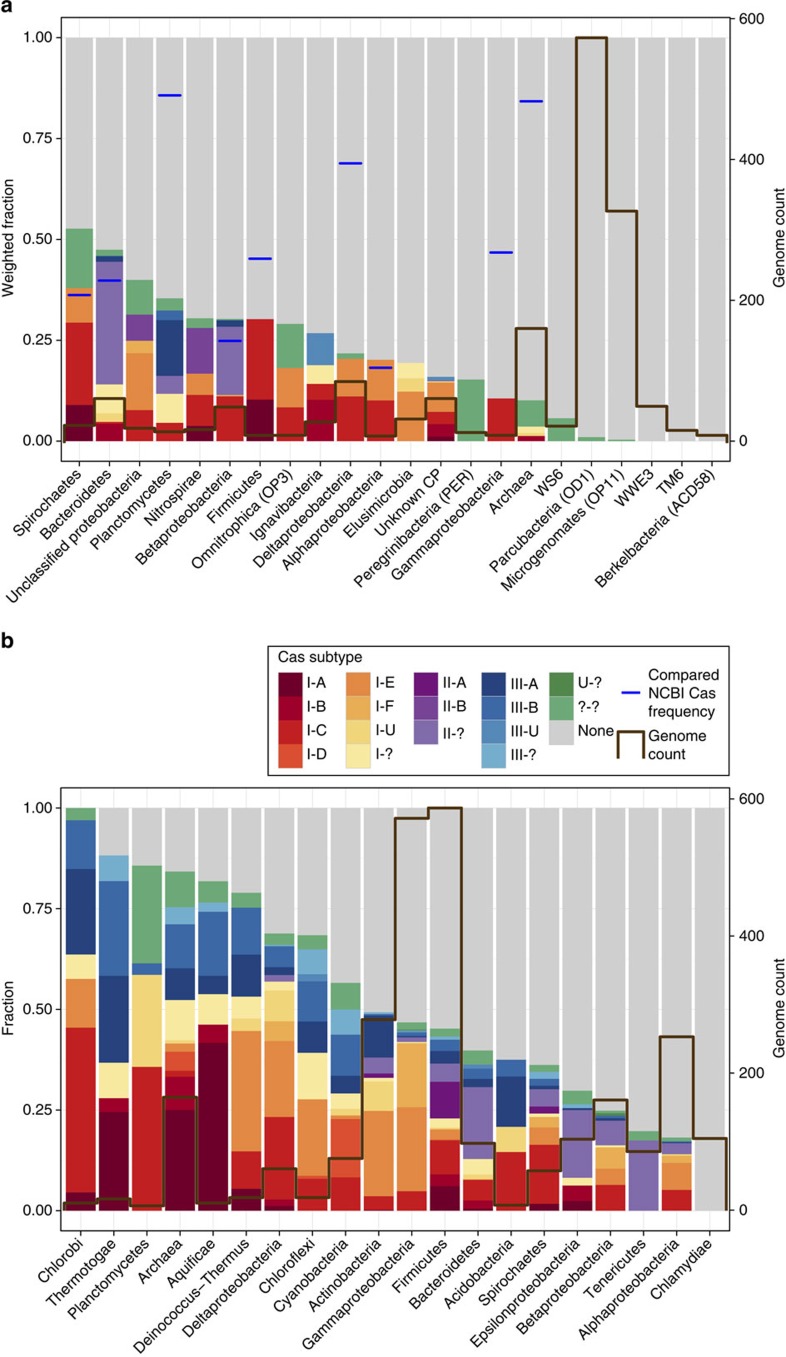
Figure 1
Figure 1. The frequency of cas operons in different lineages.
(a) Rifle groundwater metagenomic data sets and (b) NCBI complete bacterial and archaeal genomes. Only lineages with more than ten genomes are presented. Column heights are normalized for genome completeness, column colours represent CRISPR-Cas type, and the bold brown line represents the number of genomes. Blue vertical lines in a represent the fraction of genomes with CRISPR-Cas among NCBI complete genomes for applicable lineages. Two superphyla and four phyla in the groundwater samples, including the two most abundant ones, superphyla Parcubacteria (OD1), and Microgenomates (OP11), have an extremely low incidence of cas operons.
Figure 2
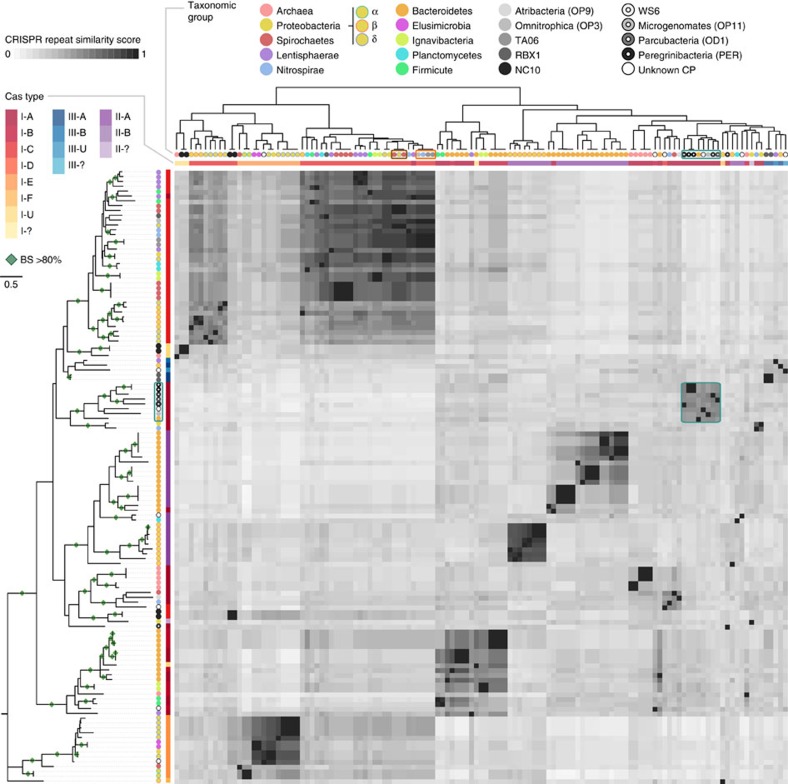
Figure 2. Cas1 phylogeny versus repeat similarity in CRISPR-Cas retrieved from Rifle groundwater samples.
Cas1 phylogeny (left) compared with the similarity of repeats in associated CRISPR arrays (top). Coloured circles on the branch tips represent taxonomic affiliation. Colour strip represent CRISPR-Cas type. Heat map shades correspond to full-length repeat similarity. Genomes from different phyla with identical repeats are marked by brown and orange boxes. The cyan box highlights a cluster of genomes with closely related Cas1 proteins and similar repeats, which includes one Bacteroidetes genome and most of the genomes from CPR organisms that have a CRISPR-Cas system. Green diamonds mark branching with bootstrap values (BS) >80%.
Figure 3
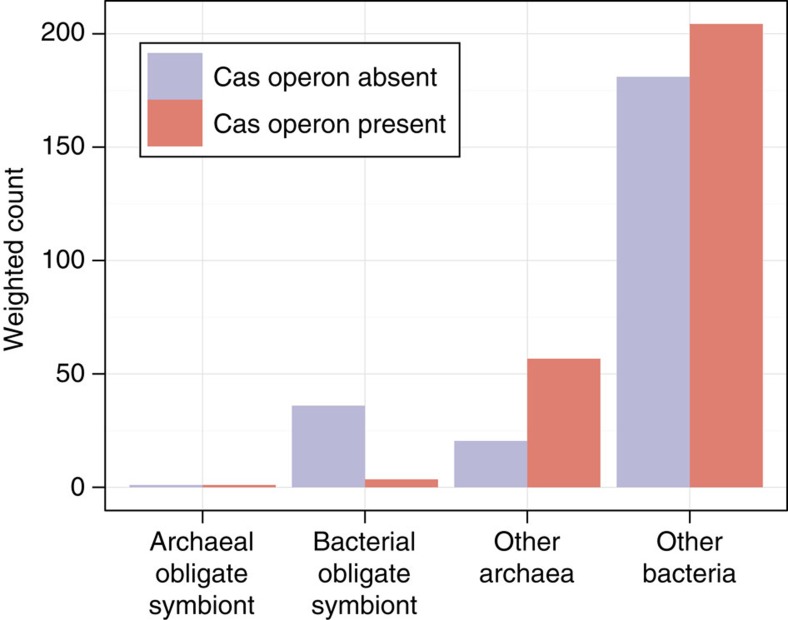
Figure 3. Association between obligate symbiotic lifestyles and presence of CRISPR-Cas among well-studied bacteria and archaea.
Existence of CRISPR-Cas (purple: absent; red: present) among 1,703 sequenced organisms, including 203 obligate symbionts (two archaea; 201 bacteria) and 1,500 organisms that are not obligate symbionts (164 archaea and 1,336 bacteria). To address sample biases, each genome was assigned a weight inversely proportional to the number of genomes represented in the genus. Thus, each genus received a total count of 1 on the y axis. Even when considering the differences in CRISPR-Cas abundance between bacteria and archaea, a significant association is found between obligate symbiotic lifestyles and presence of CRISPR-Cas (P value <1.6 × 10⁻⁸, ANOVA).

References

    1. Barrangou R. et al. CRISPR provides acquired resistance against viruses in prokaryotes. Science 315, 1709–1712 (2007). - PubMed
    1. Garneau J. E. et al. The CRISPR/Cas bacterial immune system cleaves bacteriophage and plasmid DNA. Nature 468, 67–71 (2010). - PubMed
    1. Sorek R., Kunin V. & Hugenholtz P. CRISPR—a widespread system that provides acquired resistance against phages in bacteria and archaea. Nat. Rev. Microbiol. 6, 181–186 (2008). - PubMed
    1. Cong L. et al. Multiplex genome engineering using CRISPR/Cas systems. Science 339, 819–823 (2013). - PMC - PubMed
    1. Mali P. et al. RNA-guided human genome engineering via Cas9. Science 339, 823–826 (2013). - PMC - PubMed

Publication types