


Internal structure of cesium-bearing radioactive microparticles released from Fukushima nuclear power plant
- PMID: 26838055
- PMCID: PMC4738348
- DOI: 10.1038/srep20548
Internal structure of cesium-bearing radioactive microparticles released from Fukushima nuclear power plant
Abstract
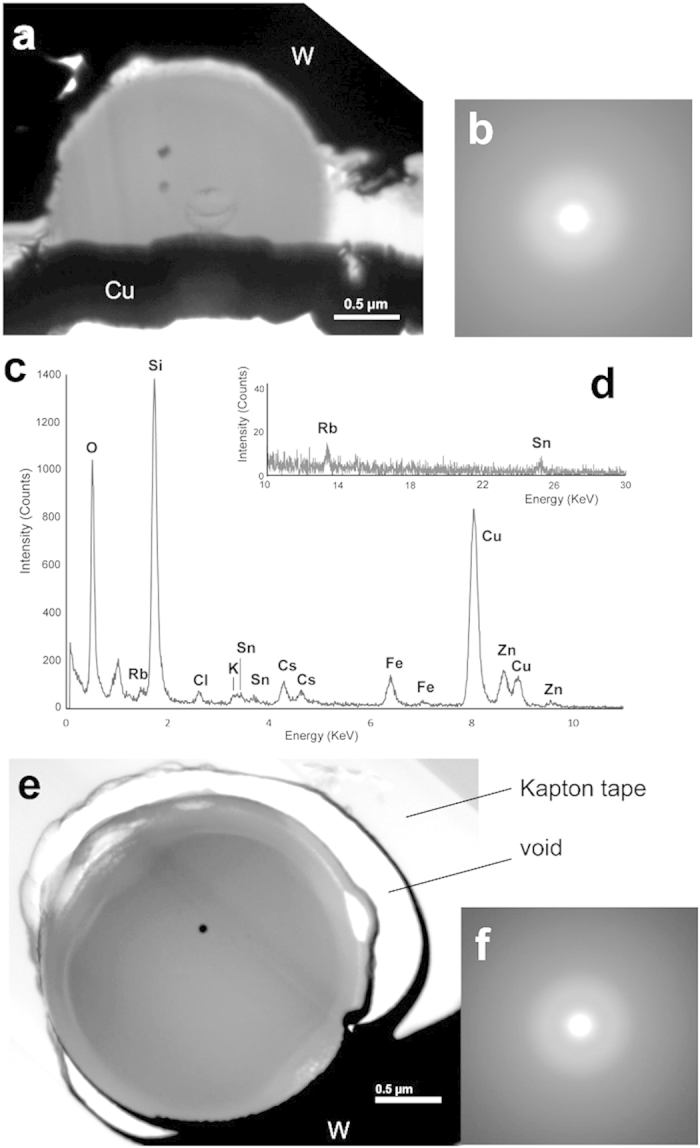
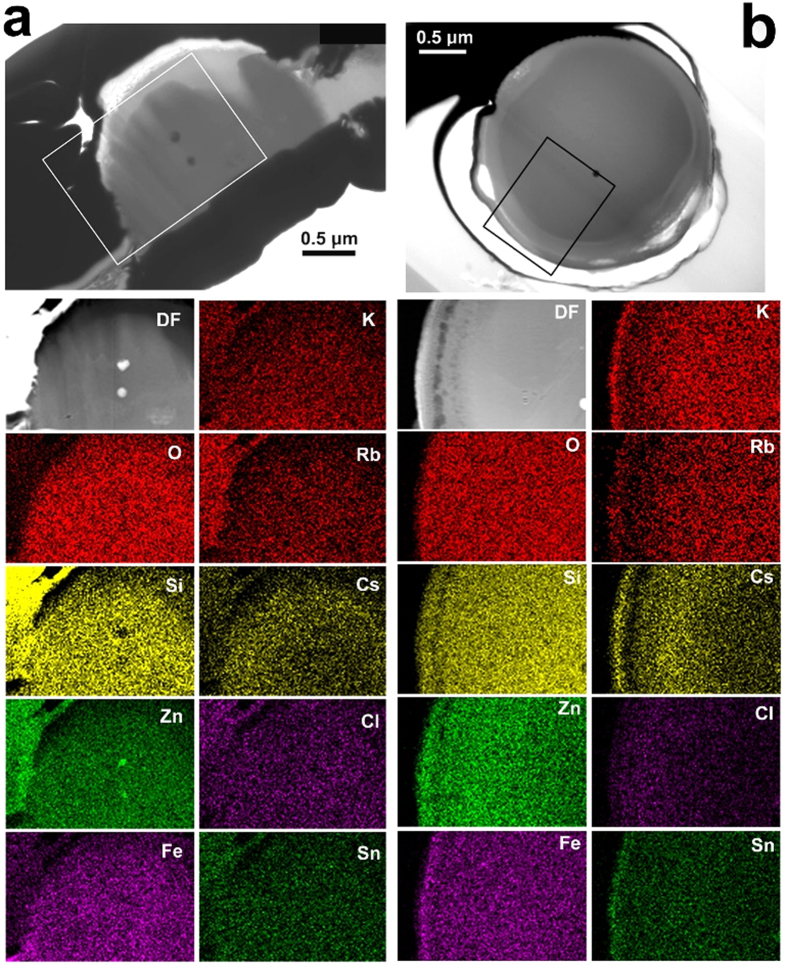
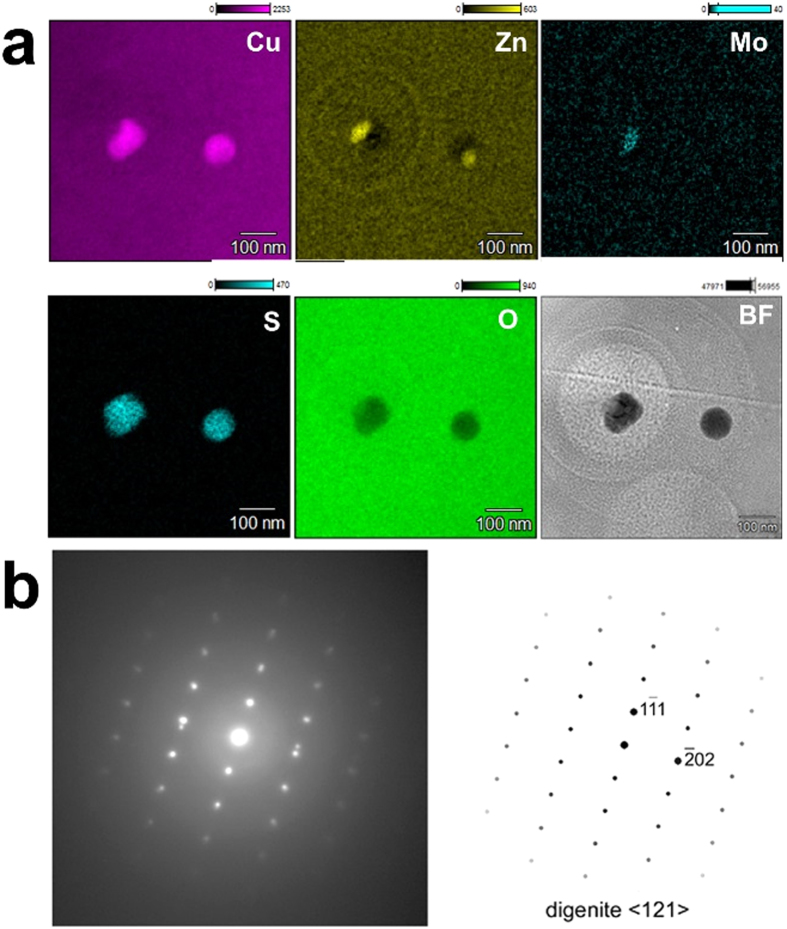
Microparticles containing substantial amounts of radiocesium collected from the ground in Fukushima were investigated mainly by transmission electron microscopy (TEM) and X-ray microanalysis with scanning TEM (STEM). Particles of around 2 μm in diameter are basically silicate glass containing Fe and Zn as transition metals, Cs, Rb and K as alkali ions, and Sn as substantial elements. These elements are homogeneously distributed in the glass except Cs which has a concentration gradient, increasing from center to surface. Nano-sized crystallites such as copper- zinc- and molybdenum sulfide, and silver telluride were found inside the microparticles, which probably resulted from the segregation of the silicate and sulfide (telluride) during molten-stage. An alkali-depleted layer of ca. 0.2 μm thick exists at the outer side of the particle collected from cedar leaves 8 months after the nuclear accident, suggesting gradual leaching of radiocesium from the microparticles in the natural environment.
Figures
References
-
- Yoshida N. & Takahashi Y. Land-surface contamination by radionuclides from the Fukushima Daiichi Nuclear Power Plant accident. Elements 8, 201–206 (2012).
-
- Katata G., Ota M., Terada H., Chino M. & Nagai H. Atmospheric discharge and dispersion of radionuclides during the Fukushima Dai-ichi Nuclear Power Plant accident. Part I: Source term estimation and local-scale atmospheric dispersion in early phase of the accident. J. Environ. Radioactiv. 109, 103–113 (2012). - PubMed
-
- Santschi P. H. et al.. Chernobyl radionuclides in the environment- tracers for the tight coupling of atmospheric, terrestrial, and aquatic geochemical processes. Environ. Sci. Technol. 22, 510–516 (1988). - PubMed
-
- Nakanishi T. M., Kobayashi N. I. & Tanoi K. Radioactive cesium deposition on rice, wheat, peach tree and soil after nuclear accident in Fukushima. J. Radioanal. Nuclear Chem. 296, 985–989 (2013).
-
- Nakanishi H. et al.. Radioactive cesium distribution in bamboo Phyllostachys reticulata (Rupr) K. Koch shoots after the TEPCO Fukushima Daiichi Nuclear Power Plant disaster. Soil Sci. Plant Nutr. 60, 801–808 (2014).
Publication types
LinkOut - more resources
Full Text Sources
Other Literature Sources
