Review
. 2016 Mar 18;118(6):994-1007.
doi: 10.1161/CIRCRESAHA.115.305376. Epub 2016 Jan 7.

The Expanding Complexity of Estrogen Receptor Signaling in the Cardiovascular System

Affiliations
Review

The Expanding Complexity of Estrogen Receptor Signaling in the Cardiovascular System

Sara Menazza et al. Circ Res. .

Abstract

Estrogen has important effects on cardiovascular function including regulation of vascular function, blood pressure, endothelial relaxation, and the development of hypertrophy and cardioprotection. However, the mechanisms by which estrogen mediates these effects are still poorly understood. As detailed in this review, estrogen can regulate transcription by binding to 2 nuclear receptors, ERα and ERβ, which differentially regulate gene transcription. ERα and ERβ regulation of gene transcription is further modulated by tissue-specific coactivators and corepressors. Estrogen can bind to ERα and ERβ localized at the plasma membrane as well as G-protein-coupled estrogen receptor to initiate membrane delimited signaling, which enhances kinase signaling pathways that can have acute and long-term effects. The kinase signaling pathways can also mediate transcriptional changes and can synergize with the ER to regulate cell function. This review will summarize the beneficial effects of estrogen in protecting the cardiovascular system through ER-dependent mechanisms with an emphasis on the role of the recently described ER membrane signaling mechanisms.

Keywords: MAP kinase signaling pathways; PI3 kinases; estrogens; receptors, G-protein–coupled; signal transduction.


Figures

Figure 1
Figure 1. Effects of estrogen on the heart
Estrogen has many pleiotropic effects on the cardiovascular system. Estrogen can impact cardiovascular health and disease by direct effects: (i) on the vascular endothelial cells promoting vasorelaxation, cell proliferation and migration; (ii) on vascular smooth muscle cells decreasing cell proliferation and migration and (iii) on cardiomyocytes reducing LDL-cholesterol level and protecting against insulin resistance, infarct size and ischemia–reperfusion injury and cardiac hypertrophy.
Figure 2
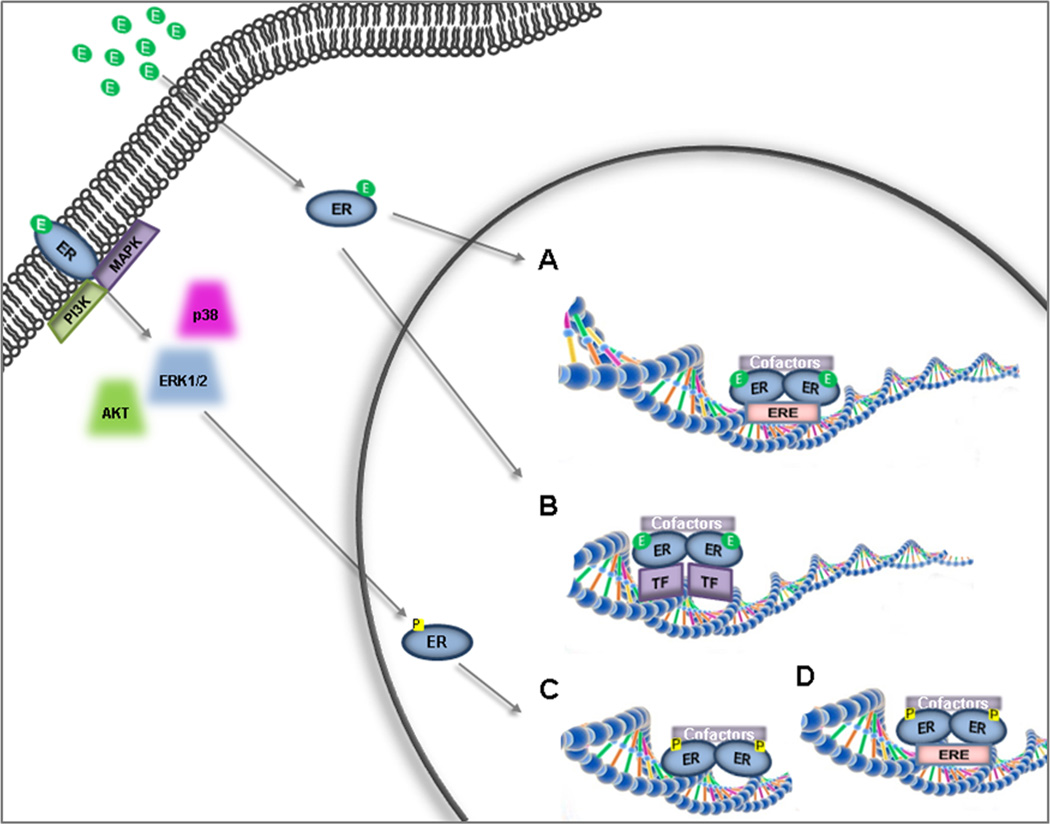
Figure 2. Genomic ER signaling
A: Direct binding to DNA. Estrogen binding to ERs promotes receptor translocation to the nuclei. ERs bind to the consensus estrogen response element (ERE) in the DNA, mediating its genomic effects. Co-activators and co-repressors are recruited to activate or inhibit gene; B: Indirectly binding DNA through other transcription factors. ERs can tether transcription factors (TF) such as API and Sp1 regulating gene expressions; C & D: Ligand-independent binding. ERs can be phosphorylated by kinases signaling (such as p38, ERK and Akt) activated by plasma membrane ERs signaling. Specific serine site phosphorylation of ERs can trigger its binding to DNA thus activating the transcription via ligand-independent binding or via ERE-binding.
Figure 3
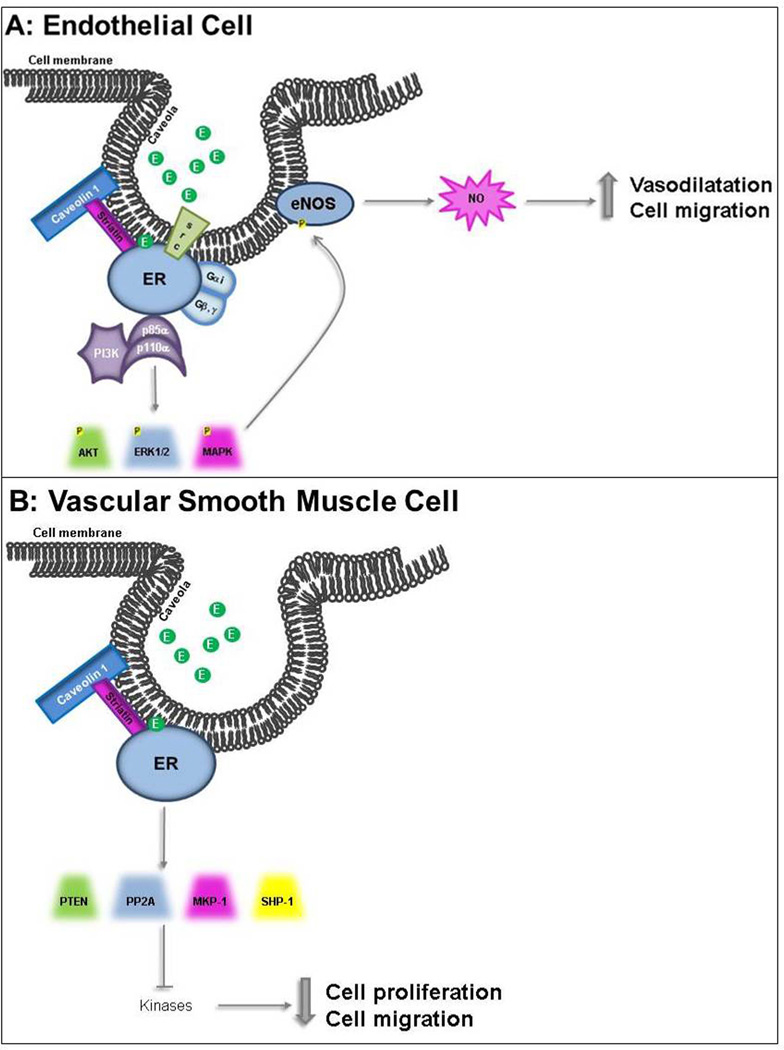
Figure 3. Non genomic ER signaling
Panel A: Rapid ER signaling in vascular Endothelial Cells. ERs localize to caveolae by direct binding to caveolin-1 and scaffold protein striatin. Upon estrogen binding, ERs and the G protein form a complex leading to activation of tyrosine kinase Src, serine/threonine kinase PI3K (binding the subunit p38a), Akt, and MAPK. Kinases then directly activate eNOS by serine 1177 phosphorylation. The increased production of nitric oxide (NO) promotes endothelial cell vasodilatation, proliferation and migration. Panel B: Rapid ER signaling in vascular smooth muscle cells. ERs localize to caveolae by direct binding to caveolin-1 and scaffold protein striatin. Upon estrogen binding, ERs activate several phosphatases leading to inhibition of kinases and finally resulting in a decrease of cell proliferation and migration.
Figure 4
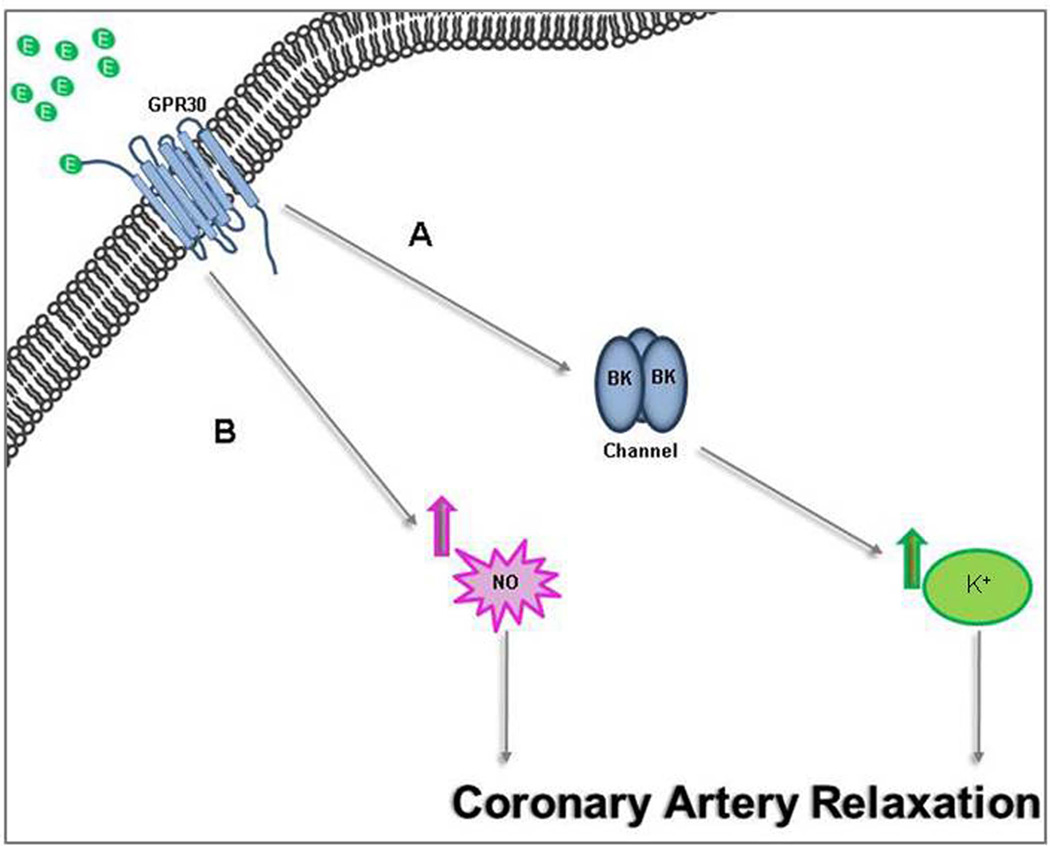
Figure 4. GRP30 activation via endothelium-independent or endothelium-dependent mechanisms
A: Endothelium-independent effect is mediated by a large conductance calcium-activated potassium channel leading to an increase in potassium efflux. This effect results in coronary artery relaxation. BK, Ca2+- and voltage-activated K+ channels. B: Endothelium-dependent mechanism. Estrogen binding to GPR30 leads to activation of eNOS raising the production of nitric oxide (NO) in coronary endothelial cells to relax these arteries.

References

    1. Mendelsohn ME, Karas RH. Molecular and cellular basis of cardiovascular gender differences. Science. 2005;308:1583–1587. - PubMed
    1. Barrett-Connor E, Bush TL. Estrogen and coronary heart disease in women. Jama. 1991;265:1861–1867. - PubMed
    1. Babiker FA, Joseph S, Juggi J. The protective effects of 17beta-estradiol against ischemia-reperfusion injury and its effect on pacing postconditioning protection to the heart. Journal of physiology and biochemistry. 2014;70:151–162. - PubMed
    1. Skavdahl M, Steenbergen C, Clark J, Myers P, Demianenko T, Mao L, Rockman HA, Korach KS, Murphy E. Estrogen receptor-beta mediates male-female differences in the development of pressure overload hypertrophy. American journal of physiology Heart and circulatory physiology. 2005;288:H469–H476. - PubMed
    1. Patten RD, Karas RH. Estrogen replacement and cardiomyocyte protection. Trends in cardiovascular medicine. 2006;16:69–75. - PubMed

Publication types