


Reward functions of the basal ganglia
- PMID: 26838982
- PMCID: PMC5495848
- DOI: 10.1007/s00702-016-1510-0
Reward functions of the basal ganglia
Erratum in
-
Erratum to: Reward functions of the basal ganglia.J Neural Transm (Vienna). 2017 Sep;124(9):1159. doi: 10.1007/s00702-017-1738-3. J Neural Transm (Vienna). 2017. PMID: 28653081 Free PMC article. No abstract available.
Abstract
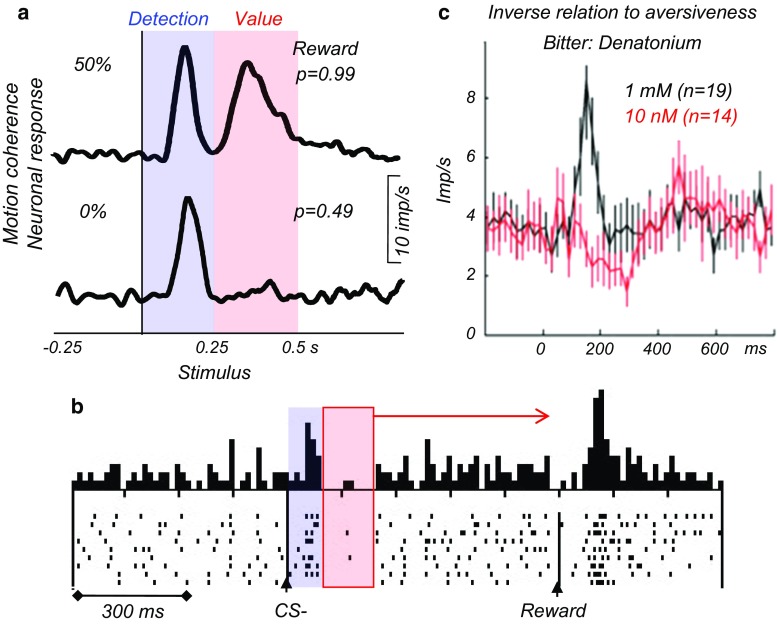
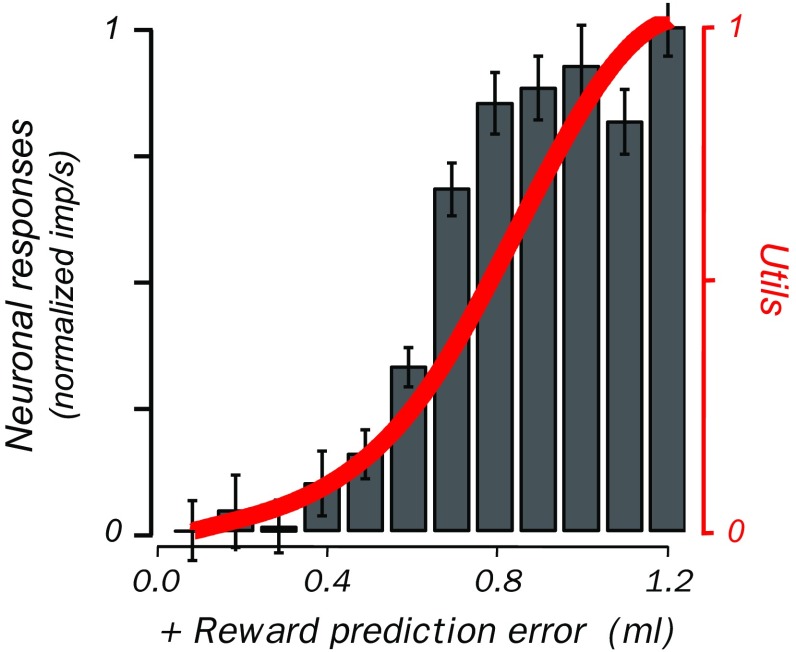
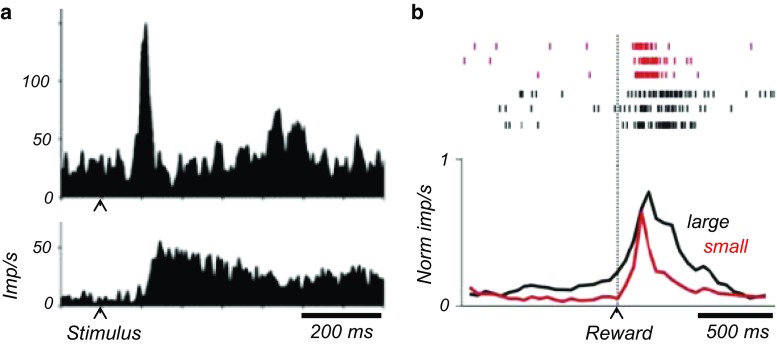
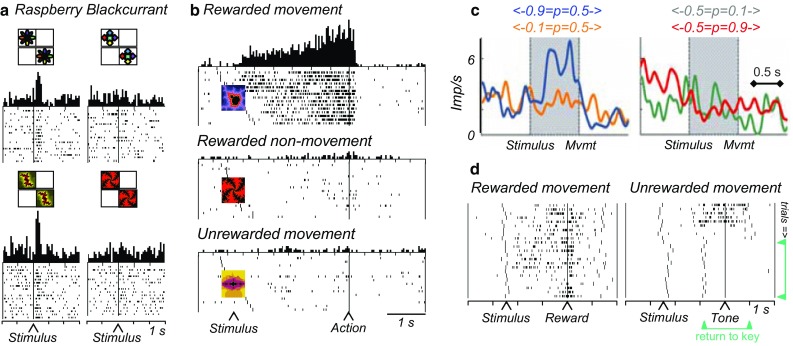
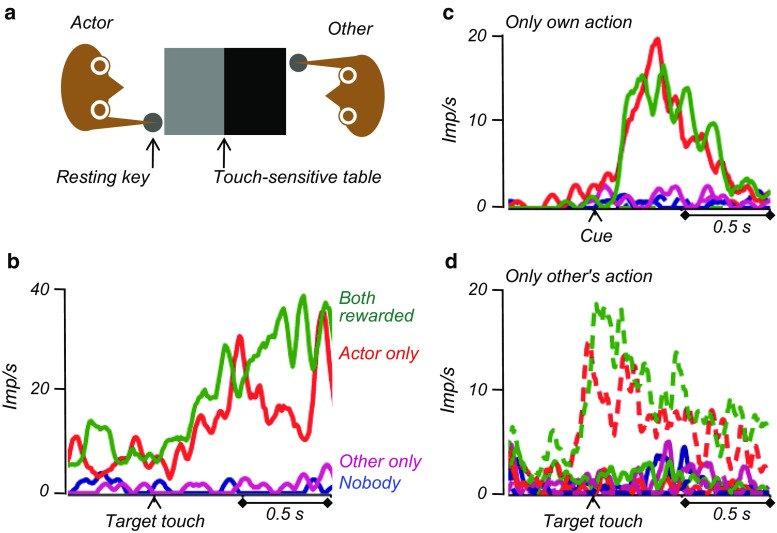
Besides their fundamental movement function evidenced by Parkinsonian deficits, the basal ganglia are involved in processing closely linked non-motor, cognitive and reward information. This review describes the reward functions of three brain structures that are major components of the basal ganglia or are closely associated with the basal ganglia, namely midbrain dopamine neurons, pedunculopontine nucleus, and striatum (caudate nucleus, putamen, nucleus accumbens). Rewards are involved in learning (positive reinforcement), approach behavior, economic choices and positive emotions. The response of dopamine neurons to rewards consists of an early detection component and a subsequent reward component that reflects a prediction error in economic utility, but is unrelated to movement. Dopamine activations to non-rewarded or aversive stimuli reflect physical impact, but not punishment. Neurons in pedunculopontine nucleus project their axons to dopamine neurons and process sensory stimuli, movements and rewards and reward-predicting stimuli without coding outright reward prediction errors. Neurons in striatum, besides their pronounced movement relationships, process rewards irrespective of sensory and motor aspects, integrate reward information into movement activity, code the reward value of individual actions, change their reward-related activity during learning, and code own reward in social situations depending on whose action produces the reward. These data demonstrate a variety of well-characterized reward processes in specific basal ganglia nuclei consistent with an important function in non-motor aspects of motivated behavior.
Keywords: Dopamine; Pedunculopontine nucleus; Striatum.
Figures
References
-
- Adamantidis AR, Tsai H-C, Boutrel B, Zhang F, Stuber GD, Budygin EA, Touriño C, Bonci A, Deisseroth K, de Lecea L. Optogenetic interrogation of dopaminergic modulation of the multiple phases of reward-seeking behavior. J Neurosci. 2011;31:10829–10835. doi: 10.1523/JNEUROSCI.2246-11.2011. - DOI - PMC - PubMed
Publication types
MeSH terms
Substances
Grants and funding
LinkOut - more resources
Full Text Sources
Other Literature Sources
