. 2016 Feb 9;7(6):6353-68.
doi: 10.18632/oncotarget.7047.

Germline polymorphisms in an enhancer of PSIP1 are associated with progression-free survival in epithelial ovarian cancer

Juliet D French  1 Sharon E Johnatty  1 Yi Lu  1 Jonathan Beesley  1 Bo Gao  2 Murugan Kalimutho  1 Michelle J Henderson  3 Amanda J Russell  3 Siddhartha Kar  4 Xiaoqing Chen  1 Kristine M Hillman  1 Susanne Kaufmann  1 Haran Sivakumaran  1 Martin O'Reilly  5 Chen Wang  6 Darren J Korbie  7 Australian Ovarian Cancer Study GroupAustralian Ovarian Cancer StudyDiether Lambrechts  8   9 Evelyn Despierre  9 Els Van Nieuwenhuysen  9 Sandrina Lambrechts  9 Ignace Vergote  9 Beth Karlan  10 Jenny Lester  10 Sandra Orsulic  10 Christine Walsh  10 Peter A Fasching  11   12 Matthias W Beckmann  11 Arif B Ekici  13 Alexander Hein  11 Keitaro Matsuo  14 Satoyo Hosono  14 Jacobus Pisterer  15 Peter Hillemanns  16 Toru Nakanishi  17 Yasushi Yatabe  18 Marc T Goodman  19 Galina Lurie  20 Rayna K Matsuno  20 Pamela J Thompson  19 Tanja Pejovic  21 Yukie Bean  21 Florian Heitz  22   23 Philipp Harter  22   23 Andreas du Bois  22   23 Ira Schwaab  24 Estrid Hogdall  25   26 Susanne K Kjaer  25   27 Allan Jensen  25 Claus Hogdall  27 Lene Lundvall  27 Svend Aage Engelholm  28 Bob Brown  29 James M Flanagan  29 Michelle D Metcalf  29 Nadeem Siddiqui  30 Thomas Sellers  31 Brooke Fridley  32 Julie Cunningham  33 Joellen M Schildkraut  34   35 Ed Iversen  36 Rachel Palmieri Weber  34 Donal Brennan  37 Andrew Berchuck  38 Paul Pharoah  4   39 Paul Harnett  40 Murray D Norris  3 Michelle Haber  3 Ellen L Goode  41 Jason S Lee  1 Kum Kum Khanna  1 Kerstin B Meyer  5 Georgia Chenevix-Trench  1 Anna deFazio  2 Stacey L Edwards  1 Stuart MacGregor  1 Ovarian Cancer Association Consortium
Affiliations

Germline polymorphisms in an enhancer of PSIP1 are associated with progression-free survival in epithelial ovarian cancer

Juliet D French et al. Oncotarget. .

Abstract

Women with epithelial ovarian cancer (EOC) are usually treated with platinum/taxane therapy after cytoreductive surgery but there is considerable inter-individual variation in response. To identify germline single-nucleotide polymorphisms (SNPs) that contribute to variations in individual responses to chemotherapy, we carried out a multi-phase genome-wide association study (GWAS) in 1,244 women diagnosed with serous EOC who were treated with the same first-line chemotherapy, carboplatin and paclitaxel. We identified two SNPs (rs7874043 and rs72700653) in TTC39B (best P=7x10⁻⁵, HR=1.90, for rs7874043) associated with progression-free survival (PFS). Functional analyses show that both SNPs lie in a putative regulatory element (PRE) that physically interacts with the promoters of PSIP1, CCDC171 and an alternative promoter of TTC39B. The C allele of rs7874043 is associated with poor PFS and showed increased binding of the Sp1 transcription factor, which is critical for chromatin interactions with PSIP1. Silencing of PSIP1 significantly impaired DNA damage-induced Rad51 nuclear foci and reduced cell viability in ovarian cancer lines. PSIP1 (PC4 and SFRS1 Interacting Protein 1) is known to protect cells from stress-induced apoptosis, and high expression is associated with poor PFS in EOC patients. We therefore suggest that the minor allele of rs7874043 confers poor PFS by increasing PSIP1 expression.

Keywords: PSIP1; chromosome conformation capture; epithelial ovarian cancer; genome-wide association study; progression free survival.


Conflict of interest statement

CONFLICTS OF INTEREST

The authors disclose no potential conflicts of interest.

Figures
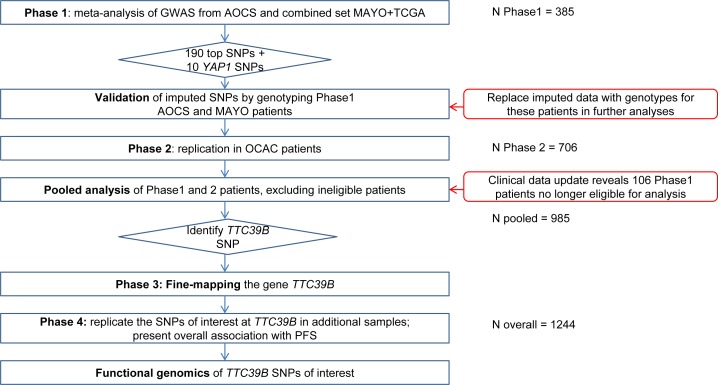
Figure 1
Figure 1. Study Design
Overview of the study design for the identification of TTC39B SNPs using a four-phase GWAS of PFS in serous EOC patients.
Figure 2
Figure 2. Association with PFS in serous EOC patients
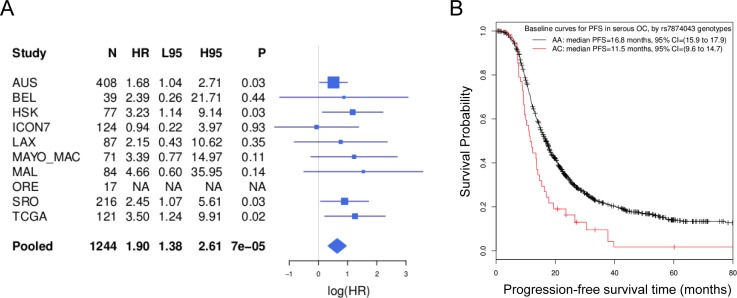
A. Associations between the TTC39B SNP rs7874043 and PFS in individual studies (rows denoted by study names), and the overall association pooling all samples together while stratifying for studies (the row denoted by “Pooled”). “HR” indicates the point estimates of hazard ratio. “L95” and “H95” represents its lower and upper 95% confidence intervals. “NA” indicates no minor allele was found in the eligible cases. The forest plot on the right is on the log scale. B. Baseline survival curves of the two genotypes (AA vs AC) of rs7874043 in a stratified Cox regression, assuming all other prognostic factors at mean values. Patients with CC genotypes were not observed due to the low minor allele frequency of rs7874043. The survival curves were truncated at 80 months as only a few events occurred after that.
Figure 3
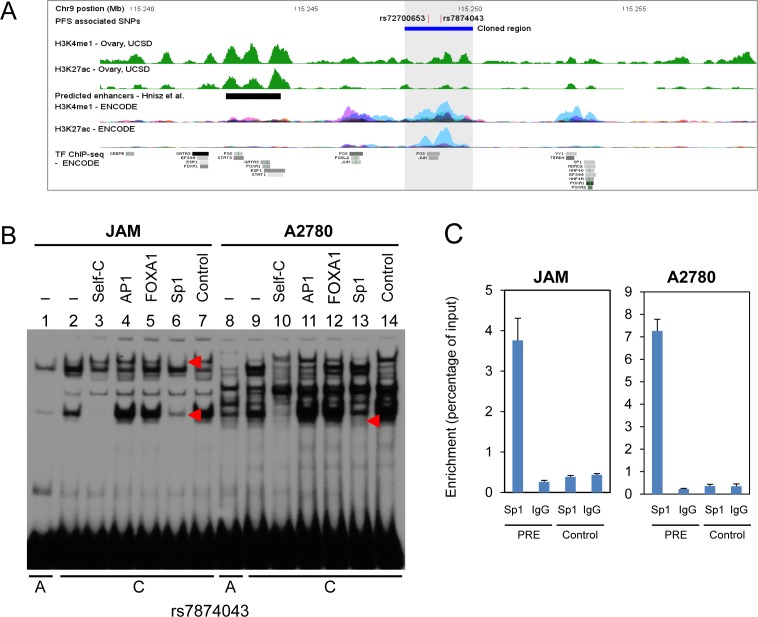
Figure 3. Chromatin structure and DNA-protein interactions surrounding the 9p22 PFS-associated SNPs
A. Colored histograms denote histone modification ChIP-seq data from UCSD and ENCODE. Epigenetic marks for H3K4me1 and H3K27ac in ovary from UCSD and 7 cell types from ENCODE, and transcription factor ChIP-seq data from ENCODE are shown. The grey shaded region denotes the PRE containing SNPs rs72700653 and rs7874043. B. EMSA for oligonucleotides containing SNP rs7874043 with the A = common allele and C = minor allele as indicated below the panel, assayed using JAM and A2780 nuclear extracts. Labels above each lane indicate inclusion of competitor oligonucleotides at 30-fold molar excess: (−) no competitor (Lanes 1,2,8,9); Self-C allele (Lanes 3,10), AP1 (Lanes 4,11), FOXA1 (Lanes 5,12), Sp1 (Lanes 6,13) and a control sequence (Lanes 7,14; containing binding site for ATF, a TF not predicted to bind). The Sp1-containing complexes are indicated with red arrowheads. C. ChIP-qPCR on the PRE in JAM and A2780 cell lines. ChIP assays were performed with Sp1 antibodies or non-immune IgG, with a region 2.3kb upstream of the predicted Sp1-binding site (Control) used as a control for nonspecific binding. Graphs represent two biological replicates. Error bars denote SD.
Figure 4
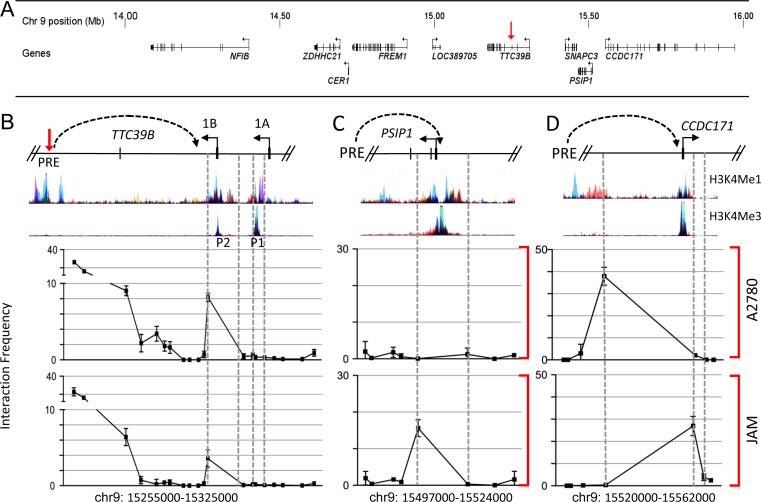
Figure 4. Chromatin interactions at 9p22 in ovarian cancer cell lines
A. Physical map spanning 2Mb of the 9p22 region showing the position of all annotated genes assessed by 3C. The red arrowhead denotes TTC39B. B.D. 3C interaction profiles between the PRE (containing rs72700653 and rs7874043) and (B) TTC39B, (C) PSIP1 and (D) CCDC171 promoter regions. 3C libraries were generated with either HindIII (B) or EcoRI (C and D), with the anchor point set at the PRE. A physical map of the region interrogated by 3C and relevant ENCODE histone modification data is shown above. A representative graph of three biological replicates is shown. Error bars denote SD.
Figure 5
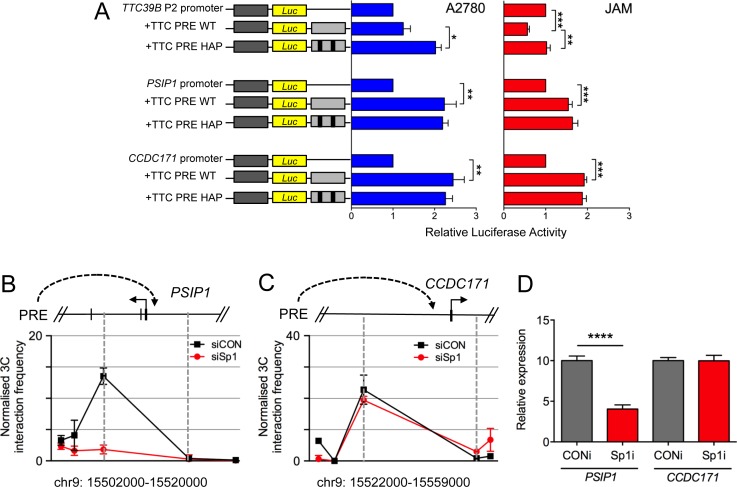
Figure 5. Evaluation of the function of rs72700653 and rs7874043 in ovarian cancer cell lines
A. Luciferase assays comparing effect of minor alleles on the function of TTC39B, PSIP1 and CCDC171 promoters. The PRE was cloned upstream of TTC39B, PSIP1 or CCDC171 promoter-driven luciferase reporter constructs with rs72700653 and rs7874043 (PRE HAP) or without (PRE WT). A2780 or JAM ovarian cancer cells were transiently transfected with each construct and assayed for luciferase activity after 24h. Error bars denote SEM (N = 3). P values were determined with a two-tailed t test. *p < 0.05, **p < 0.01,***p < 0.001. Effect of siRNA knock-down of SP1 on 3-C interactions between the PRE with B. PSIP1 and C. CCDC171 promoter regions in JAM cells. 3C libraries were generated with EcoRI, with the anchor point set at the PRE. A physical map of the region interrogated by 3C data is shown above. A representative graph of three biological replicates is shown. Error bars denote SD. D. Effect of siRNA knock-down on gene expression levels of PSIP and CCDC171 in JAM cells. JAM cells were transiently transfected using Sp1 (siSp1) RNAi smartpools or nontargeting control (siCON) and assayed after 48 hours. Gene expression was measured by TaqMan and is given relative to B-glucuronidase. Error bars denote SEM (N = 3). P values were determined with a two-tailed t test. ****p < 0.0001.
Figure 6
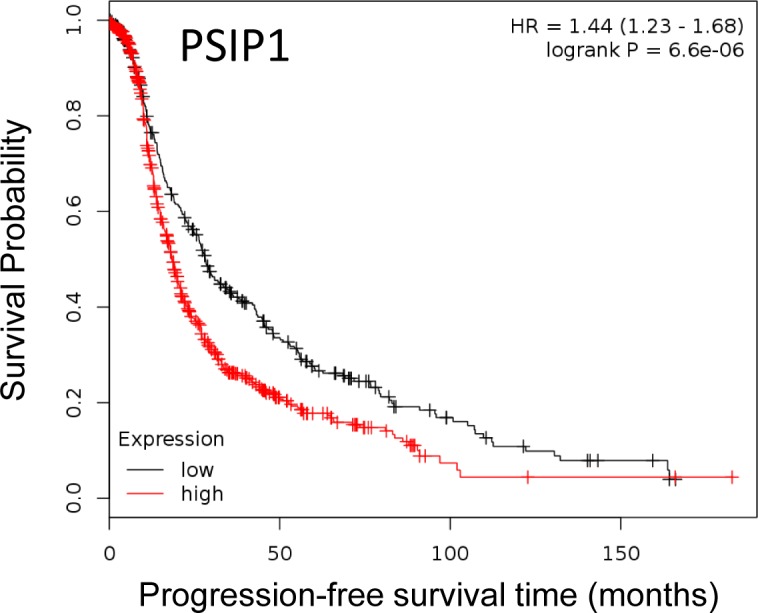
Figure 6. Kaplan-Meier curves of association between expression of PSIP1 with PFS in EOC
Expression of PSIP1 (Affymetrix probe 205961_s_at; log rank P = 6.6 × 10⁻⁶) and PFS in 1171 patients with serous and endometrioid EOC using the online tool KM-plotter [22]. High and low expression are defined as above and below the median.
Figure 7
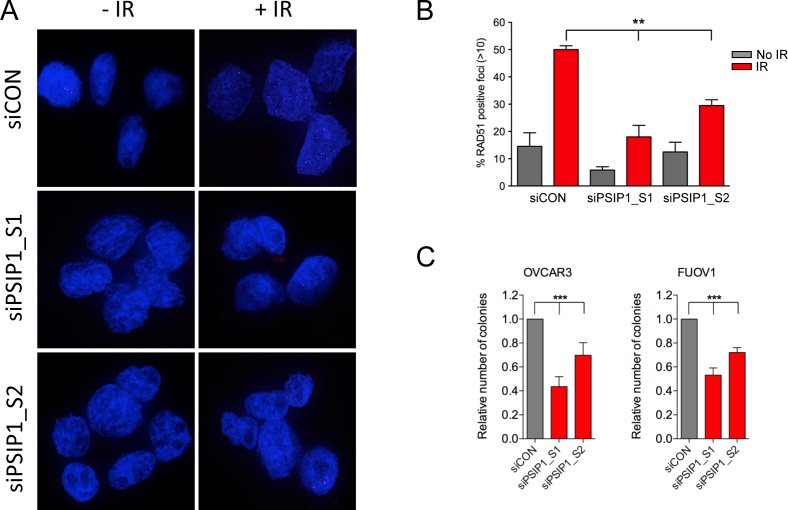
Figure 7. PSIP1 inhibition impaired DNA damage-induced homologous recombination function in ovarian cancer cell lines
A. Representative images of the OVCAR3 cell line transfected either with nontargeting scramble control (siCON) or PSIP1 (siPSIP1) RNAi for 48h, irradiated (IR) with 6 Gy and immunostained with anti-RAD51 (red) and DAPI (blue). B. Quantification of RAD51 positive foci after PSIP1 depletion alone and with 6 Gy IR. The percentage of cells with > 10 RAD51 foci were calculated. Error bars denote SEM (N = 2 with more than 50 cells were counted for each experiment). C. Effect of PSIP1 silencing on long-term colony formation in OVCAR3 and FUOV1 determined using crystal violet staining. P values were determined with a two-tailed t test. **p < 0.01,***p < 0.001.

References

    1. Jemal A, Bray F, Center MM, Ferlay J, Ward E, Forman D. Global cancer statistics. CA Cancer J Clin. 2011;61:69–90. - PubMed
    1. Markman M. Pharmaceutical management of ovarian cancer : current status. Drugs. 2008;68:771–89. - PubMed
    1. Marchetti C, Pisano C, Facchini G, Bruni GS, Magazzino FP, Losito S, Pignata S. First-line treatment of advanced ovarian cancer: current research and perspectives. Expert Rev Anticancer Ther. 2010;10:47–60. - PubMed
    1. Johnatty SE, Beesley J, Paul J, Fereday S, Spurdle AB, Webb PM, Byth K, Marsh S, McLeod H, Group AS, Harnett PR, Brown R, DeFazio A, et al. ABCB1 (MDR 1) polymorphisms and progression-free survival among women with ovarian cancer following paclitaxel/carboplatin chemotherapy. Clin Cancer Res. 2008;14:5594–601. - PubMed
    1. Tian C, Ambrosone CB, Darcy KM, Krivak TC, Armstrong DK, Bookman MA, Davis W, Zhao H, Moysich K, Gallion H, DeLoia JA. Common variants in ABCB1, ABCC2 and ABCG2 genes and clinical outcomes among women with advanced stage ovarian cancer treated with platinum and taxane-based chemotherapy: a Gynecologic Oncology Group study. Gynecol Oncol. 2012;124:575–81. - PMC - PubMed

Publication types

MeSH terms