


Identification of Eight Different Isoforms of the Glucocorticoid Receptor in Guinea Pig Placenta: Relationship to Preterm Delivery, Sex and Betamethasone Exposure
- PMID: 26840867
- PMCID: PMC4739593
- DOI: 10.1371/journal.pone.0148226
Identification of Eight Different Isoforms of the Glucocorticoid Receptor in Guinea Pig Placenta: Relationship to Preterm Delivery, Sex and Betamethasone Exposure
Abstract
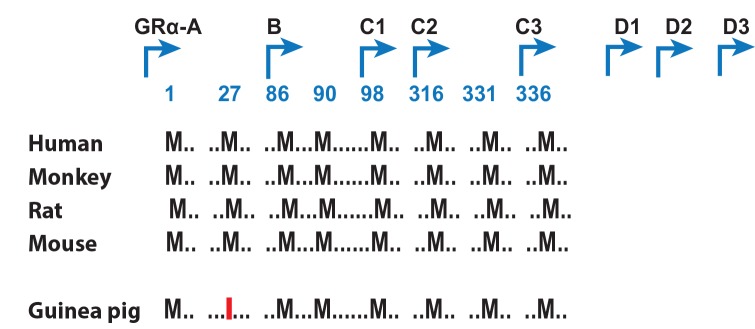
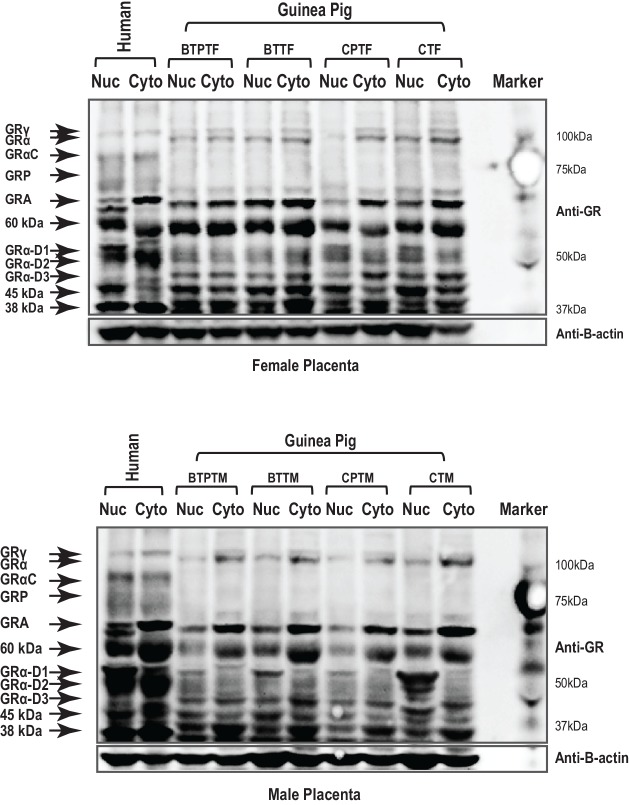
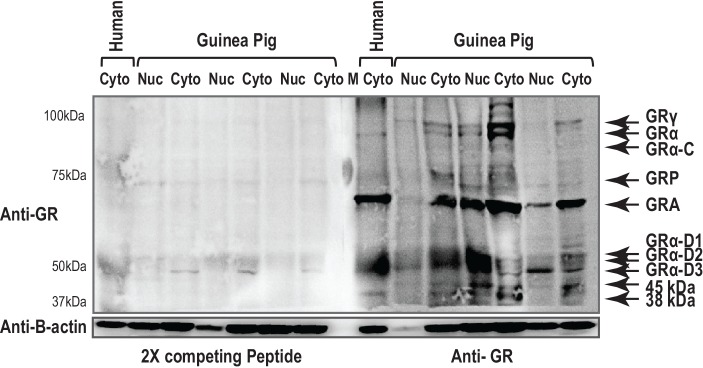
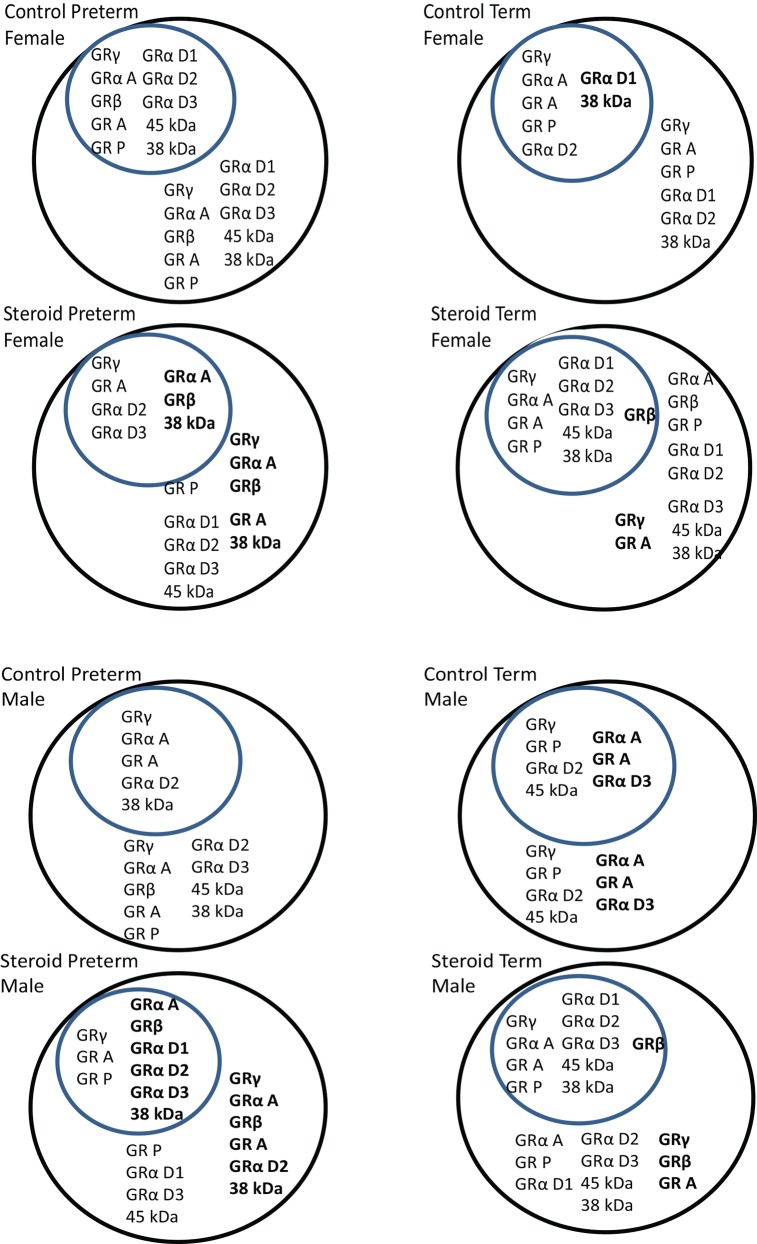
The placental glucocorticoid receptor (GR) is central to glucocorticoid signalling and for mediating steroid effects on pathways associated with fetal growth and lung maturation but the GR has not been examined in the guinea pig placenta even though this animal is regularly used as a model of preterm birth and excess glucocorticoid exposure. Guinea pig dams received subcutaneous injections of either vehicle or betamethasone at 24 and 12 hours prior to preterm or term caesarean-section delivery. At delivery pup and organ weights were recorded. Placentae were dissected, weighed and analysed using Western blot to examine GR isoform expression in nuclear and cytoplasmic extracts. A comparative examination of the guinea pig GR gene identified it is capable of producing seven of the eight translational GR isoforms which include GRα-A, C1, C2, C3, D1, D2, and D3. GRα-B is not produced in the Guinea Pig. Total GR antibody identified 10 specific bands from term (n = 29) and preterm pregnancies (n = 27). Known isoforms included GRγ, GRα A, GRβ, GRP, GRA and GRα D1-3. There were sex and gestational age differences in placental GR isoform expression. Placental GRα A was detected in the cytoplasm of all groups but was significantly increased in the cytoplasm and nucleus of preterm males and females exposed to betamethasone and untreated term males (KW-ANOVA, P = 0.0001, P = 0.001). Cytoplasmic expression of GRβ was increased in female preterm placentae and preterm and term male placentae exposed to betamethasone (P = 0.01). Nuclear expression of GRβ was increased in all placentae exposed to betamethasone (P = 0.0001). GRα D2 and GRα D3 were increased in male preterm placentae when exposed to betamethasone (P = 0.01, P = 0.02). The current data suggests the sex-specific placental response to maternal betamethasone may be dependent on the expression of a combination of GR isoforms.
Conflict of interest statement
Figures
References
-
- Crowther CA, Doyle LW, Haslam RR, Hiller JE, Harding JE, et al. (2007) Outcomes at 2 years of age after repeat doses of antenatal corticosteroids. N Engl J Med 357: 1179–1189. - PubMed
-
- Dalziel SR, Lim VK, Lambert A, McCarthy D, Parag V, et al. (2007) Psychological functioning and health-related quality of life in adulthood after preterm birth. Dev Med Child Neurol 49: 597–602. - PubMed
-
- Dalziel SR, Parag V, Rodgers A, Harding JE (2007) Cardiovascular risk factors at age 30 following pre-term birth. Int J Epidemiol 36: 907–915. - PubMed
-
- Dalziel SR, Fenwick S, Cundy T, Parag V, Beck TJ, et al. (2006) Peak bone mass after exposure to antenatal betamethasone and prematurity: follow-up of a randomized controlled trial. J Bone Miner Res 21: 1175–1186. - PubMed
Publication types
MeSH terms
Substances
Grants and funding
LinkOut - more resources
Full Text Sources
Other Literature Sources
Miscellaneous
