


The effects of DAT1 genotype on fMRI activation in an emotional go/no-go task
- PMID: 26843006
- PMCID: PMC4972696
- DOI: 10.1007/s11682-016-9516-7
The effects of DAT1 genotype on fMRI activation in an emotional go/no-go task
Abstract
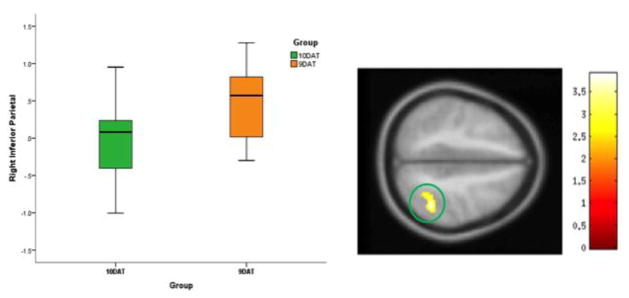
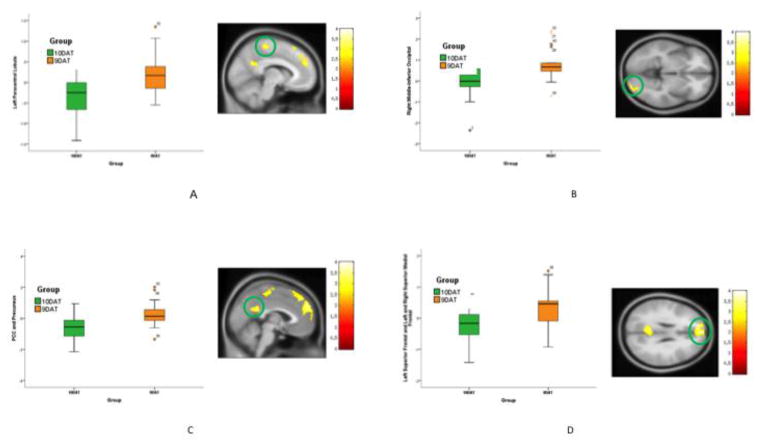
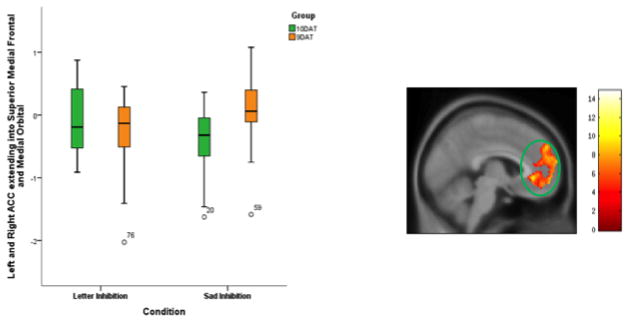
Dopaminergic brain circuits participate in emotional processing and impulsivity. The dopamine transporter (DAT) modulates dopamine reuptake. A variable number tandem repeat (VNTR) in the dopamine transporter gene (DAT1) affects DAT expression. The influence of DAT1 genotype on neural activation during emotional processing and impulse inhibition has not been examined. Forty-two healthy subjects were classified as 9DAT (n = 17) or 10DAT (n = 25) based on DAT1 genotype (9DAT = 9R/9R and 9R/10R; 10DAT = 10R/10R). Subjects underwent fMRI during non-emotional and emotional go/no-go tasks. Subjects were instructed to inhibit responses to letters, happy faces, or sad faces in separate blocks. Accuracy and reaction time did not differ between groups. Within group results showed activation in regions previously implicated in emotional processing and response inhibition. Between groups results showed increased activation in 9DAT individuals during inhibition. During letter inhibition, 9DAT individuals exhibited greater activation in right inferior parietal regions. During sad inhibition, 9DAT Individuals exhibited greater activation in frontal, posterior cingulate, precuneus, right cerebellar, left paracentral, and right occipital brain regions. The interaction between DAT genotype and response type in sad versus letter stimuli showed increased activation in 9DAT individuals during sad no-go responses in the anterior cingulate cortex, extending into frontal-orbital regions. 9DAT individuals have greater activation than 10DAT individuals during neutral and sad inhibition, showing that genotypic variation influencing basal dopamine levels can alter the neural basis of emotional processing and response inhibition. This may indicate that 9R carriers exert more effort to overcome increased basal dopamine activation when inhibiting responses in emotional contexts.
Keywords: Dopamine transporter; Emotion; Response inhibition.
Conflict of interest statement
None of the authors have any financial conflicts to declare.
Conflict of Interest: None of the authors have any conflicts of interest related to this report.
Figures
References
-
- Anand A, Verhoeff P, Seneca N, Zoghbi SS, Seibyl JP, Charney DS, Innis RB. Brain SPECT imaging of amphetamine-induced dopamine release in euthymic bipolar disorder patients. Am J Psychiatry. 2000;157(7):1108–1114. - PubMed
-
- Aron AR, Fletcher PC, Bullmore ET, Sahakian BJ, Robbins TW. Stop signal inhibition disrupted by damage to right inferior frontal gyrus in humans. Nat Neurosci. 2003;6(2):115–116. - PubMed
-
- Bertolino A, Blasi G, Latorre V, Rubino V, Rampino A, Sinibaldi L, Caforio G, Petruzzella V, Pizzuti A, Scarabino T, Nardini M, Weinberger DR, Dallapiccola B. Additive effects of genetic variation in dopamine regulating genes on working memory cortical activity in human brain. J Neurosci. 2006;26(15):3918–3922. - PMC - PubMed
-
- Brehmer Y, Westerberg H, Bellander M, Furth D, Karlsson S, Backman L. Working memory plasticity modulated by dopamine transporter genotype. Neurosci Lett. 2009;467(2):117–120. - PubMed
Publication types
MeSH terms
Substances
Grants and funding
LinkOut - more resources
Full Text Sources
Other Literature Sources
