


Rationale, design and respondent characteristics of the 2013-2014 New York City Health and Nutrition Examination Survey (NYC HANES 2013-2014)
- PMID: 26844121
- PMCID: PMC4721444
- DOI: 10.1016/j.pmedr.2015.06.019
Rationale, design and respondent characteristics of the 2013-2014 New York City Health and Nutrition Examination Survey (NYC HANES 2013-2014)
Abstract
Purpose: Capacity to monitor non-communicable diseases (NCDs) at state or local levels is limited. Emerging approaches include using biomeasures and electronic health record (EHR) data. In 2004, New York City (NYC) performed a population-based health study on adult residents using biomeasures (NYC Health and Nutrition Examination Study, or NYC HANES), modeled after NHANES. A second NYC HANES was launched in 2013 to examine change over time, evaluate municipal policies, and validate a proposed EHR-based surveillance system. We describe the rationale and methods of NYC HANES 2013-2014.
Methods: NYC HANES was a population-based, cross-sectional survey of NYC adults using three-stage cluster sampling. Between August 2013 and June 2014, selected participants completed a health interview and physical exam (blood pressure, body mass index, and waist circumference). Fasting biomeasures included diabetes, lipid profiles, kidney function, environmental biomarkers, and select infectious diseases.
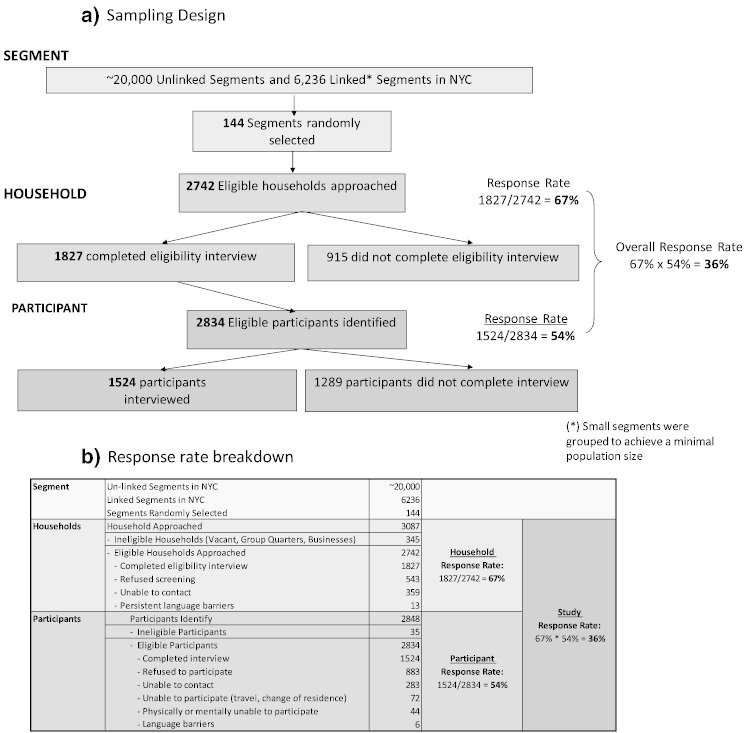
Results: Of the 3065 households approached, 2742 were eligible and 1827 were successfully screened (67%). A total of 1524 of eligible participants completed the survey (54%), for an overall response rate of 36%.
Conclusion: Completing a second NYC HANES a decade after the first study affords an opportunity to understand changes in prevalence, awareness and control of NCDs and evaluate municipal efforts to manage them.
Keywords: A1C (or HbA1c), hemoglobin A1c; ACASI, audio computer assisted self-interview; Biomarkers; CARI, computer assisted recorded interview; CUNY SPH, City University of New York School of Public Health; DOHMH, Department of Health and Mental Hygiene; Electronic health records; GIS, Geographic Information Systems; Health and nutrition examination survey; Methodology; NHANES, National Health and Nutrition Examination Survey; NYC HANES; NYC HANES, New York City Health and Nutrition Examination Survey; NYC, New York City; New York City; PHQ-9, Patient Health Questionnaire-9; PSU, Primary Sampling Unit; Population-based study; Study design; Study protocol; Surveillance; WHODAS, World Health Organization Disability Assessment Scale.
Figures
References
-
- Angell S.Y., Garg R.K. Prevalence, awareness, treatment and predictors of control of hypertension in New York City. Circ. Cardiovasc. Qual. Outcomes. 2008;1:46–53. - PubMed
-
- Arkansas Department of Health ARCHES (Arkansas Cardiovascular Health Examination Survey) 2014. http://www.healthy.arkansas.gov/programsServices/chronicDisease/Initiati... Retrieved November 17, 2014, from.
-
- Bauer U.E., Briss P.A. Prevention of chronic disease in the 21st Century: elimination of the leading preventable causes of premature death and disability in the USA. Lancet. 2014;384(9937):5–11. - PubMed
-
- Board of Health . New York City Department of Health and Mental Hygiene; 2006. Notice of Adoption of an Amendment (§81.08) to Article 81 of the New York City Health Code. ( http://www.nyc.gov/html/doh/downloads/pdf/public/notice-adoption-hc-art8...)
-
- Centers for Disease Control and Prevention . 2013. National Health and Nutrition Examination Survey (NHANES): Physician Examination Procedures Manual.
Grants and funding
LinkOut - more resources
Full Text Sources
Other Literature Sources
