Frontal-striatum dysfunction during reward processing: Relationships to amotivation in schizophrenia
- PMID: 26845257
- PMCID: PMC5132953
- DOI: 10.1037/abn0000137
Frontal-striatum dysfunction during reward processing: Relationships to amotivation in schizophrenia
Abstract
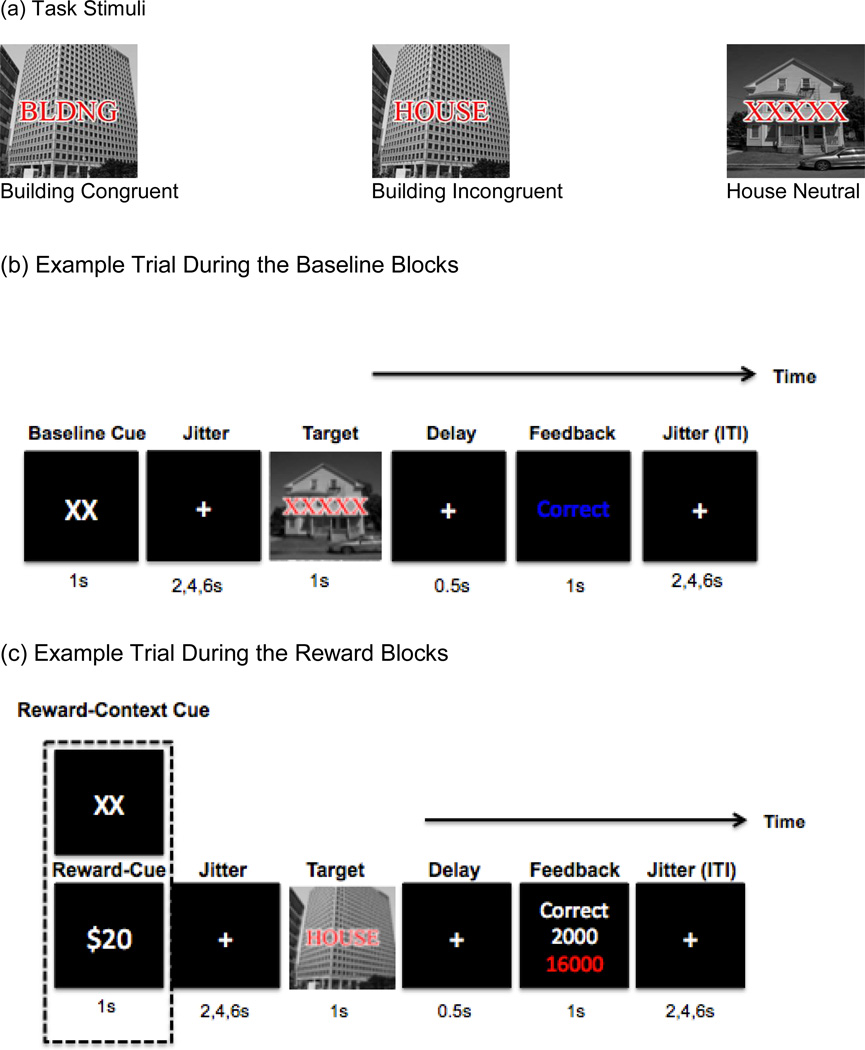
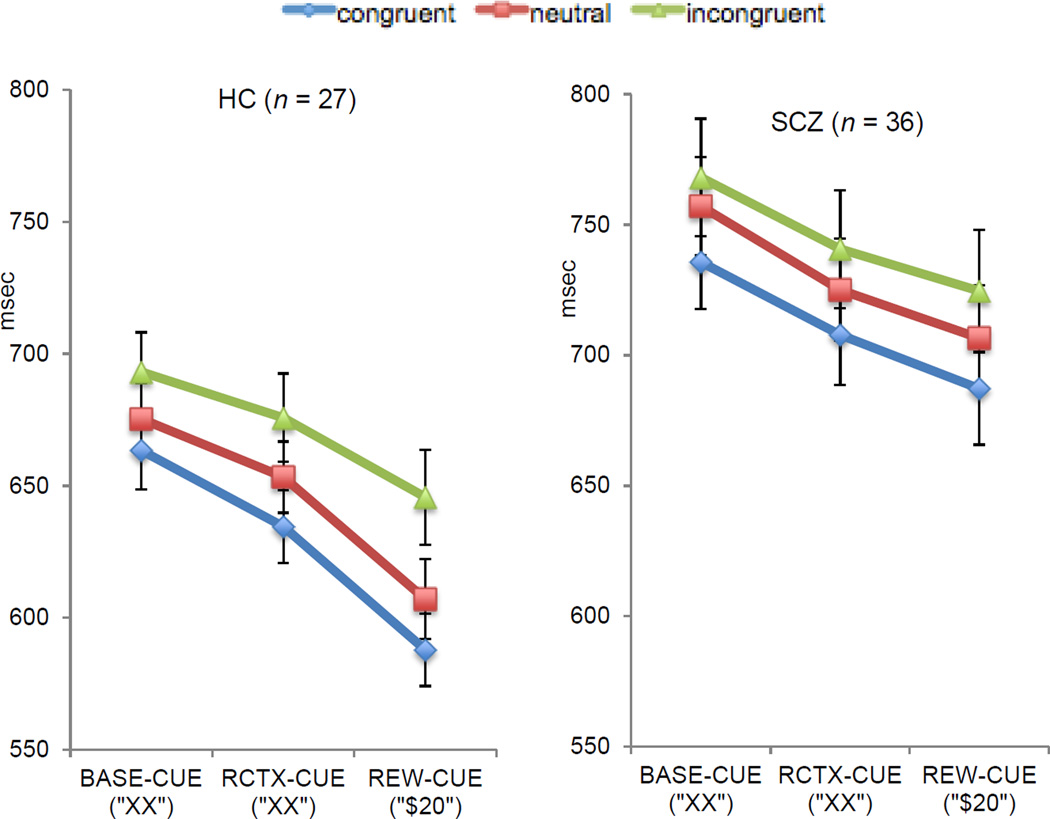
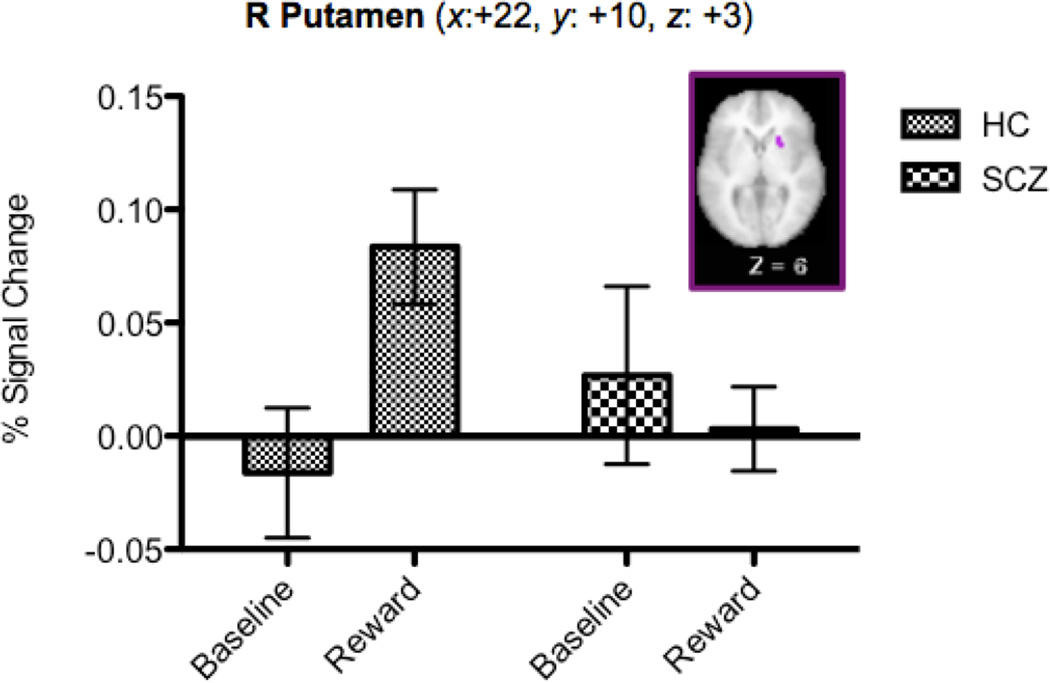
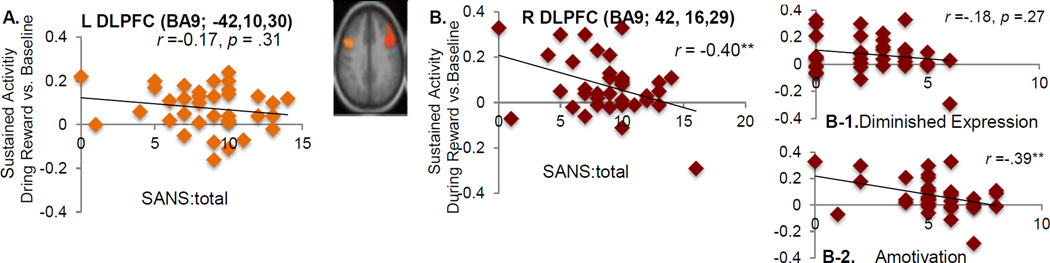
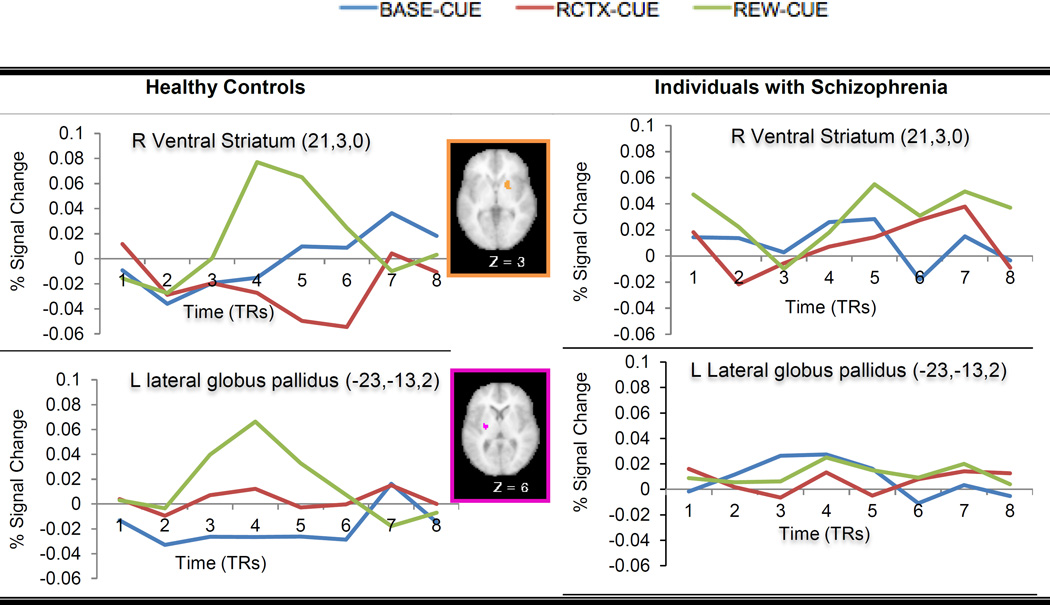
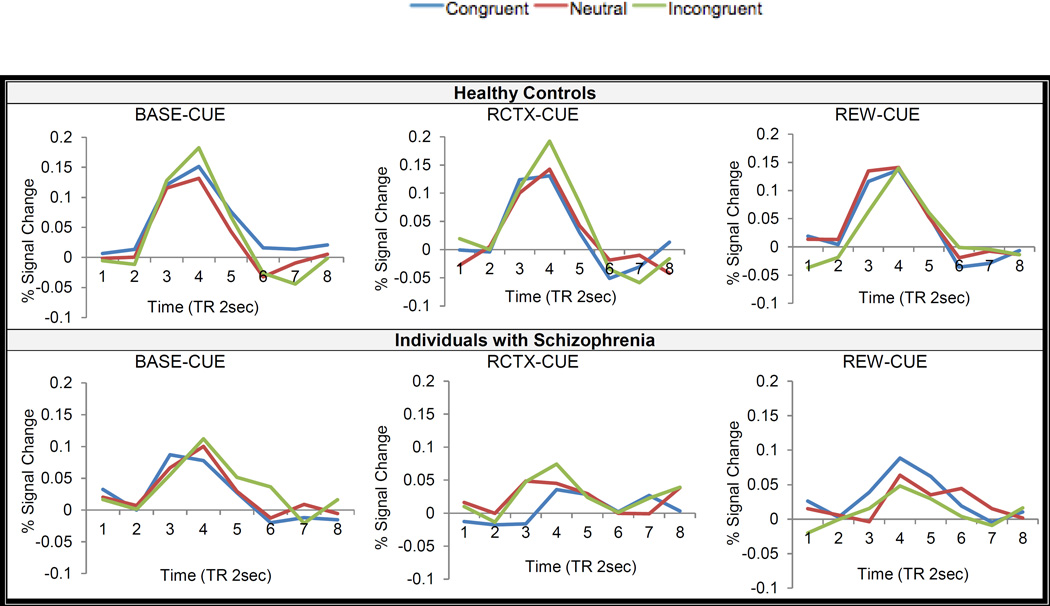
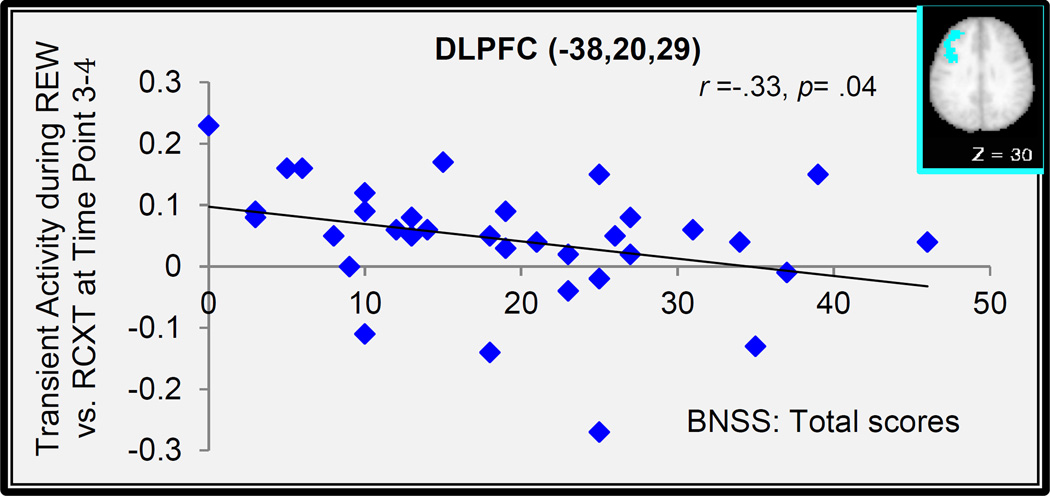
Schizophrenia is characterized by deficits of context processing, thought to be related to dorsolateral prefrontal cortex (DLPFC) impairment. Despite emerging evidence suggesting a crucial role of the DLPFC in integrating reward and goal information, we do not know whether individuals with schizophrenia can represent and integrate reward-related context information to modulate cognitive control. To address this question, 36 individuals with schizophrenia (n = 29) or schizoaffective disorder (n = 7) and 27 healthy controls performed a variant of a response conflict task (Padmala & Pessoa, 2011) during fMRI scanning, in both baseline and reward conditions, with monetary incentives on some reward trials. We used a mixed state-item design that allowed us to examine both sustained and transient reward effects on cognitive control. Different from predictions about impaired DLPFC function in schizophrenia, we found an intact pattern of increased sustained DLPFC activity during reward versus baseline blocks in individuals with schizophrenia at a group level but blunted sustained activations in the putamen. Contrary to our predictions, individuals with schizophrenia showed blunted cue-related activations in several regions of the basal ganglia responding to reward-predicting cues. Importantly, as predicted, individual differences in anhedonia/amotivation symptoms severity were significantly associated with reduced sustained DLPFC activation in the same region that showed overall increased activity as a function of reward. These results suggest that individual differences in motivational impairments in schizophrenia may be related to dysfunction of the DLPFC and striatum in motivationally salient situations.
(c) 2016 APA, all rights reserved).
Conflict of interest statement
All authors have no financial or conflicts of interest.
Figures
References
-
- Abler B, Erk S, Walter H. Human reward system activation is modulated by a single dose of olanzapine in healthy subjects in an event-related, double-blind, placebo-controlled fMRI study. Psychopharmacology (Berl) 2007;191(3):823–833. - PubMed
-
- Andreasen NC. The Scale for the Assessment of Negative Symptoms (SANS) Iowa City: University of Iowa; 1983a.
-
- Andreasen NC. The Scale for the Assessment of Positive Symptoms (SAPS) Iowa City: University of Iowa; 1983b.
-
- Barch DM, Carter CS, Braver TS, Sabb FW, MacDonald A, 3rd, Noll DC, Cohen JD. Selective deficits in prefrontal cortex function in medication-naive patients with schizophrenia. Archives of General Psychiatry. 2001;58(3):280–288. - PubMed
Publication types
MeSH terms
Grants and funding
LinkOut - more resources
Full Text Sources
Other Literature Sources
Medical