. 2016 Feb 4;11(2):e0147860.
doi: 10.1371/journal.pone.0147860. eCollection 2016.

Long-Term Benefits of Smoking Cessation on Gastroesophageal Reflux Disease and Health-Related Quality of Life

Affiliations

Long-Term Benefits of Smoking Cessation on Gastroesophageal Reflux Disease and Health-Related Quality of Life

Yukie Kohata et al. PLoS One. .

Erratum in

Abstract

Objective: Smoking is associated with gastroesophageal reflux disease (GERD). Varenicline, a nicotinic receptor partial agonist, is used to aid smoking cessation. The purpose of this study was to prospectively examine the long-term benefits of smoking cessation on GERD and health-related quality of life (HR-QOL).

Methods: Patients treated with varenicline were asked to fill out a self-report questionnaire about their smoking habits, gastrointestinal symptoms, and HR-QOL before and 1 year after smoking cessation. The prevalence of GERD, frequency of symptoms, and HR-QOL scores were compared. We also investigated associations between clinical factors and newly-developed GERD.

Results: A total of 141 patients achieved smoking cessation (success group) and 50 did not (failure group) at 1 year after the treatment. The GERD improvement in the success group (43.9%) was significantly higher than that in the failure group (18.2%). The frequency of reflux symptoms significantly decreased only in the success group. There were no significant associations between newly developed GERD and clinical factors including increased body mass index and successful smoking cessation. HR-QOL significantly improved only in the success group.

Conclusions: Smoking cessation improved both GERD and HR-QOL. Smoking cessation should be recommended for GERD patients.


Conflict of interest statement

Competing Interests: Prof. Arakawa received lecture fees from Otsuka and Eisai and research grants from Otsuka, Eisai, Astellas, Abbott Japan, Takeda, Dainippon Sumitomo, and Daiichi Sankyo. The remaining authors have no conflicts to disclose. This does not alter the authors' adherence to PLOS ONE policies on sharing data and materials.

Figures

Fig 1
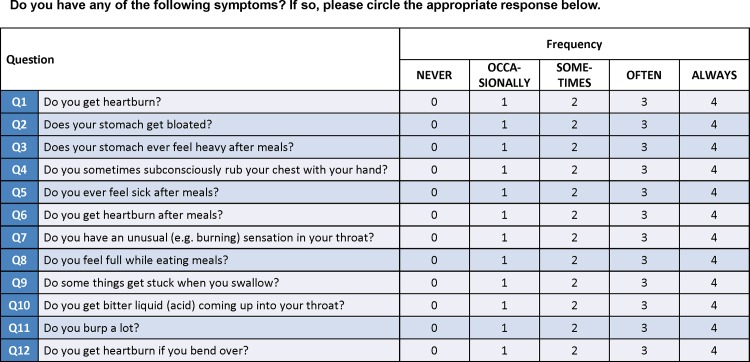
Fig 1. Frequency scale for symptoms of gastroesophageal reflux disease.
Questionnaire is consist of 12 questions including 7 (light blue lines) with acid reflux symptoms and 5 (dark blue lines) with dysmotility symptoms.
Fig 2
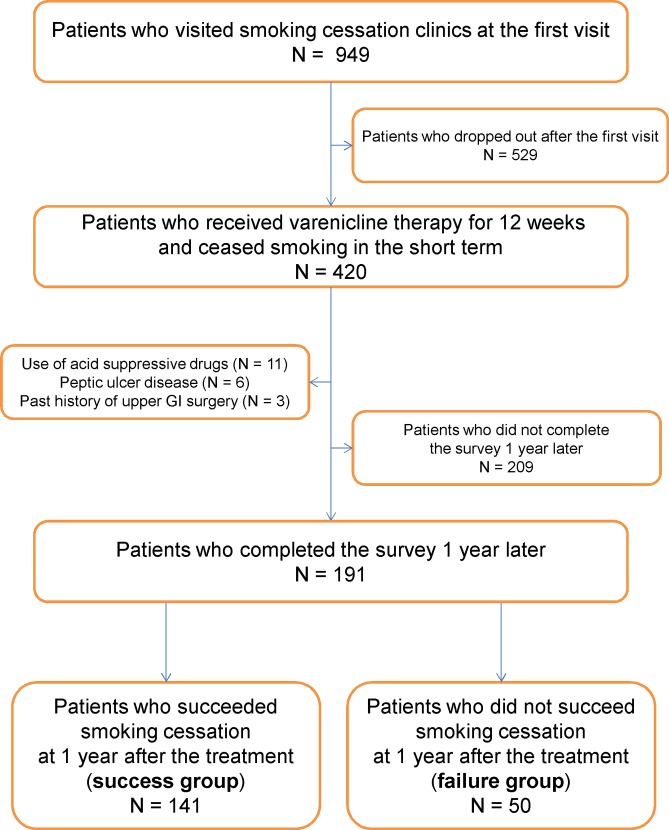
Fig 2. Flow chart of study participants.
Among 949 patients who initially visited smoking cessation clinics, 420 underwent smoking cessation therapy using varenicline for 12 weeks; all these patients ceased smoking in the short term. Twenty patients who used acid suppressive drugs, had peptic ulcer disease, or had a history of upper GI surgery were excluded, and 209 patients did not complete the survey 1 year later. Of 191 patients who completed the survey 1 year after attempted smoking cessation, 141 patients achieved smoking cessation (success group) and 50 did not (failure group).
Fig 3
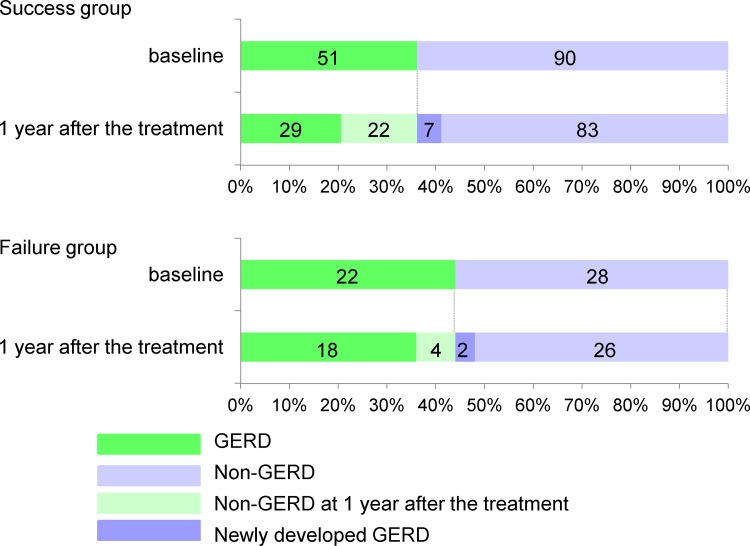
Fig 3. Prevalence of GERD at baseline and 1 year after attempted smoking cessation.
The number of patients that experienced improvement in GERD was significantly higher in the success group (43.9%) than in the failure group (18.2%). Seven (7.8%) of the patients within the success group and 2 (7.1%) of the 28 patients within the failure group newly developed GERD at 1 year after the treatment.
Fig 4
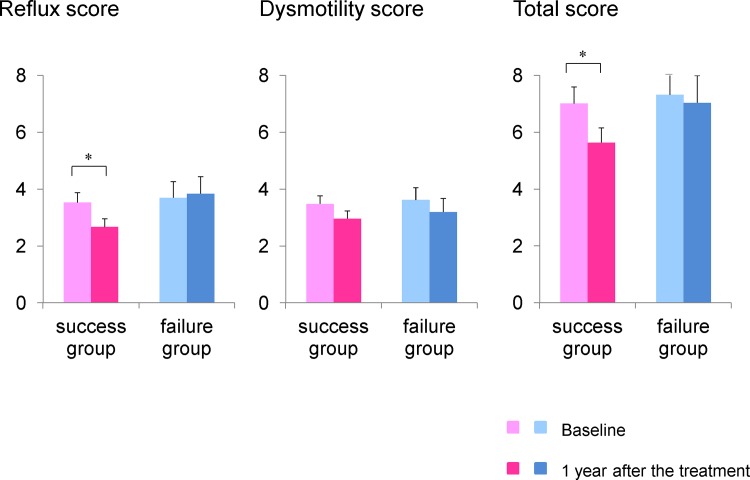
Fig 4. Changes in FSSG score among all subjects.
The reflux and total scores significantly decreased 1 year after smoking cessation in the success group, but not in the failure group. *p<0.05 versus baseline.
Fig 5
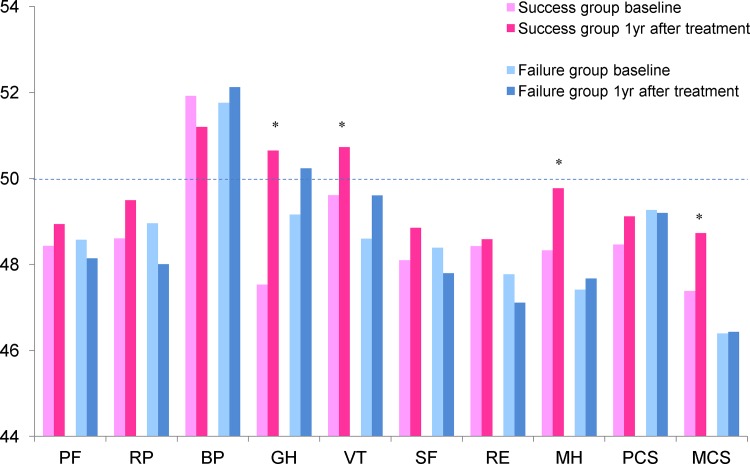
Fig 5. HR-QOL (SF-8 survey score) before and after smoking cessation.
General health (GH), vitality (VT), and mental health (MH) significantly improved after smoking cessation in the success group, whereas there were no significant changes in the failure group. PF, physical functioning; RO, role physical; BP, bodily pain; SF, social functioning; RE, role emotional; PCS, physical component summary; MCS, mental component summary. *p<0.05 versus baseline.

References

    1. Peery AF, Dellon ES, Lund J, Crockett SD, McGowan CE, Bulsiewicz WJ, et al. Burden of gastrointestinal disease in the United States: 2012 update. Gastroenterology. 2012;143(5):1179–87 e1–3. Epub 2012/08/14. 10.1053/j.gastro.2012.08.002 - DOI - PMC - PubMed
    1. Fujiwara Y, Arakawa T. Epidemiology and clinical characteristics of GERD in the Japanese population. Journal of Gastroenterology. 2009;44(6):518–34. 10.1007/s00535-009-0047-5 . - DOI - PubMed
    1. Dimenas E. Methodological aspects of evaluation of Quality of Life in upper gastrointestinal diseases. Scandinavian journal of gastroenterology Supplement. 1993;199:18–21. Epub 1993/01/01. . - PubMed
    1. Ness-Jensen E, Hveem K, El-Serag H, Lagergren J. Lifestyle Intervention in Gastroesophageal Reflux Disease. Clinical gastroenterology and hepatology. 2015. Epub 2015/05/10. 10.1016/j.cgh.2015.04.176 . - DOI - PMC - PubMed
    1. Kaltenbach T, Crockett S, Gerson LB. Are lifestyle measures effective in patients with gastroesophageal reflux disease? An evidence-based approach. Archives of Internal Medicine. 2006;166(9):965–71. Epub 2006/05/10. 10.1001/archinte.166.9.965 . - DOI - PubMed