


Epidemiological investigation of a foodborne outbreak in Spain associated with U.S. West Coast genotypes of Vibrio parahaemolyticus
- PMID: 26848427
- PMCID: PMC4729754
- DOI: 10.1186/s40064-016-1728-1
Epidemiological investigation of a foodborne outbreak in Spain associated with U.S. West Coast genotypes of Vibrio parahaemolyticus
Abstract
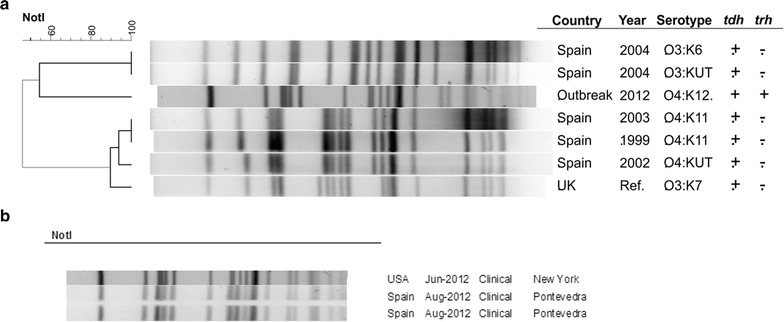
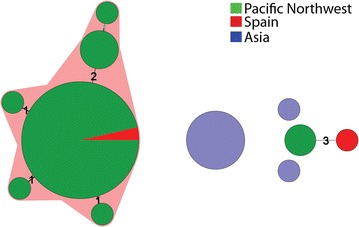
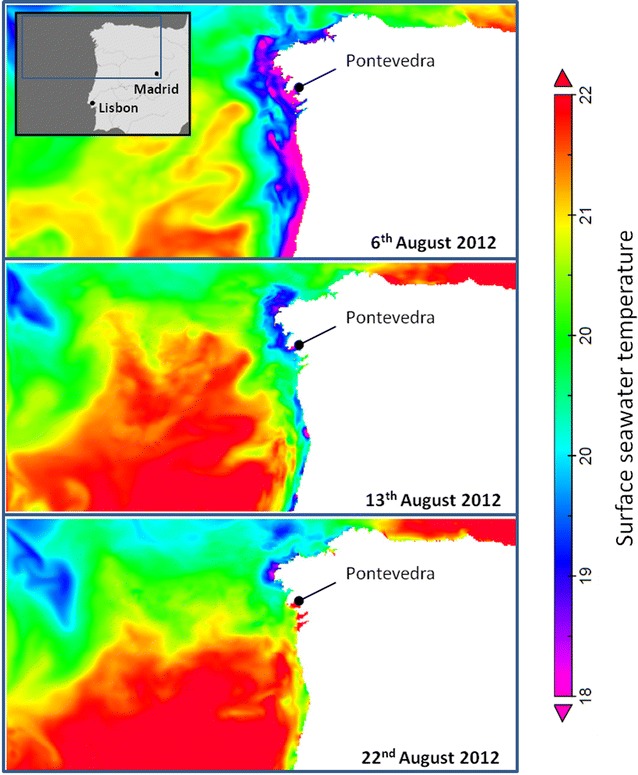
We describe an outbreak of seafood-associated Vibrio parahaemolyticus in Galicia, Spain in on 18th of August 2012 affecting 100 of the 114 passengers travelling on a food banquet cruise boat. Epidemiological information from 65 people was available from follow-on interviews, of which 51 cases showed symptoms of illness. The food items identified through the questionnaires as the most probable source of the infections was shrimp. This product was unique in showing a statistically significant and the highest OR with a value of 7.59 (1.52-37.71). All the nine strains isolated from stool samples were identified as V. parahaemolyticus, seven were positive for both virulence markers tdh and trh, a single strain was positive for trh only and the remaining strain tested negative for both trh and tdh. This is the largest foodborne Vibrio outbreak reported in Europe linked to domestically processed seafood. Moreover, this is the first instance of strains possessing both tdh+ and trh+ being implicated in an outbreak in Europe and that a combination of strains represent several pathogenicity groups and belonging to different genetic variants were isolated from a single outbreak. Clinical isolates were associated with a novel genetic variant of V. parahaemolyticus never detected before in Europe. Further analyses demonstrated that the outbreak isolates showed indistinguishable genetic profiles with hyper-virulent strains from the Pacific Northwest, USA, suggesting a recent transcontinental spread of these strains.
Keywords: PNW clone; ST 36; Seafood; Vibrio parahaemolyticus; tdh; trh.
Figures
References
-
- Anonymous . Standardized molecular subtyping of foodborne bacterial pathogens by pulsed-field gel electrophoresis. Atlanta: Centers for Diseases Control and Prevention; 2002.
-
- Anonymous . Quantitative risk assessment on the public health impact of pathogenic Vibrio parahaemolyticus in raw oysters. Washington: US Food and Drug Administration; 2005.
LinkOut - more resources
Full Text Sources
Other Literature Sources
