


Biofilm and Planktonic Bacterial and Fungal Communities Transforming High-Molecular-Weight Polycyclic Aromatic Hydrocarbons
- PMID: 26850299
- PMCID: PMC4959499
- DOI: 10.1128/AEM.03713-15
Biofilm and Planktonic Bacterial and Fungal Communities Transforming High-Molecular-Weight Polycyclic Aromatic Hydrocarbons
Abstract
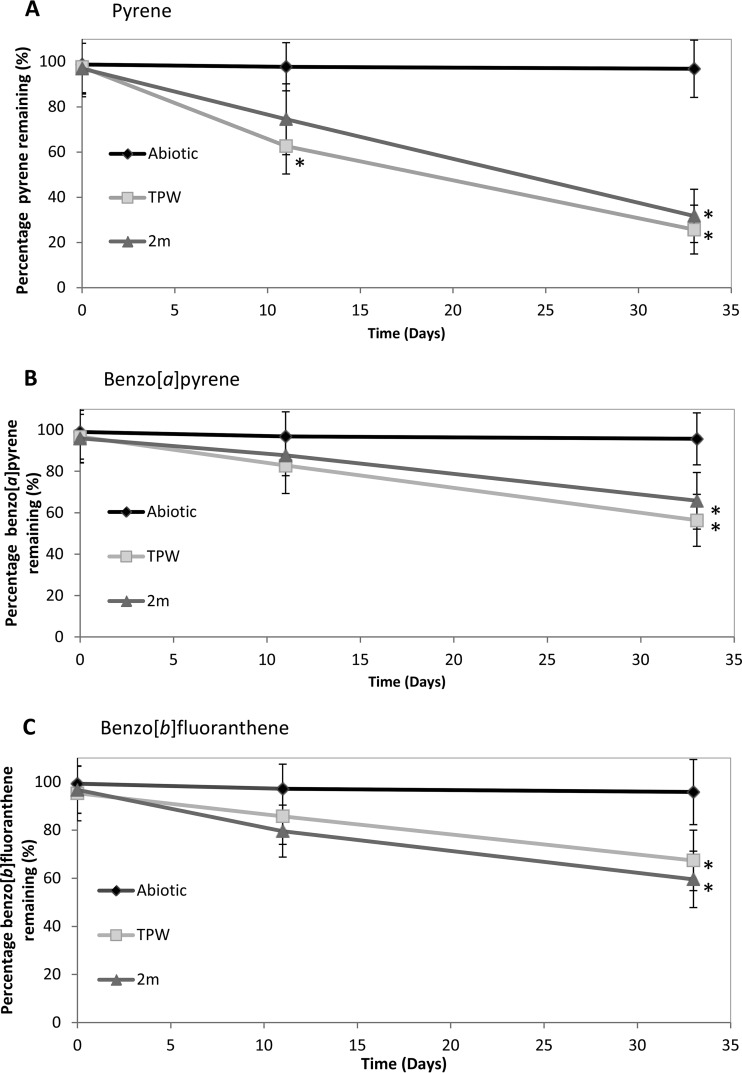
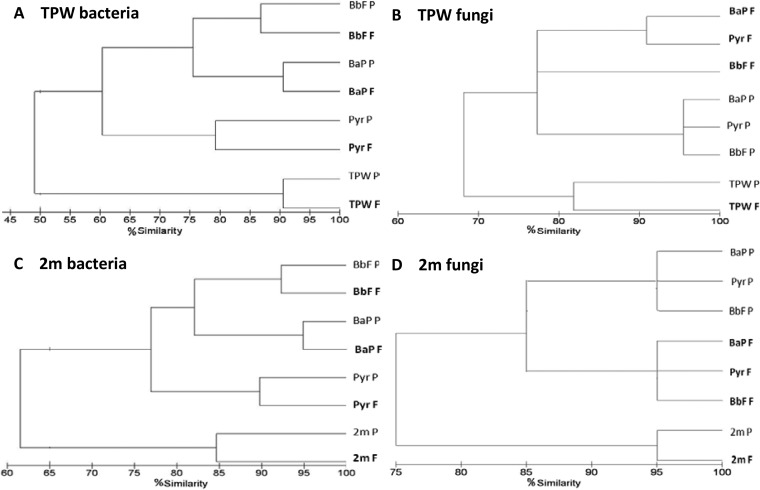
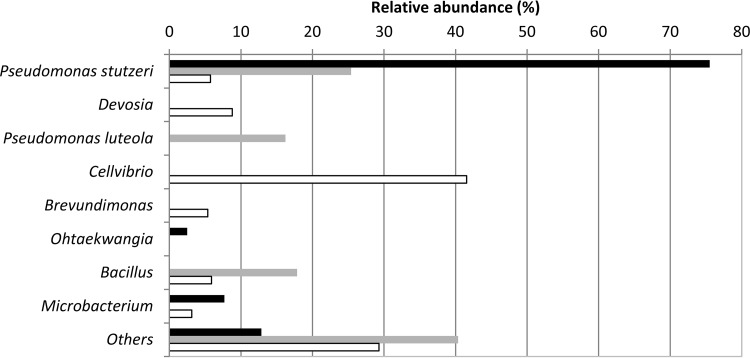
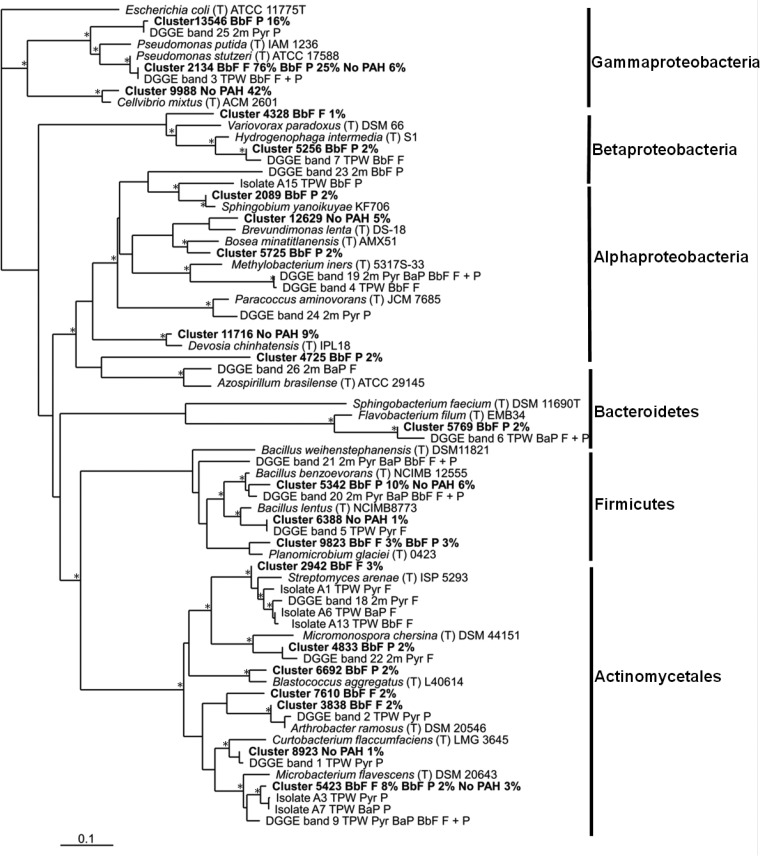
High-molecular-weight polycyclic aromatic hydrocarbons (HMW-PAHs) are natural components of fossil fuels that are carcinogenic and persistent in the environment, particularly in oil sands process-affected water (OSPW). Their hydrophobicity and tendency to adsorb to organic matter result in low bioavailability and high recalcitrance to degradation. Despite the importance of microbes for environmental remediation, little is known about those involved in HMW-PAH transformations. Here, we investigated the transformation of HMW-PAHs using samples of OSPW and compared the bacterial and fungal community compositions attached to hydrophobic filters and in suspension. It was anticipated that the hydrophobic filters with sorbed HMW-PAHs would select for microbes that specialize in adhesion. Over 33 days, more pyrene was removed (75% ± 11.7%) than the five-ring PAHs benzo[a]pyrene (44% ± 13.6%) and benzo[b]fluoranthene (41% ± 12.6%). For both bacteria and fungi, the addition of PAHs led to a shift in community composition, but thereafter the major factor determining the fungal community composition was whether it was in the planktonic phase or attached to filters. In contrast, the major determinant of the bacterial community composition was the nature of the PAH serving as the carbon source. The main bacteria enriched by HMW-PAHs were Pseudomonas, Bacillus, and Microbacterium species. This report demonstrates that OSPW harbors microbial communities with the capacity to transform HMW-PAHs. Furthermore, the provision of suitable surfaces that encourage PAH sorption and microbial adhesion select for different fungal and bacterial species with the potential for HMW-PAH degradation.
Copyright © 2016 Folwell et al.
Figures
References
-
- European Union Water Framework Directive. 2008. Priority substances and certain other pollutants. http://ec.europa.eu/environment/water/water-framework/priority_substance....
-
- Timoney KP, Lee P. 2009. Does the Alberta tar sands industry pollute? The scientific evidence. Open Conser Biol J 3:65–81. doi: 10.2174/1874839200903010065. - DOI
Publication types
MeSH terms
Substances
LinkOut - more resources
Full Text Sources
Other Literature Sources
Medical
