


Genomic Information may Inhibit Weight-Related Behavior Change Inclinations Among Individuals in a Fear State
- PMID: 26850762
- PMCID: PMC4867291
- DOI: 10.1007/s12160-016-9771-2
Genomic Information may Inhibit Weight-Related Behavior Change Inclinations Among Individuals in a Fear State
Abstract
Background: As evidence mounts regarding associations between genetics and body weight, it is essential to understand how to communicate this information, and factors like emotion that could moderate the effectiveness of messages.
Purpose: We assessed influences of emotion on reactions to weight-related genomic information in a virtual clinical setting.
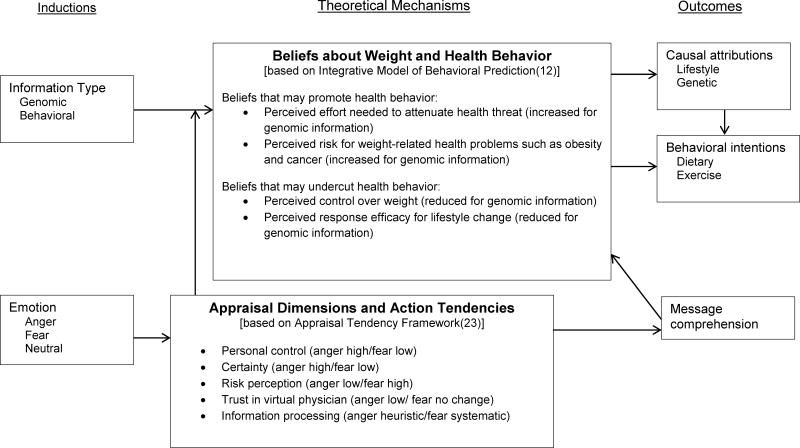
Methods: An online representative US sample of overweight women was randomized to receive an emotion induction (anger, fear, or neutral) paired with information about genomic or behavioral influences on weight in an interaction with a virtual doctor.
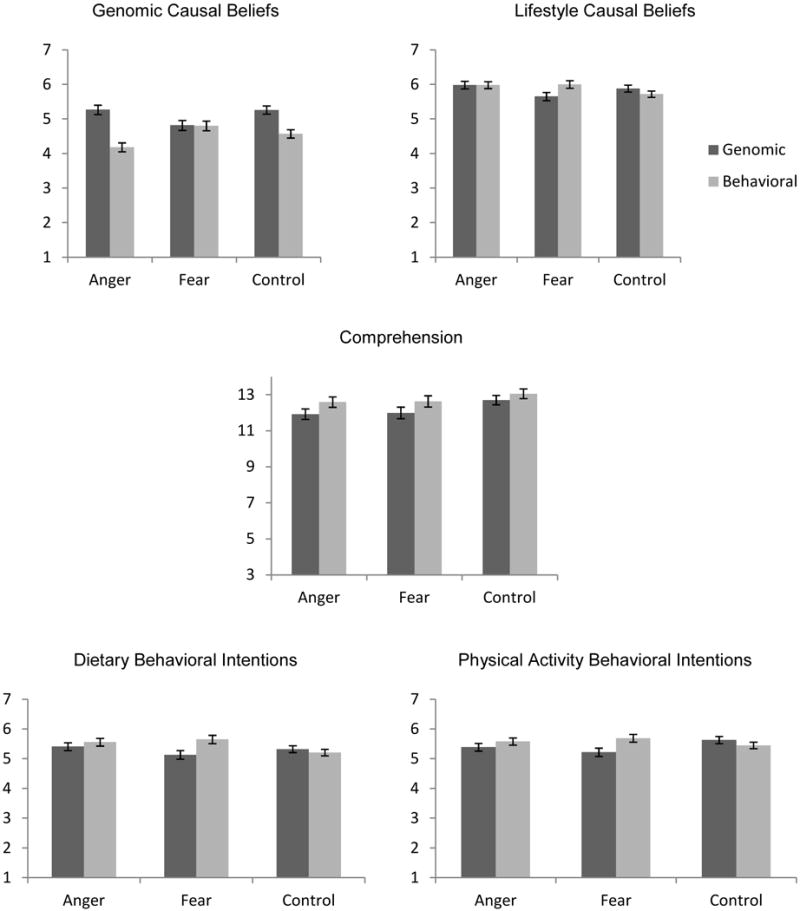
Results: Receiving genomic information led to reduced attributions of lifestyle causes for weight and behavioral intentions, but only among individuals in a fear state.
Conclusions: The current study is among the first to reinforce the concern that discussing genomic underpinnings of overweight could undercut health behavior, and highlights the importance of identifying factors like emotion that influence interpretation of genomic information. Clinicaltrials.gov NCT01888913.
Keywords: Genomics; Health-care communication; Obesity; Weight management.
Conflict of interest statement
Conflict of interest statement: The authors have no conflicts of interest to disclose.
Susan Persky has no conflicts of interest to report. Rebecca Ferrer has no conflicts of interest to report. William Klein has no conflicts of interest to report. We have adhered to ethical standards. In addition, we have complied with all human subjects requirements; the study reported here was approved by the National Human Genome Research Institute Intuitional Review Board, and informed consent was obtained from all participants.
Figures
References
-
- Moyer V. Screening for and management of obesity in adults: U.S. Preventive Services Task Force recommendation statment. Ann Intern Med. 2012;157(5):373–8. - PubMed
-
- Douketis J, Macie C, Thabane L, Williamson D. Systematic review of long-term weight loss studies in obese adults: clinical significance and applicability to clinical practice. Int J Obes. 2005;29(10):1153–67. - PubMed
-
- Anderson J, Konz E, Frederich R, Wood C. Long-term weight-loss maintenance: A meta-analysis of US studies. Am J Clin Nutr. 2001;74(5):579–84. - PubMed
Publication types
MeSH terms
Associated data
Grants and funding
LinkOut - more resources
Full Text Sources
Other Literature Sources
Medical
Research Materials
