. 2016 Apr 21:320:83-92.
doi: 10.1016/j.neuroscience.2016.01.051. Epub 2016 Feb 3.

Event-related potential correlates of mindfulness meditation competence

Affiliations

Event-related potential correlates of mindfulness meditation competence

R Atchley et al. Neuroscience. .

Abstract

Objective: This cross-sectional study evaluated event-related potentials (ERPs) across three groups: naïve, novice, and experienced meditators as potential physiological markers of mindfulness meditation competence.

Methods: Electroencephalographic (EEG) data were collected during a target tone detection task and a Breath Counting task. The Breath Counting task served as the mindfulness meditation condition for the novice and experienced meditator groups. Participants were instructed to respond to target tones with a button press in the first task (Tones), and then ignore the primed tones while Breath Counting. The primary outcomes were ERP responses to target tones, namely the N2 and P3, as markers of stimulus discrimination and attention, respectively.

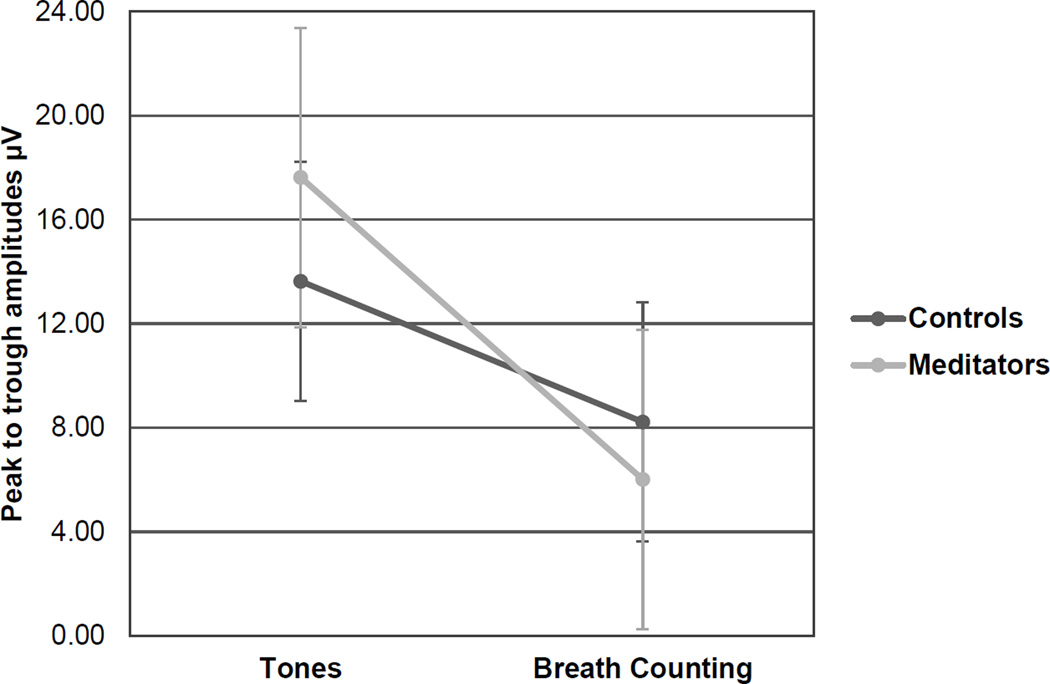
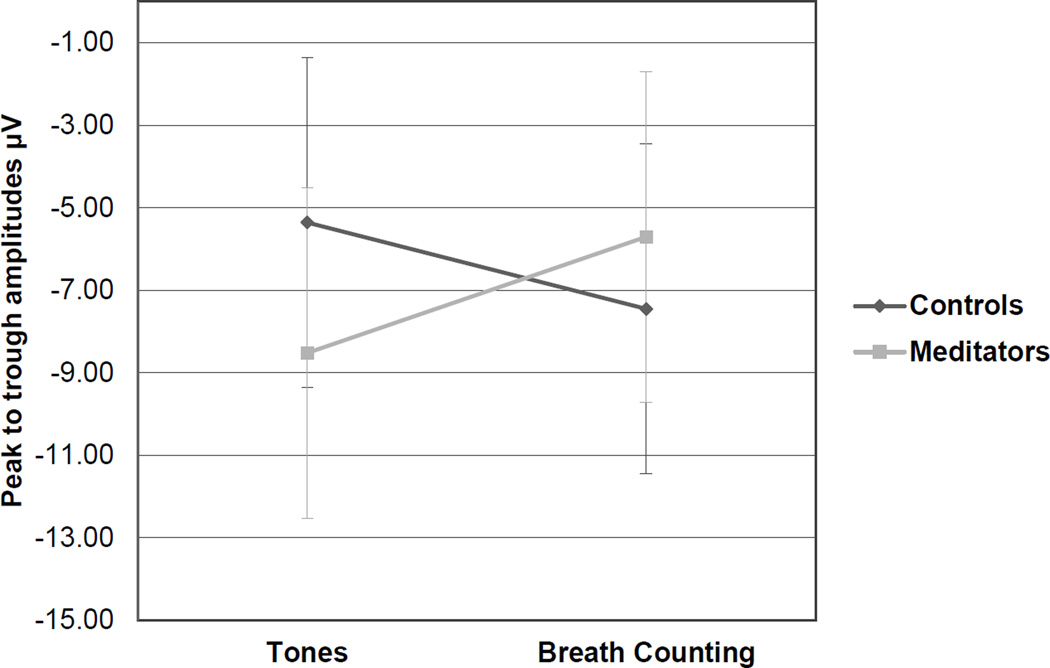
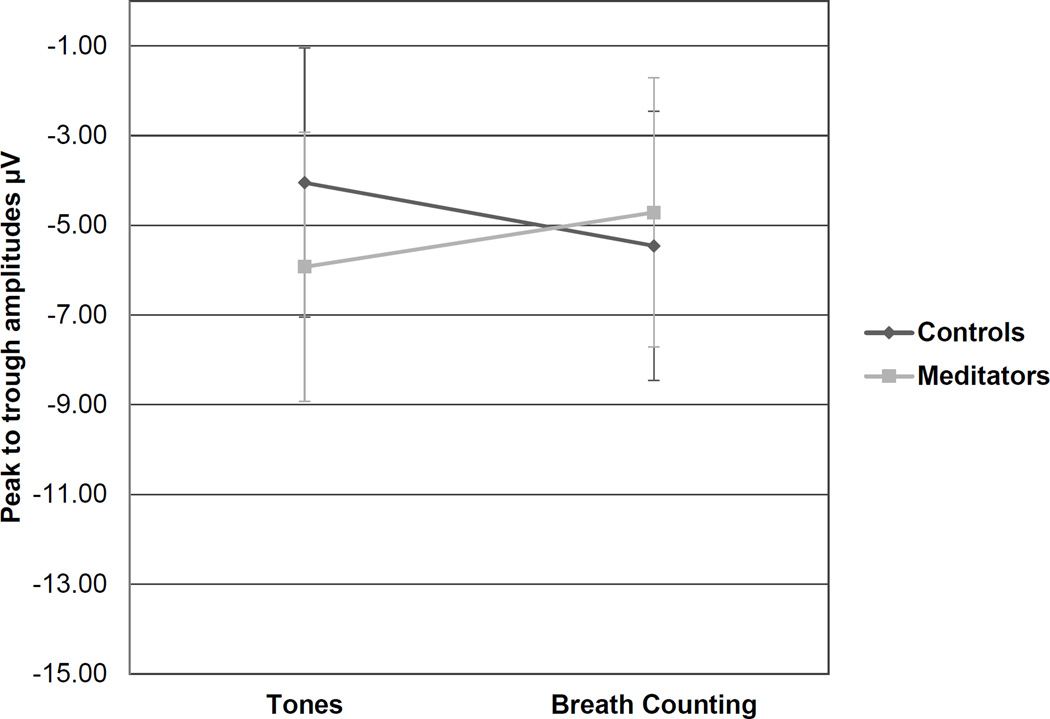
Results: As expected, P3 amplitudes elicited by target tones were attenuated within groups during the Breath Counting task in comparison to the Tones task (p<.001). There was a task by group interaction for P3 (p=.039). Both meditator groups displayed greater change in peak-to-trough P3 amplitudes, with higher amplitudes during the Tones condition and more pronounced reductions in P3 amplitudes during the Breath Counting meditation task in comparison to the naïve group.

Conclusions: Meditators had stronger P3 amplitude responses to target tones when instructed to attend to the tones, and a greater attenuation of P3 amplitudes when instructed to ignore the same tones during the Breath Counting task. This study introduces the idea of identifying ERP markers as a means of measuring mindfulness meditation competence, and results suggest this may be a valid approach. This information has the potential to improve mindfulness meditation interventions by allowing objective assessment of mindfulness meditation quality.

Keywords: attention; event-related potentials; meditation; mindfulness.


Figures

Figure 1
Figure 1
P3 responses to targets, Cz *For target tones this interaction was significant, p = .039, with meditators showing a greater change in peak-to-trough P3 amplitudes from the Tones to the Breath Counting task.
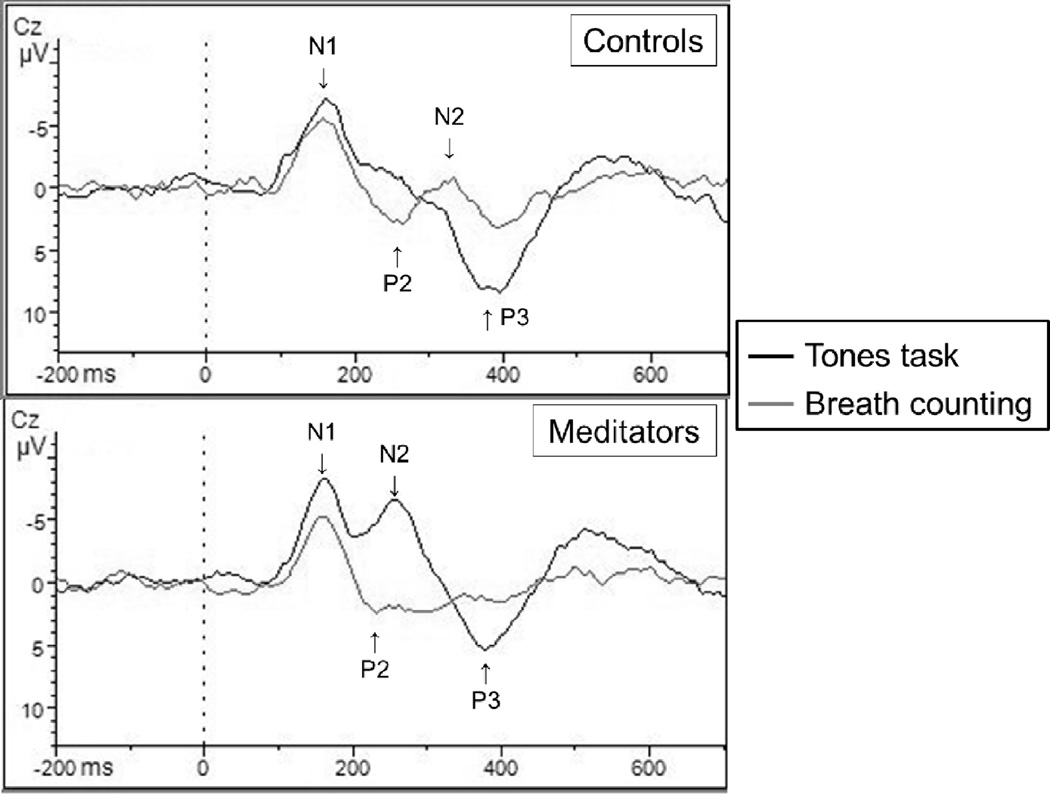
Figure 2
Figure 2
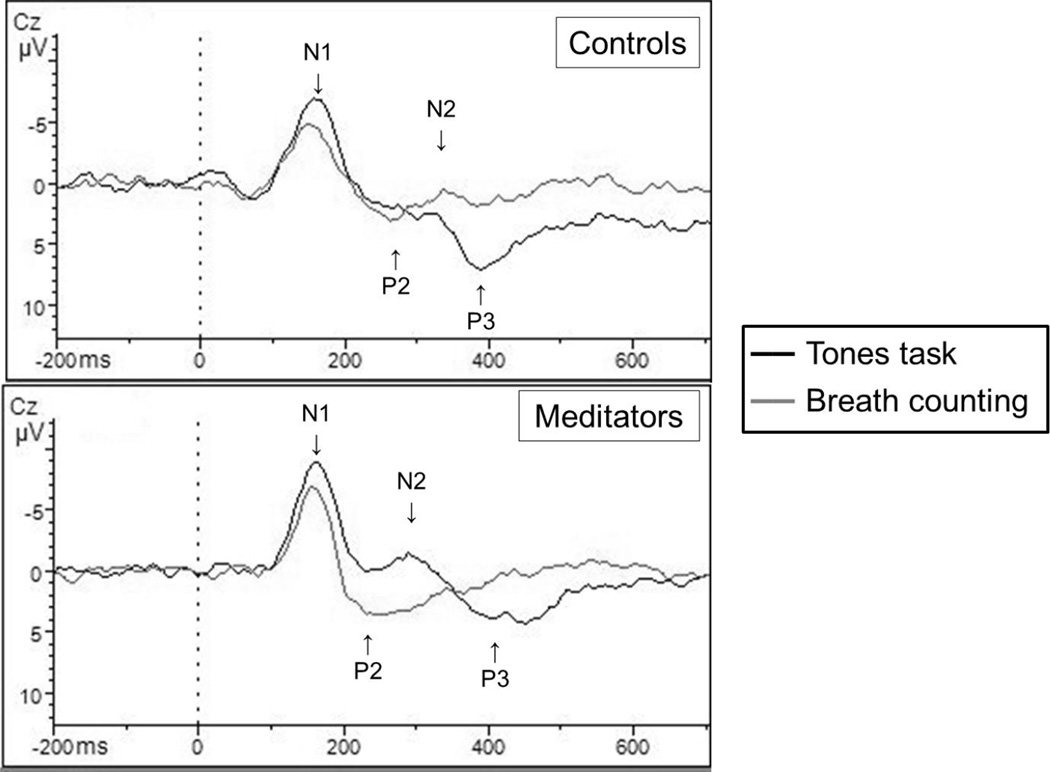
Target tone event-related potential responses * With novice and experienced groups combined, meditators showed a greater peak-to-trough change in P3 and N2 across tasks in comparison to non-meditators when responding to infrequent target tones. Data here are reported from the Cz electrode site. Please note that the ERP component labels are approximate denotations of general areas that may not apply to both overlapping conditions.
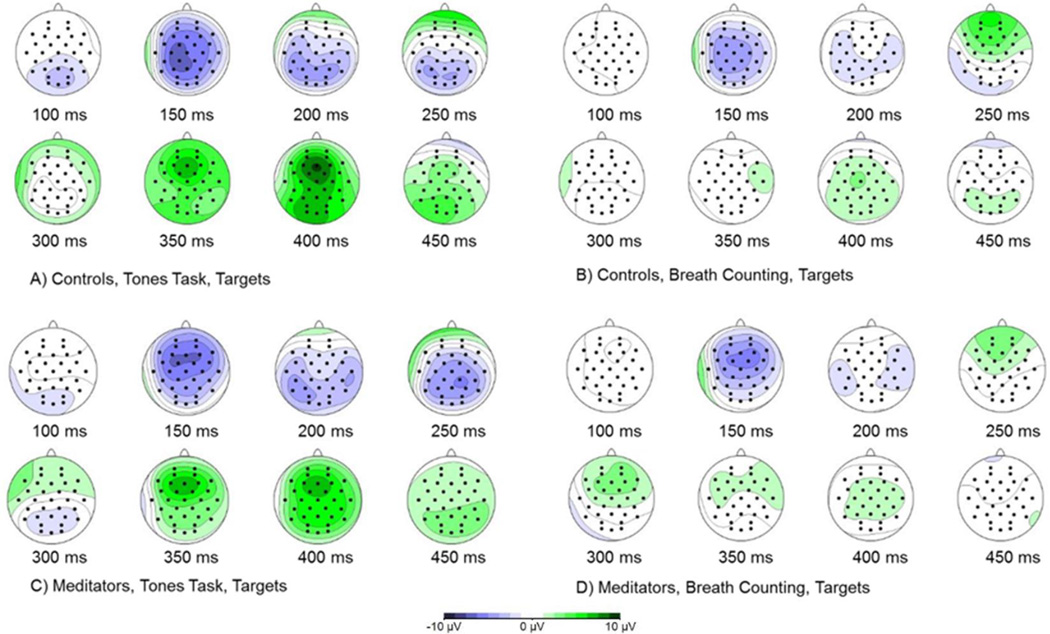
Figure 3
Figure 3
Topographic maps of brain activity in response to target tones across conditions
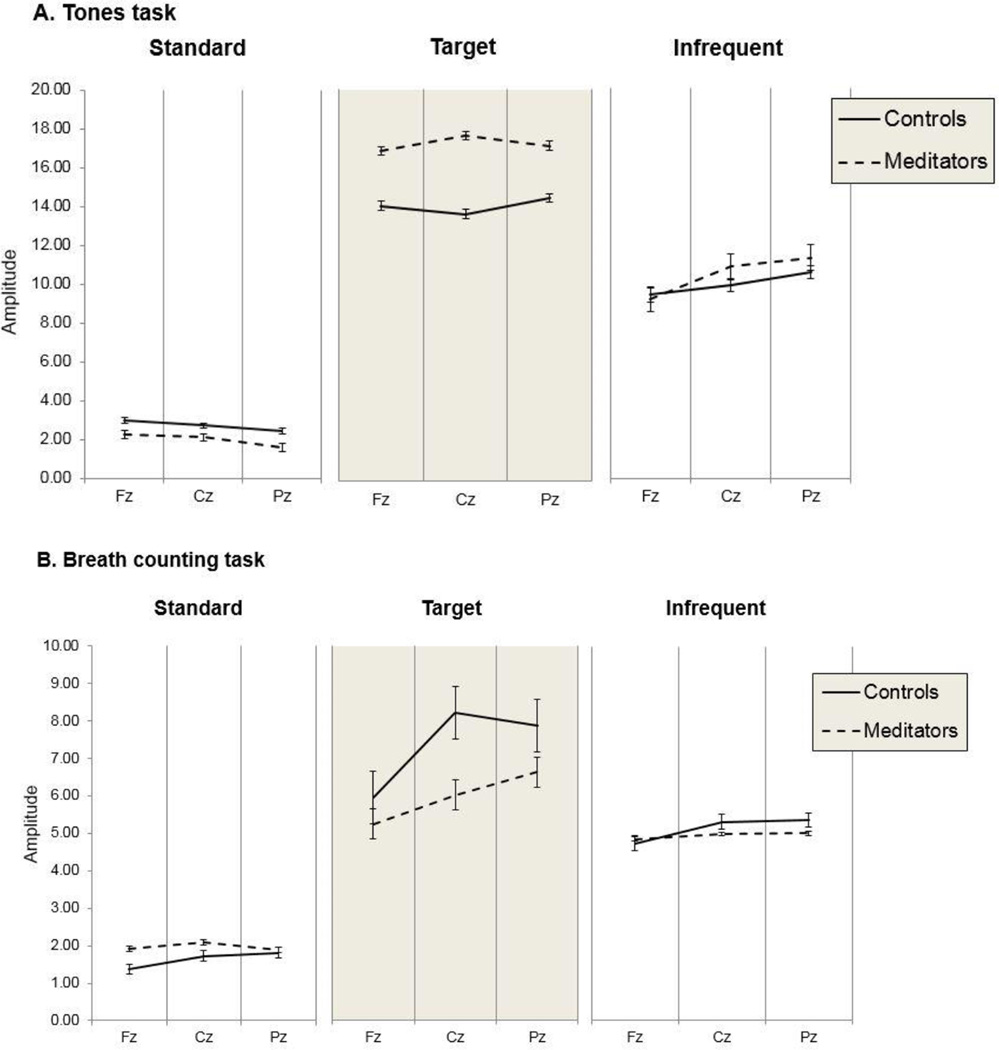
Figure 4
Figure 4
P3 amplitudes across all conditions (group, task, tone type)
Figure 5
Figure 5
N2 responses to targets, Cz *This interaction was significant at the Cz site, p = .017, with a more pronounced effect than at the Pz site and meditators exhibiting a greater difference in N2 peak-to-trough amplitudes from the Tones Task to Breath Counting.
Figure 6
Figure 6
N2 reponses to targets, Pz *This interaction was significant at the Pz site, p = .044, with meditators on average showing greater peak-to-trough N2 amplitudes during the Tones task and attenuated N2 amplitudes during the Breath Counting task in comparison to controls.
Figure 7
Figure 7
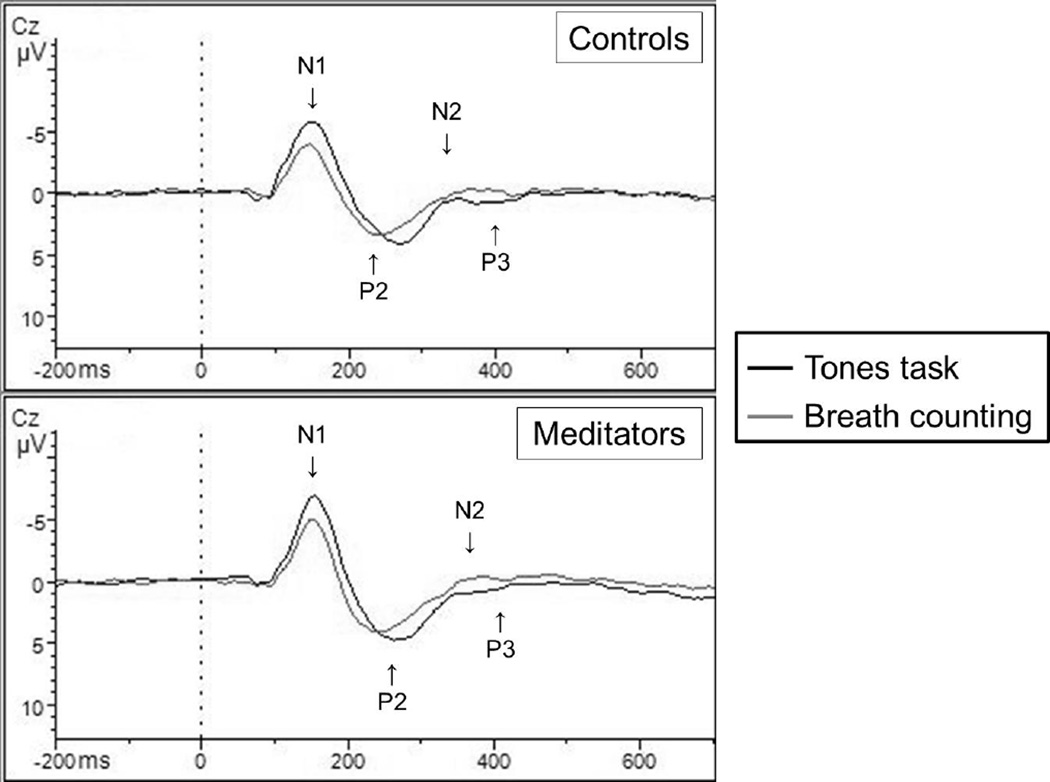
Frequent standard tone event-related potential responses *For frequent standard tones there were significant changes in N1 and P2 peak-to-trough values from the Tones task to the Breath Counting task, but there were no group effects, as expected.
Figure 8
Figure 8
Infrequent non-target tone event-related potential responses *At the Cz site, there were significant changes in amplitude in N1 and P3 responses to infrequent non-targets as well as a group effect for N1 responses, with meditators showing higher amplitudes during the Tones task, p = .02. There was an additional group effect for P2 with meditators showing higher amplitudes during the Breath Counting task, p = .04.

References

    1. Ahani A, Wahbeh H, Nezamfar H, Miller M, Erdogmus D, Oken B. Quantitative change of EEG and respiration signals during mindfulness meditation. Journal of neuroengineering and rehabilitation. 2014;11:87. - PMC - PubMed
    1. Alperin BR, Mott KK, Holcomb PJ, Daffner KR. Does the age-related “anterior shift” of the P3 reflect an inability to habituate the novelty response? Neuroscience Letters. 2014;577:6–10. - PMC - PubMed
    1. Andresen EM, Malmgren JA, Carter WB, Patrick DL. Screening for depression in well older adults: Evaluation of a short form of the CES-D. American journal of preventative medicine. 1994;10:77–84. - PubMed
    1. Brefczynski-Lewis JA, Lutz A, Schaefer HS, Levinson DB, Davidson RJ. Neural correlates of attentional expertise in long-term meditation practitioners. Proc Natl Acad Sci U S A. 2007;104:11483–11488. - PMC - PubMed
    1. Cahn BR, Polich J. Meditation states and traits. EEG, ERP, and neuroimaging studies. Psychological Bulletin. 2006;132:180–211. - PubMed

Publication types