


Longitudinal measures of cognition in the Ts65Dn mouse: Refining windows and defining modalities for therapeutic intervention in Down syndrome
- PMID: 26854932
- PMCID: PMC5716476
- DOI: 10.1016/j.expneurol.2016.02.005
Longitudinal measures of cognition in the Ts65Dn mouse: Refining windows and defining modalities for therapeutic intervention in Down syndrome
Abstract
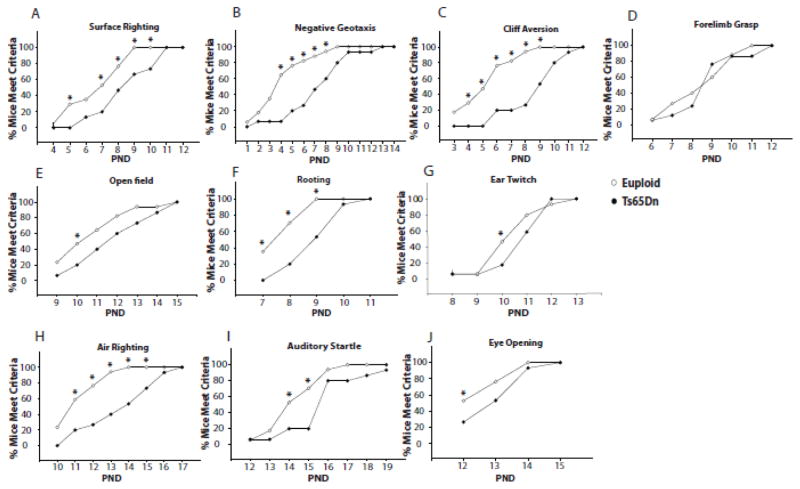
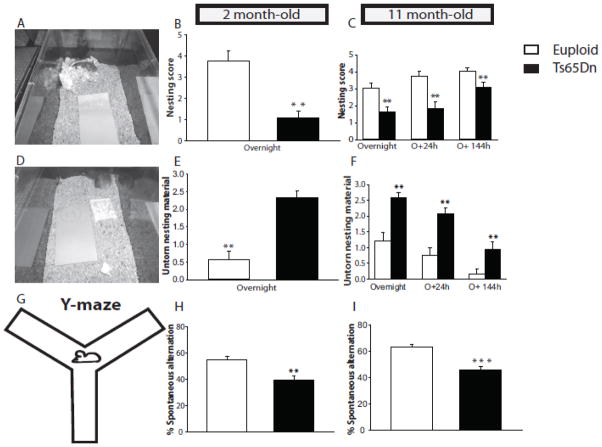
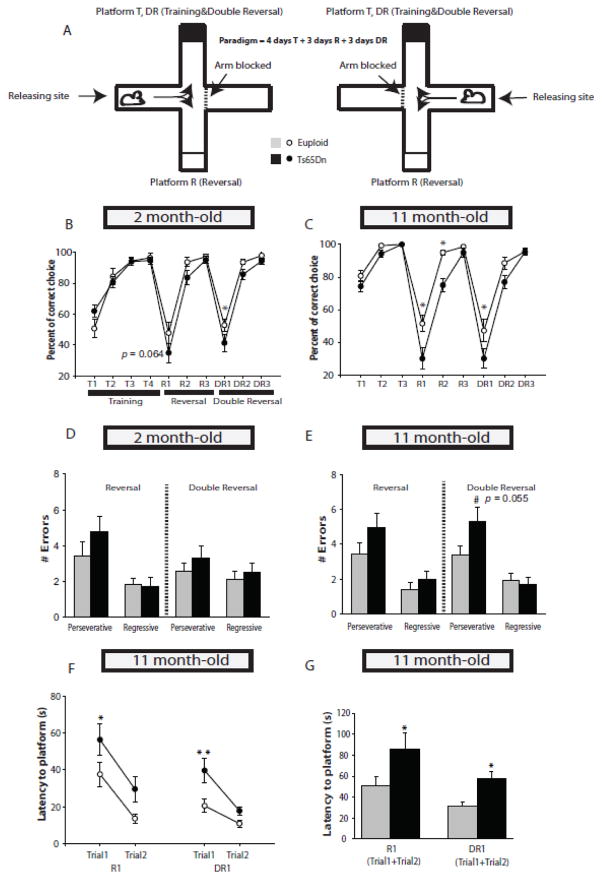
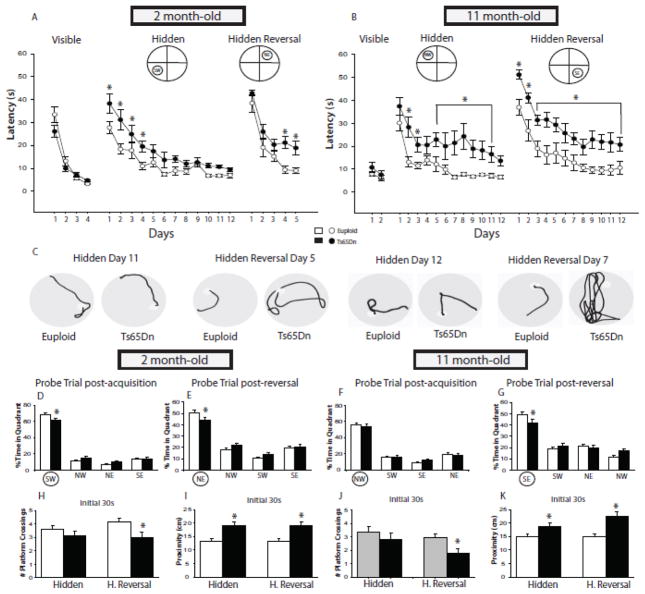
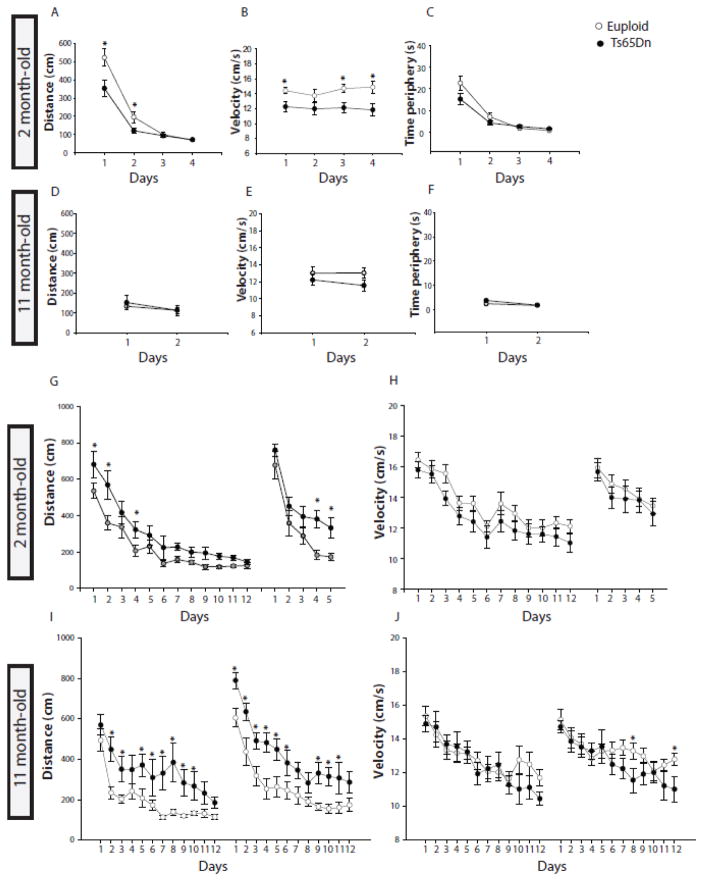
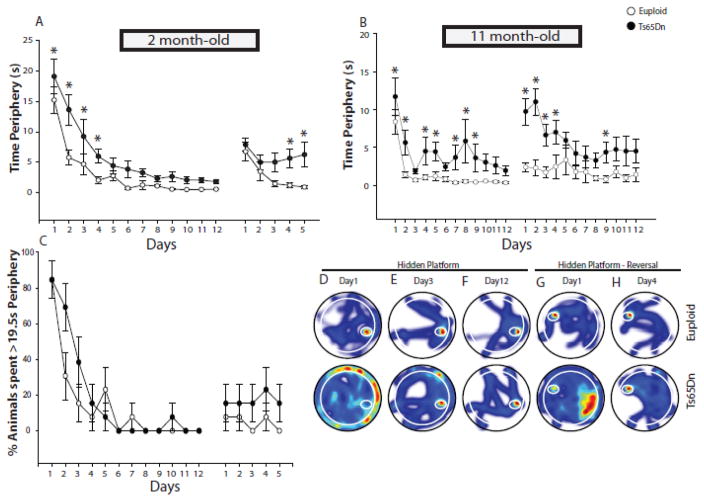
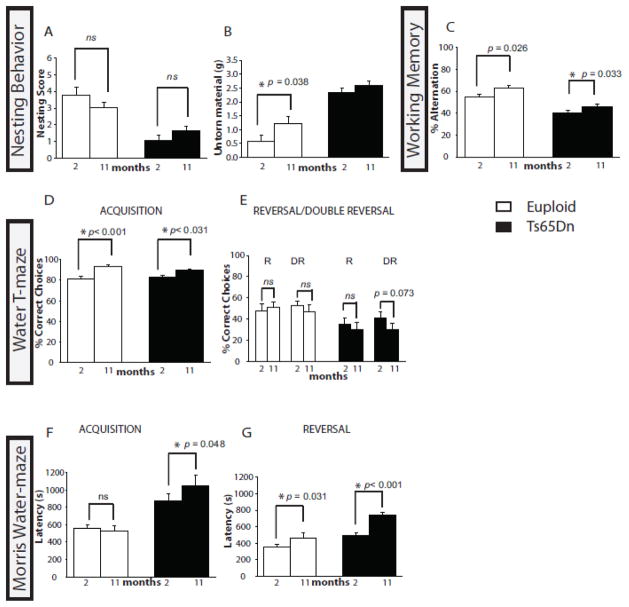
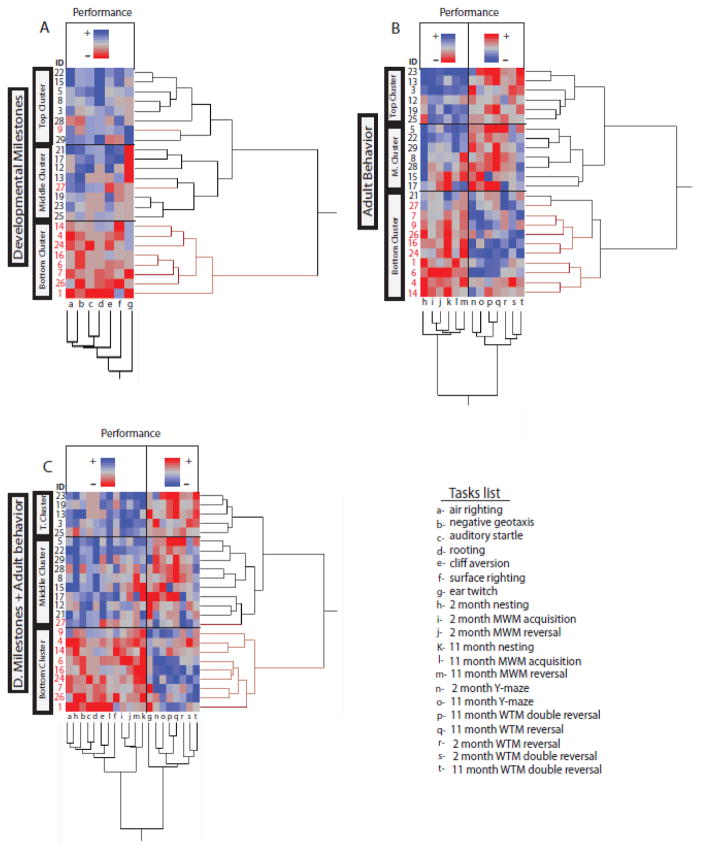
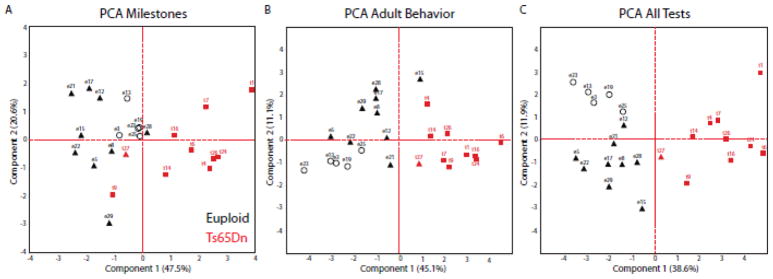
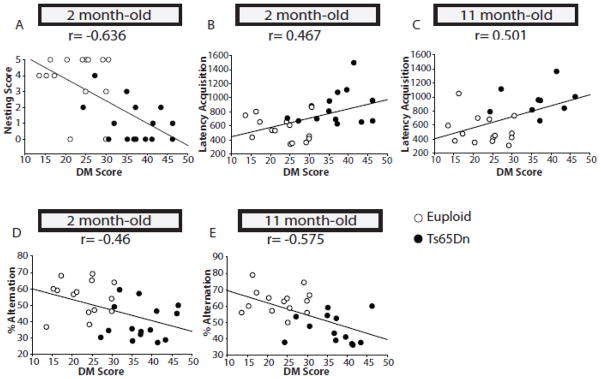
Mouse models have provided insights into adult changes in learning and memory in Down syndrome, but an in-depth assessment of how these abnormalities develop over time has never been conducted. To address this shortcoming, we conducted a longitudinal behavioral study from birth until late adulthood in the Ts65Dn mouse model to measure the emergence and continuity of learning and memory deficits in individuals with a broad array of tests. Our results demonstrate for the first time that the pace at which neonatal and perinatal milestones are acquired is correlated with later cognitive performance as an adult. In addition, we find that life-long behavioral indexing stratifies mice within each genotype. Our expanded assessment reveals that diminished cognitive flexibility, as measured by reversal learning, is the most robust learning and memory impairment in both young and old Ts65Dn mice. Moreover, we find that reversal learning degrades with age and is therefore a useful biomarker for studying age-related decline in cognitive ability. Altogether, our results indicate that preclinical studies aiming to restore cognitive function in Ts65Dn should target both neonatal milestones and reversal learning in adulthood. Here we provide the quantitative framework for this type of approach.
Keywords: Aging; Alzheimer Disease; Cognition; Developmental disorder; Developmental milestones; Down syndrome; Mouse behavior; Mouse model; Reversal learning; Ts65Dn.
Copyright © 2016 Elsevier Inc. All rights reserved.
Figures
References
-
- Altafaj X, Martin ED, Ortiz-Abalia J, Valderrama A, Lao-Peregrin C, Dierssen M, Fillat C. Normalization of Dyrk1A expression by AAV2/1-shDyrk1A attenuates hippocampal-dependent defects in the Ts65Dn mouse model of Down syndrome. Neurobiol Dis. 2013;52:117–127. - PubMed
-
- Alvarez JA, Emory E. Executive function and the frontal lobes: a meta-analytic review. Neuropsychology review. 2006;16:17–42. - PubMed
-
- Breslin J, Spano G, Bootzin R, Anand P, Nadel L, Edgin J. Obstructive sleep apnea syndrome and cognition in Down syndrome. Developmental medicine and child neurology. 2014;56:657–664. - PubMed
Publication types
MeSH terms
Substances
Grants and funding
LinkOut - more resources
Full Text Sources
Other Literature Sources
Medical
Molecular Biology Databases
