


Fetal exposure to placental corticotropin-releasing hormone is associated with child self-reported internalizing symptoms
- PMID: 26855003
- PMCID: PMC4808336
- DOI: 10.1016/j.psyneuen.2016.01.023
Fetal exposure to placental corticotropin-releasing hormone is associated with child self-reported internalizing symptoms
Abstract
Objective: Fetal exposure to maternal prenatal stress hormones such as cortisol exerts influences on the developing nervous system that persist and include risk for internalizing symptoms later in life. Placental corticotropin-releasing hormone (pCRH) is a feto-placental stress signal that also shapes fetal neurodevelopment and may be a more direct indicator of the fetal experience than maternal stress hormones. The programming effects of pCRH on child development are unknown. The current investigation examined associations between prenatal maternal and placental stress hormone exposures (maternal cortisol and pCRH) and child self-reported internalizing symptoms at age 5.
Method: Maternal plasma cortisol and pCRH levels were measured at 15, 19, 25, 31, and 36 weeks' gestation in a sample of 83 women and their 91 children (8 sibling pairs from separate pregnancies), who were born full-term. Child self-reported internalizing symptoms at age 5 were obtained using scales of the Berkeley Puppet Interview.
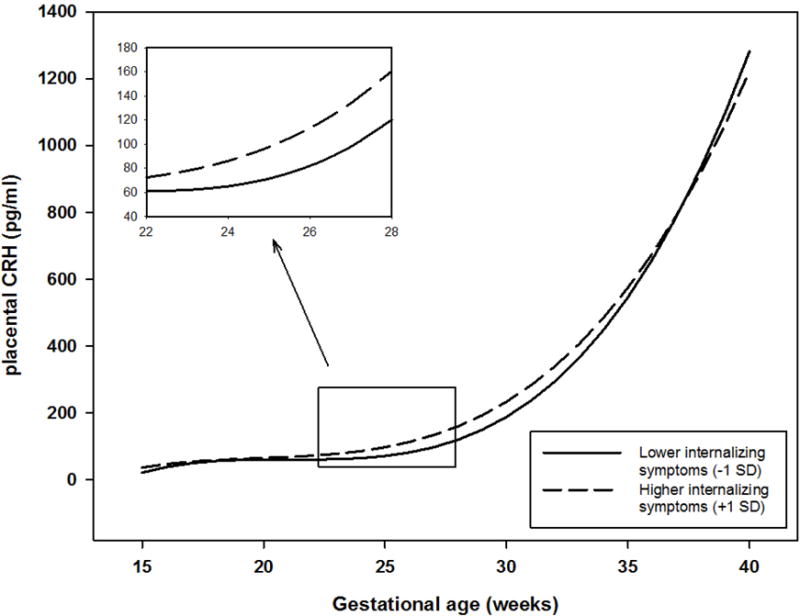
Results: Placental CRH profiles (including elevations in mid-gestation) were associated with higher levels of internalizing symptoms at age 5. This effect was not explained by critical prenatal or postnatal influences, including obstetric risk, concurrent maternal psychological state, and family socio-economic status. Prenatal maternal cortisol was not significantly associated with child self-reported internalizing symptoms.
Conclusions: Findings suggest that elevated exposures to the feto-placental stress signal pCRH exert programming effects on the developing fetal central nervous system, with lasting consequences for child mental health.
Keywords: CRH; Cortisol; Fetal programming; Internalizing problems; Pregnancy; Prenatal.
Copyright © 2016 Elsevier Ltd. All rights reserved.
Conflict of interest statement
None of the authors have any financial interests to disclose.
Figures
References
-
- Abe H, Hidaka N, Kawagoe C, Odagiri K, Watanabe Y, Ikeda T, Ishida Y. Prenatal psychological stress causes higher emotionality, depression-like behavior, and elevated activity in the hypothalamo-pituitary-adrenal axis. Neurosci Res. 2007;59:145–151. doi: 10.1016/j.neures.2007.06.1465\. - DOI - PubMed
-
- Barker DJ. In utero programming of chronic disease. Clin Sci. 1998;95:115–128. - PubMed
Publication types
MeSH terms
Substances
Grants and funding
LinkOut - more resources
Full Text Sources
Other Literature Sources
